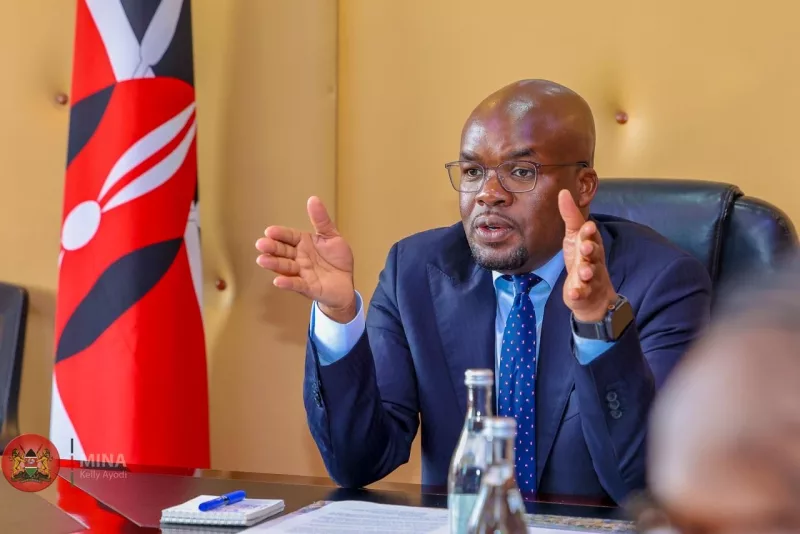
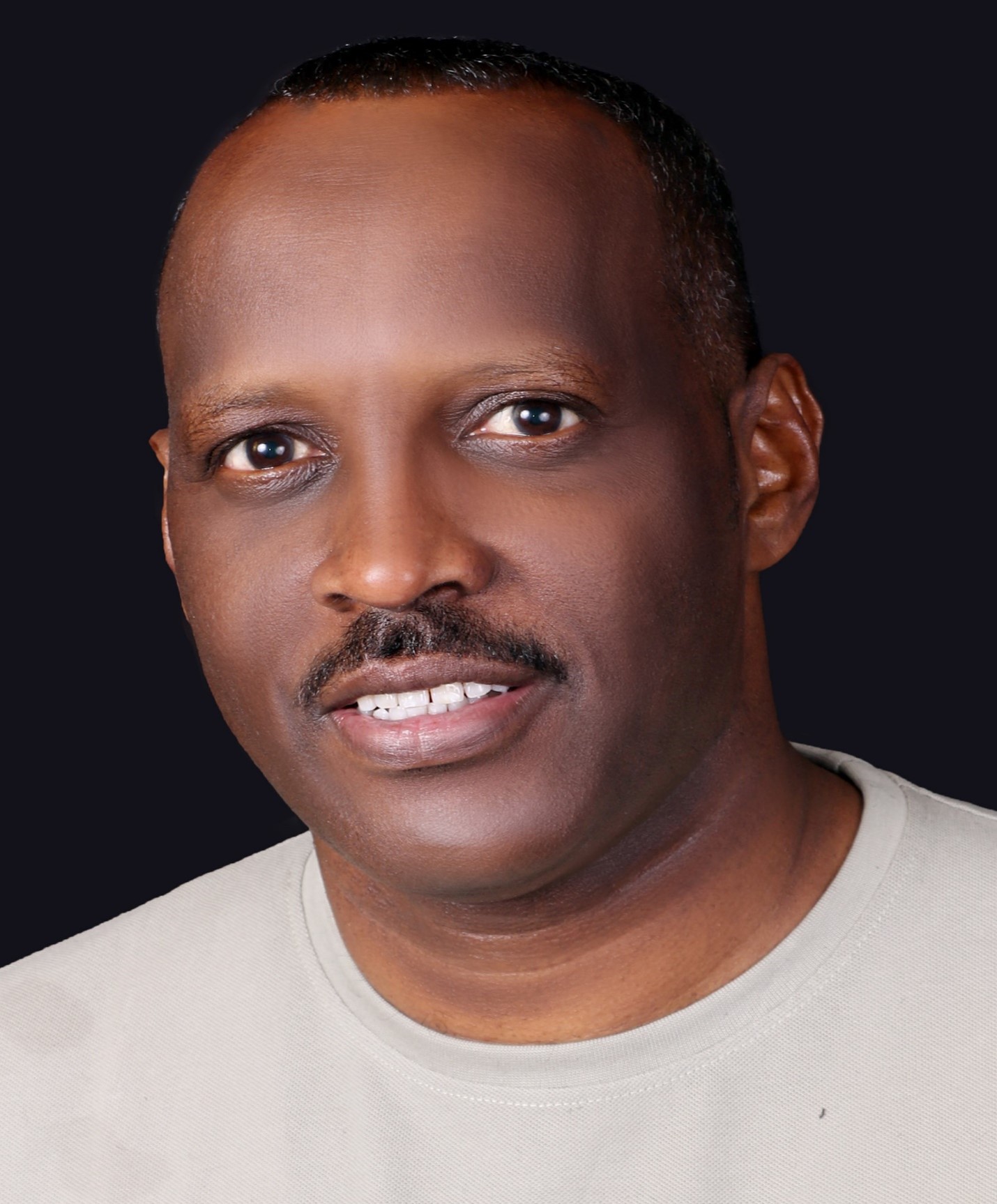
 Hon.Salah Maalim Alio-CECM Lands, Physical planning, Housing and Urban Development-County Government of Mandera/HANDOUT
Northern Kenya has once again been dragged into the national spotlight following claims by former Deputy President Rigathi Gachagua that the region suffers from leadership failure, corruption, and chronic underdevelopment.
While no region in Kenya is immune to governance challenges, Mr. Gachagua’s sweeping indictment is both intellectually lazy and politically dishonest.
It deliberately ignores the historical policy decisions that condemned Northern Kenya to the margins of the Kenyan state long before devolution or the current generation of leaders.
The underdevelopment of Northern Kenya was not accidental. It was engineered. The clearest evidence lies in Sessional Paper No. 10 of 1965, Kenya’s foundational economic blueprint, which explicitly directed public investment toward regions deemed to have “high potential” for quick economic returns.
Vast parts of Northern Kenya were written off as low-potential zones, unworthy of meaningful state investment. This policy entrenched spatial inequality, institutionalised neglect, and laid the foundation for the developmental gaps that persist to this day.
For decades, Northern Kenya was treated as a security buffer rather than a development priority. Roads were not built, schools and hospitals were sparse, and economic infrastructure was virtually non-existent.
Communities were expected to survive on resilience while the rest of the country benefited from deliberate state planning. To now frame this legacy as a failure of contemporary leadership is not only misleading—it is a distortion of history.
Mr. Gachagua’s sudden concern for Northern Kenya is further undermined by his own political record. After the 2022 General Election, he publicly mocked the region for voting against the Kenya Kwanza coalition, suggesting that Northern Kenya had forfeited any claim to government attention or resources.
This rhetoric was not a slip of the tongue; it reflected a deeply entrenched mindset that equates citizenship and development rights with electoral loyalty. That he now claims to speak for the very communities he dismissed is a staggering act of political opportunism.
It is also worth recalling that Mr. Gachagua was impeached over inciting and divisive conduct. His current intervention, framed as moral outrage, follows a familiar pattern: polarise, provoke, and deflect attention from structural policy failures by scapegoating regions that have historically lacked power within the state.
This does not mean Northern Kenya’s leaders are beyond scrutiny. Corruption, weak institutions, and poor leadership must be confronted honestly and decisively. However, accountability cannot be selective or detached from historical context.
Devolution, despite its imperfections, has delivered tangible progress across Northern Kenya—new health facilities, improved access to health, water, education, expanding road networks, and strengthened local governance.
These gains have been achieved under extreme constraints: recurring droughts, climate shocks, cross-border insecurity, and decades of accumulated infrastructural deficits.
What Northern Kenya needs is not lectures from politicians suffering from political amnesia, but a serious national reckoning with the policies that produced inequality in the first place. The conversation must shift from blame to responsibility, from soundbites to solutions.
This is why the time has come for a Northern Kenya National Leadership Summit—a home-grown platform bringing together elected leaders, professionals, elders, women, youth, and development actors from the region. Such a summit would allow Northern Kenya to articulate a unified development agenda, confront internal governance challenges, and engage the national government from a position of clarity and strength.
Northern Kenya’s problems were designed through policy. They will not be solved through insults, hypocrisy, or political grandstanding. They will be solved through honest leadership, historical accountability, and regionally driven solutions anchored in unity and purpose.
The writer is a governance, diplomacy, peace and security management specialist