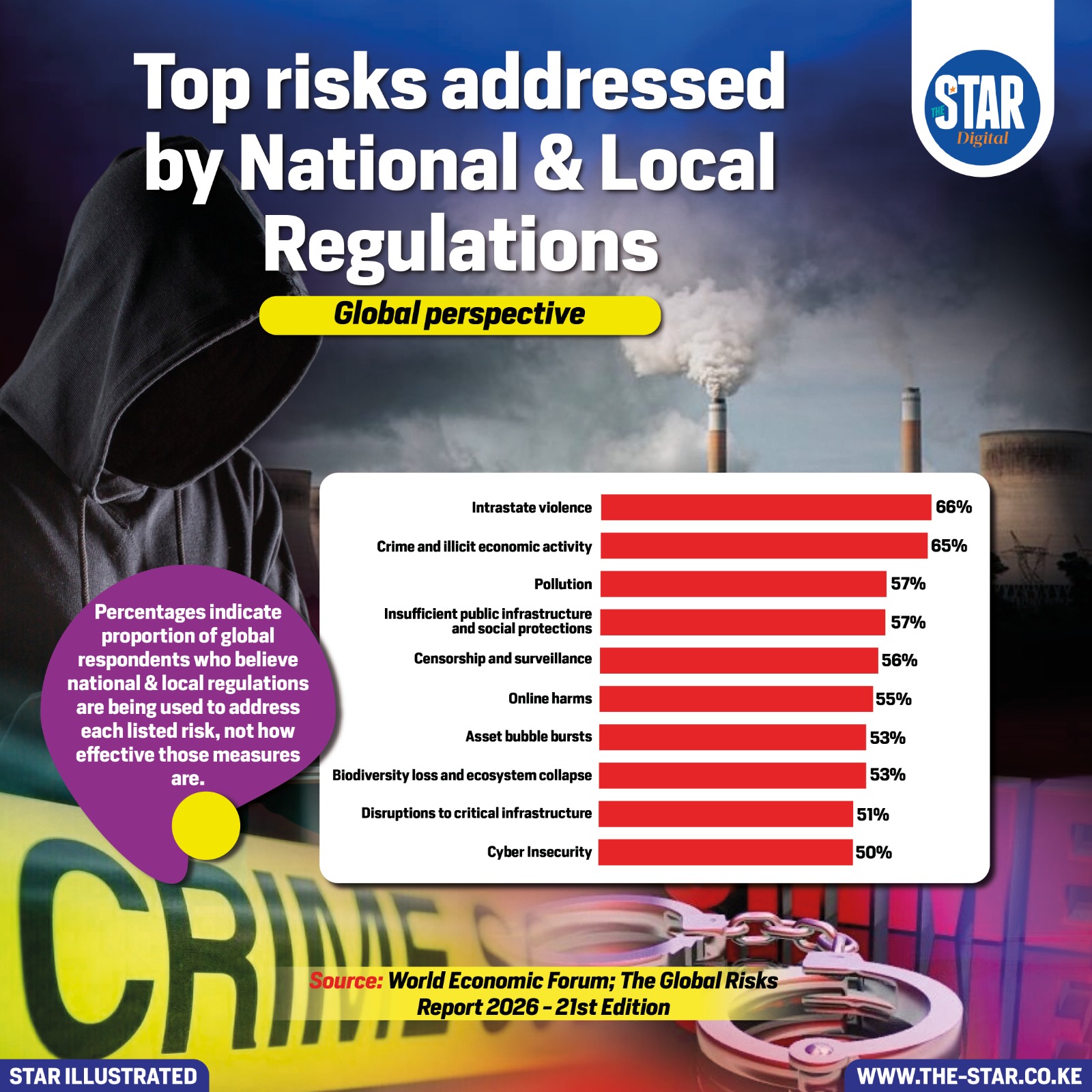
A recent global survey shows that national and local regulations are increasingly being used to tackle key risks facing societies and economies worldwide.
The findings, published in the World Economic Forum’s Global Risks Report 2026 – 21st Edition, reflect the proportion of respondents who believe regulations are being applied, though they do not measure the effectiveness of these measures.
According to the survey, intrastate violence is perceived as the top risk addressed, with 66% of respondents noting that regulations are in place to curb such conflicts.
Close behind is crime and illicit economic activity, cited by 65% of respondents, highlighting the ongoing global challenge of criminal networks and corruption.
Environmental and social concerns also feature prominently. Pollution and insufficient public infrastructure and social protections were each cited by 57%, while biodiversity loss and ecosystem collapse registered at 53%.
Online and digital threats are not overlooked, with censorship and surveillance (56%), online harms (55%), and cyber insecurity (50%) ranking among the top ten risks.
Economic vulnerabilities such as asset bubble bursts (53%) and disruptions to critical infrastructure (51%) also emerged as key concerns.
The survey underscores the global expectation that governments and regulators are taking an active role in managing these risks.
While the report does not assess outcomes, it signals public awareness of regulatory efforts across security, environmental, economic, and technological domains.