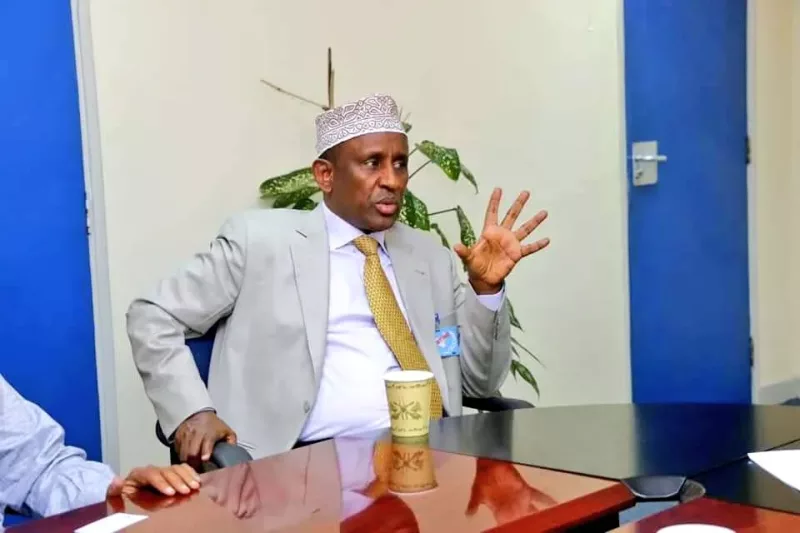
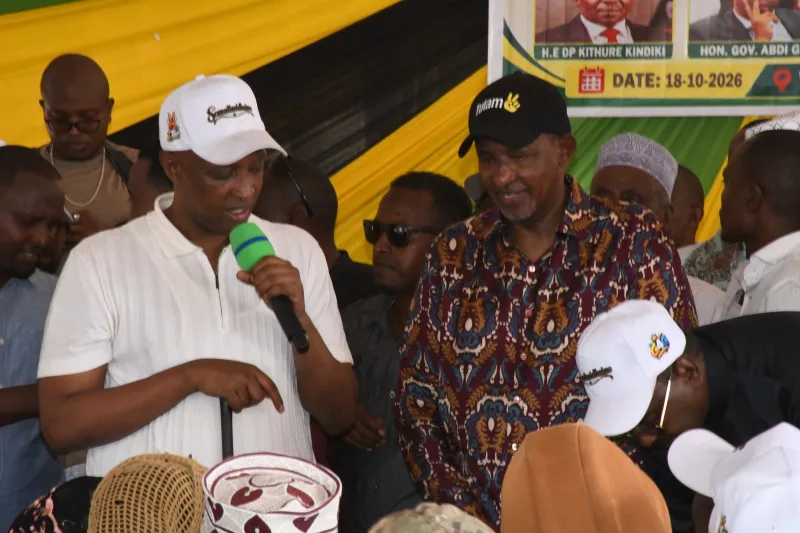
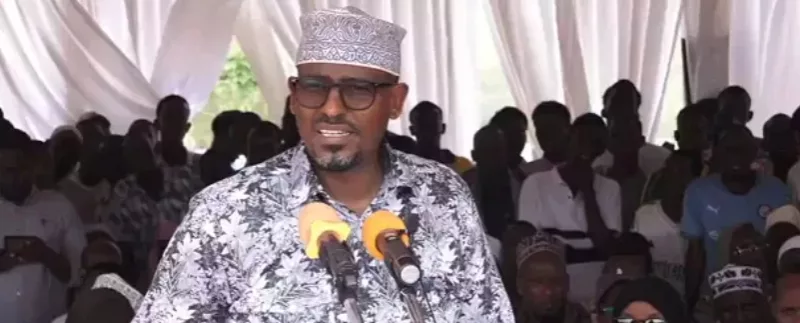
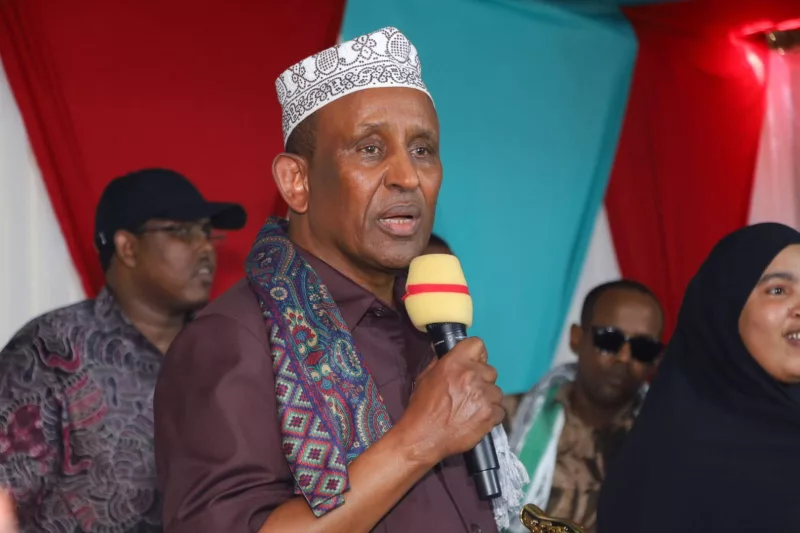
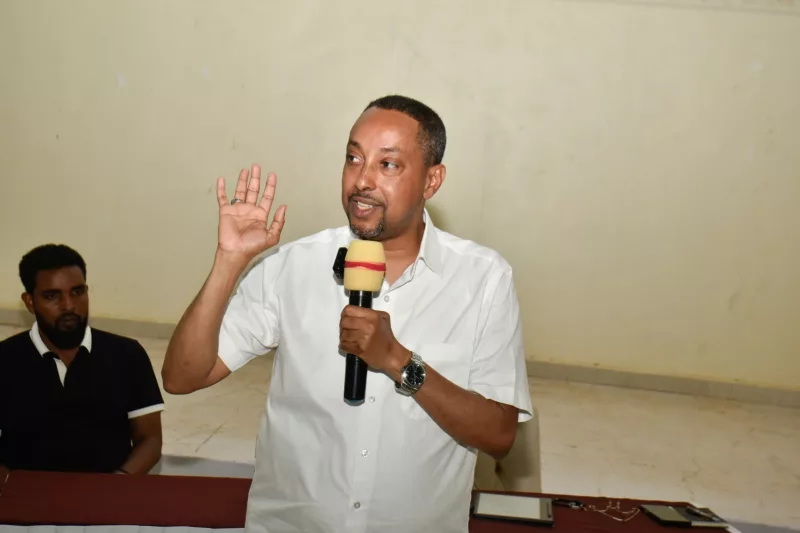
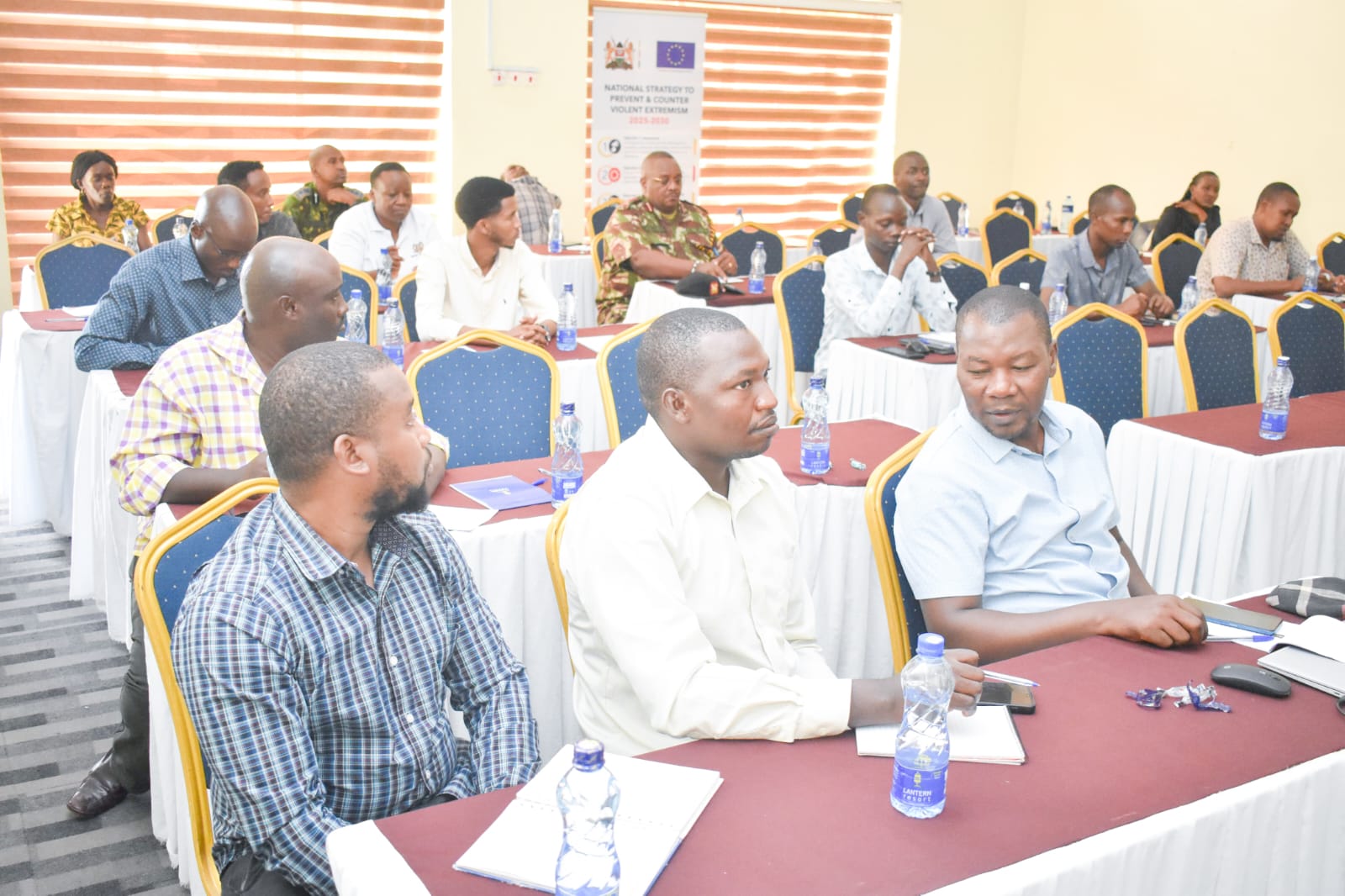
 Participants at the forum.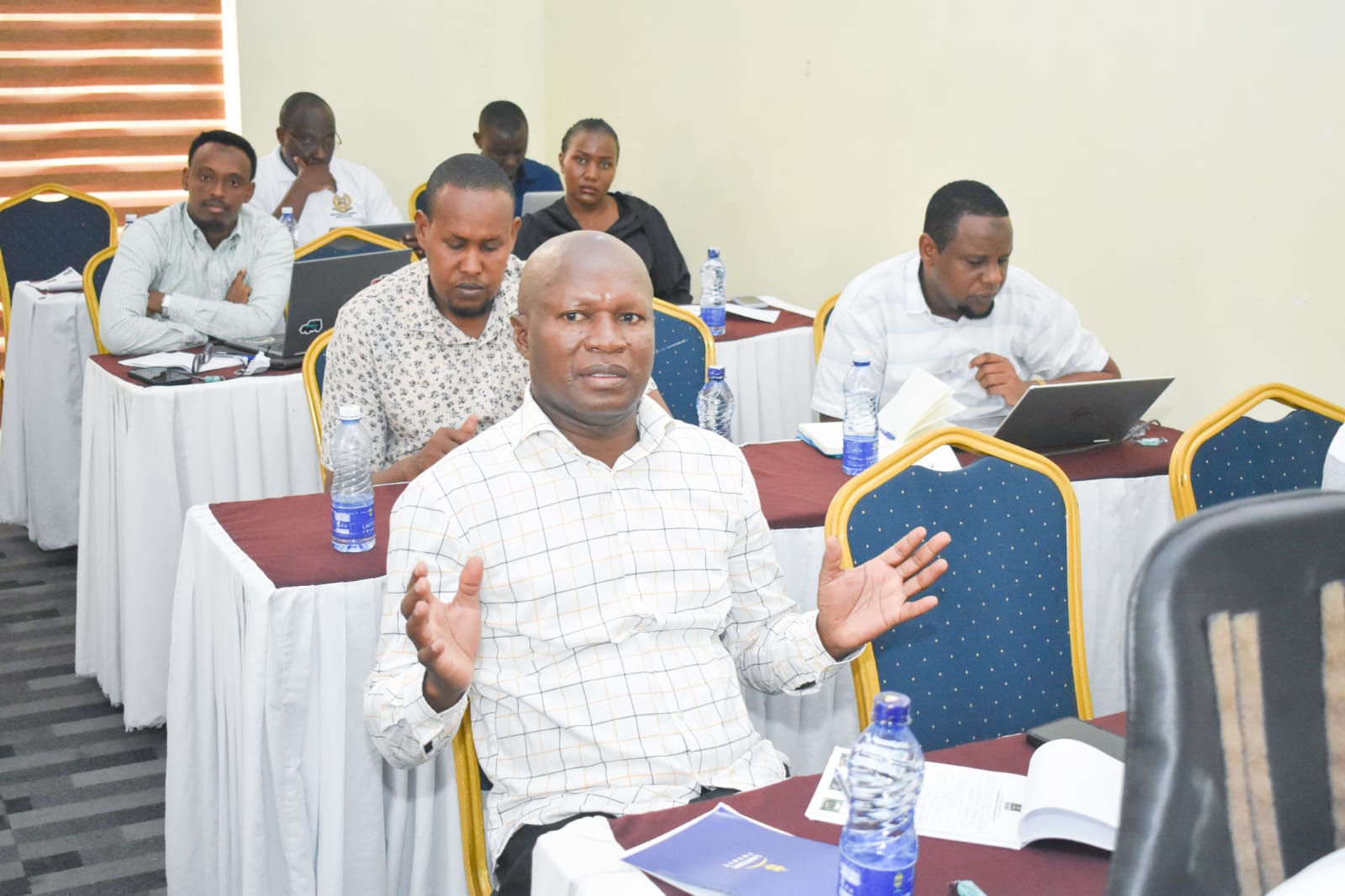
 Ben Muiya, the North Eastern deputy regional commander speaking
at the forum.
Ben Muiya, the North Eastern deputy regional commander speaking
at the forum.The government has emphasised the need for a coordinated,
multi-sectoral strategy to combat terrorism, violent extremism and radicalisation.
National Government Communication Centre acting director general
Charles Owino said blending intelligence-led security operations with
community-driven initiatives was the
only way to dismantle terror networks and curb recruitment at the grassroots
level.
He spoke at the close of a three-day crisis communication
workshop in Garissa, organised by the National Counter Terrorism Centre (NCTC),
He underscored the importance of collaboration among all
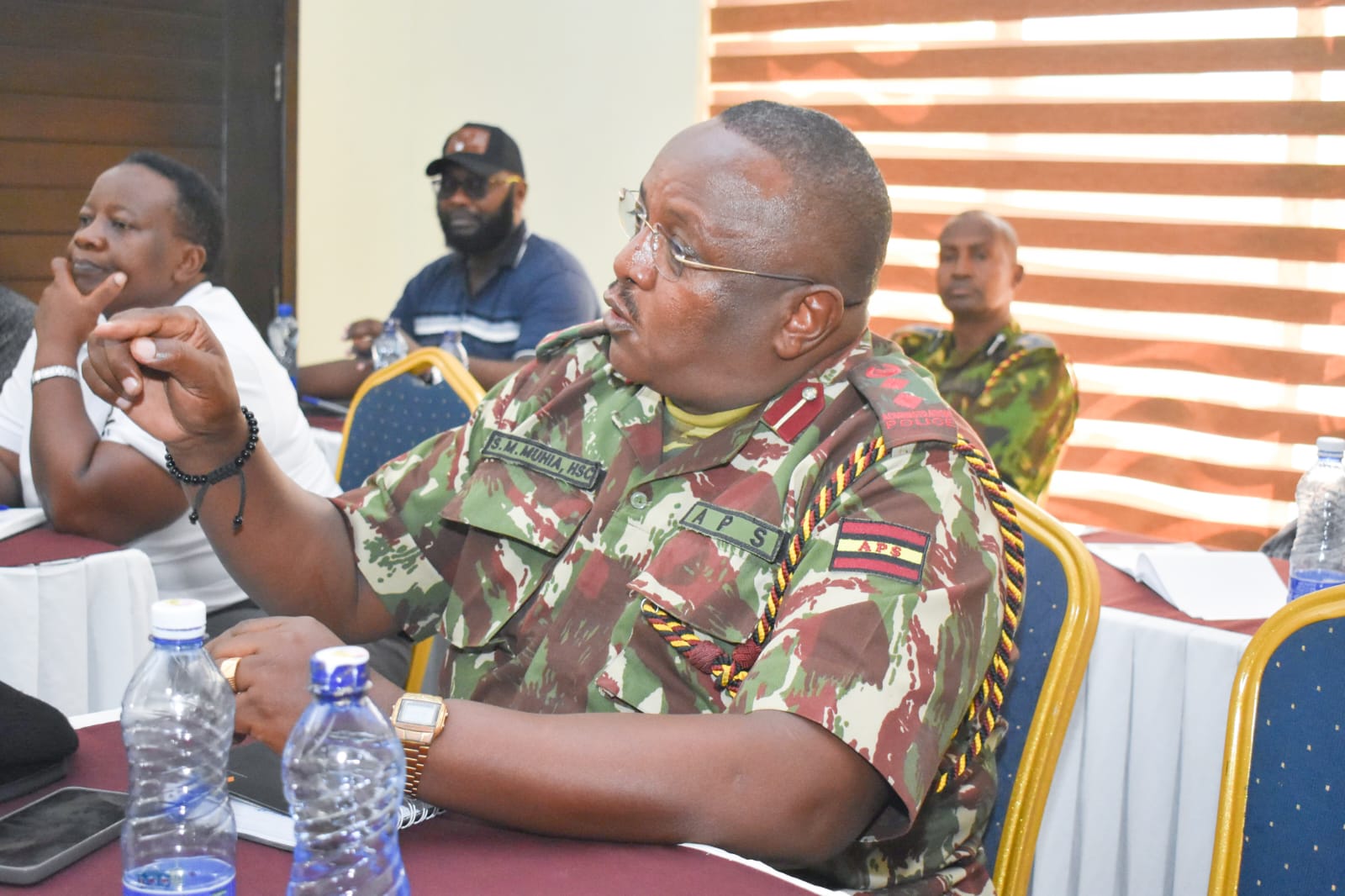
actors. The training brought together security agencies, communication
officers, media practitioners, and civil society organisations.
“Terrorist acts affect society as a whole, not just
individuals. That is why every stakeholder matters. Government institutions,
civil society and the media all work for the public, and when we come together,
we strengthen our collective response,” Owino said.
Owino noted that safeguarding national security requires
collective responsibility, adding that all stakeholders must operate in unity
and deliver consistent messaging to counter terrorism and extremist propaganda.
He also called on the media to exercise caution in their
reporting by striking a balance between informing the public and avoiding
excessive exposure that could amplify fear or inadvertently promote terrorist
groups.
The official warned that repeatedly broadcasting graphic
images of victims only serves the objectives of terrorists noting that such
coverage can encourage attackers, whose main aim is to instill fear.
The former police spokesperson further appealed to international
partners, particularly developed nations, to support Kenya’s counterterrorism
initiatives, noting that terror attacks often affect foreign nationals as well.
“Terrorism is a global challenge. An attack in one country
impacts people beyond its borders. For instance, during the Westgate attack,
both Kenyans and foreign visitors lost their lives. It is therefore in the
interest of the European Union and other partners to support global safety
efforts,” Owino said.
He added that support from developed countries is crucial,
given Kenya’s developing status, and that insecurity in one region can
eventually have far-reaching consequences.
The programme is being supported by the European Union.
Meanwhile, NCTC chief liaison officer for ICT and Strategic
Communication Jackson Macharia said the centre is implementing a new strategic
plan for the 2026–30 period aimed at fostering a secure, cohesive and resilient
nation united against terrorism.
Macharia said involving all relevant stakeholders enhances
preparedness and enables faster, more coordinated responses during terror
incidents, ultimately saving lives.
He said NCTC has focused on closing communication gaps,
strengthening youth-centered interventions, expanding multi-stakeholder
partnerships and integrating crisis communication into the national framework
for preventing and countering violent extremism.
He added that these efforts are critical in ensuring timely,
effective responses to threats and strengthening national resilience.
The workshop brought together communication professionals from government, civil society and the media to enhance practical crisis communication skills and improve coordinated responses to extremist propaganda through simulations, case studies and joint exercises.