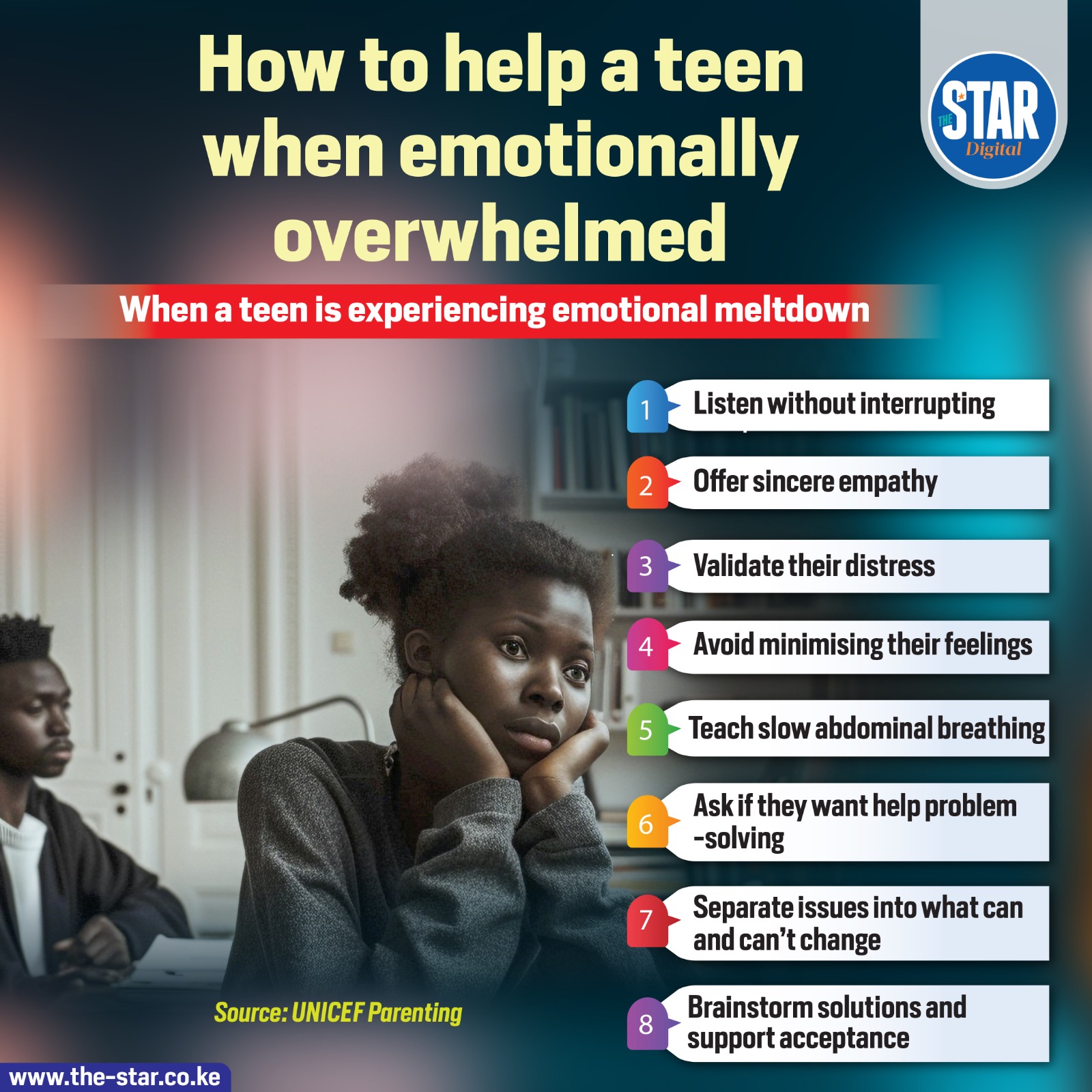
Emotional meltdowns are not uncommon during the teenage years. Rapid physical, social and psychological changes can make emotions feel intense and difficult to manage. How adults respond in these moments can either calm the situation or make it worse.
According to UNICEF parenting, one of the most important steps is to listen without interrupting. Teens often need space to express what they are feeling before they are ready to hear advice. Giving them your full attention shows that their emotions matter.
Offer sincere empathy. Simple responses that show understanding can help a teen feel less alone. It is also important to validate their distress. Even if the issue seems small to an adult, it may feel overwhelming to them. Avoid minimising their feelings or dismissing their experience.
Practical calming techniques can also help. Teaching slow abdominal breathing can reduce physical signs of stress and help them regain control. Once they are calmer, ask if they would like help with problem-solving rather than assuming they do.
You can then work together to separate issues into what can and cannot be changed. This helps teens focus their energy on what is within their control. Brainstorm possible solutions for the manageable parts, while also supporting acceptance of the things they cannot change.