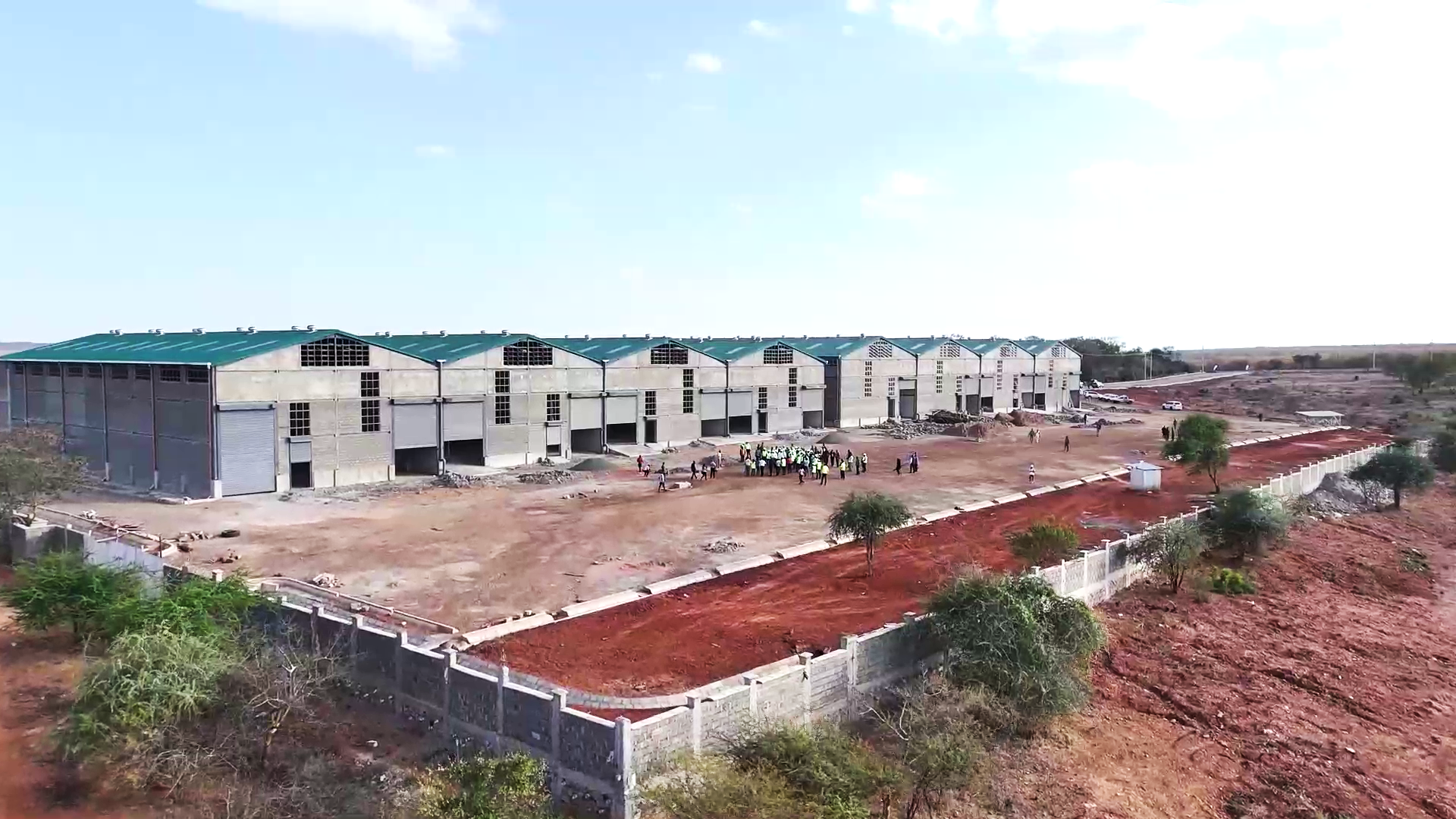
 Embu County Aggregation and Industrial Park (CAIP) that is being established at Machang'a area and is nearing completion/ ALICE WAITHERA
Embu county is banking on the County Aggregation and Industrial Park (CAIP) in Machang’a, Mbeere South, to transform its agricultural economy through value addition, processing and improved market access for farmers.
The project, a joint initiative between the national government and the Embu County government, is currently 97 per cent complete.
Read Also
It’s expected to play a critical role in enhancing the value of key agricultural products such as avocados, macadamia nuts, mangoes, milk, honey, cereals and cotton once fully operational.
The CAIP programme is part of a nationwide government strategy aimed at boosting agro-industrialisation, reducing post-harvest losses, creating jobs and linking farmers directly to local and international markets.
Similar parks are being rolled out across counties to support the Bottom-Up Economic Transformation Agenda, which prioritises agriculture, manufacturing, and small-scale enterprise development as key drivers of economic growth.
Embu Trade, Investment and Marketing executive Francis Ndwiga said most farmers in the region remain small-scale, with many growing between six and 100 trees, which falls short of market demand.
“We are encouraging farmers to venture into large-scale farming of avocados, macadamia, mangoes, honey, cereals and cotton as the county opens doors to investors who have expressed interest in setting up processing industries,” Ndwiga said.
Embu is among the leading producers of hybrid macadamia varieties in the country, a major cash crop for thousands of households.
He said improved production will enable the county to meet the growing demand from processors and exporters.
Ndwiga said the county government has introduced a support programme that provides farmers with certified seeds and extension services to improve productivity and ensure high-quality produce that can attract better prices in both local and export markets.
He added that the industrial park will significantly improve market access and reduce post-harvest losses, enabling farmers to earn better returns for their produce.
“Most farmers, especially potato farmers, experience heavy losses soon after harvesting due to poor storage. The park will eradicate these losses,” he said.
The county is also promoting the utilisation of extensive idle land, particularly in the lower Mbeere region, which he said is well-suited for cotton, honey and mango farming.
In the upper parts of the county, farmers are being encouraged to embrace avocado and macadamia production.
As part of its public-private partnership strategy, the county government plans to collaborate with the Kenya Wildlife Service to support large-scale honey farming within and around the Mwea National Game Reserve, to complement production by local farmers.
Ndwiga urged farmers to take advantage of the industrial park and upscale their farming with renewed confidence, expressing optimism that the facility will stimulate economic growth through the establishment of new industries, expanded businesses and increased county revenue.
Once operational, the park is expected to create thousands of direct and indirect jobs in processing, logistics and support services, with significant opportunities for youth and women.
Farmers in the region have expressed optimism that the project will expand market opportunities for their produce, boost incomes and strengthen the overall agricultural value chain in Embu.
Joseph Mwaniki, a farmer, hailed both levels of government for the project saying it will improve their returns, lifting their standards of living.
“Like now, there’s a lot of wastage of mangoes because farmers have nowhere to sell them due to over-supply. Once the park is complete, such produce will be aggregated and processed, stemming the losses,” he said.
The county administration has supplied millions of high-quality avocado and macadamia seedlings, with the aim of helping farmers to diversify their income.
The local economy heavily relies on agriculture that has been ravaged by climate change in the recent past, leaving farmers vulnerable and food insecure.
Its main cash crops include coffee, tea, macadamia, miraa, avocados and horticulture while subsistence farmers plant maize, beans, cowpeas, green grams, bananas, pawpaw and citrus fruits.
INSTANT ANALYSIS
The local economy heavily relies on agriculture that has been ravaged by climate change in the recent past, leaving farmers vulnerable and food insecure. Embu Trade, Investment and Marketing executive Francis Ndwiga says most farmers in the region remain small-scale, with many growing between six and 100 trees, which falls short of market demand. The county has however introduced a support programme that provides farmers with certified seeds and extension services to improve productivity.