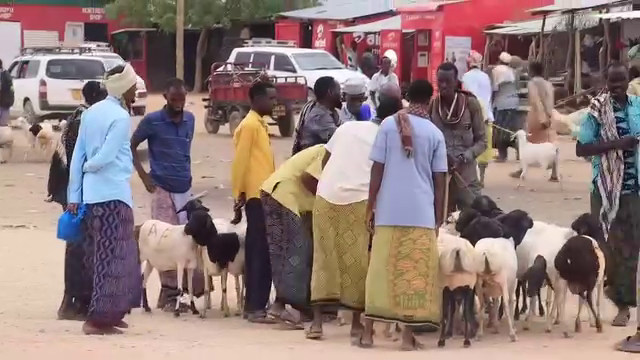
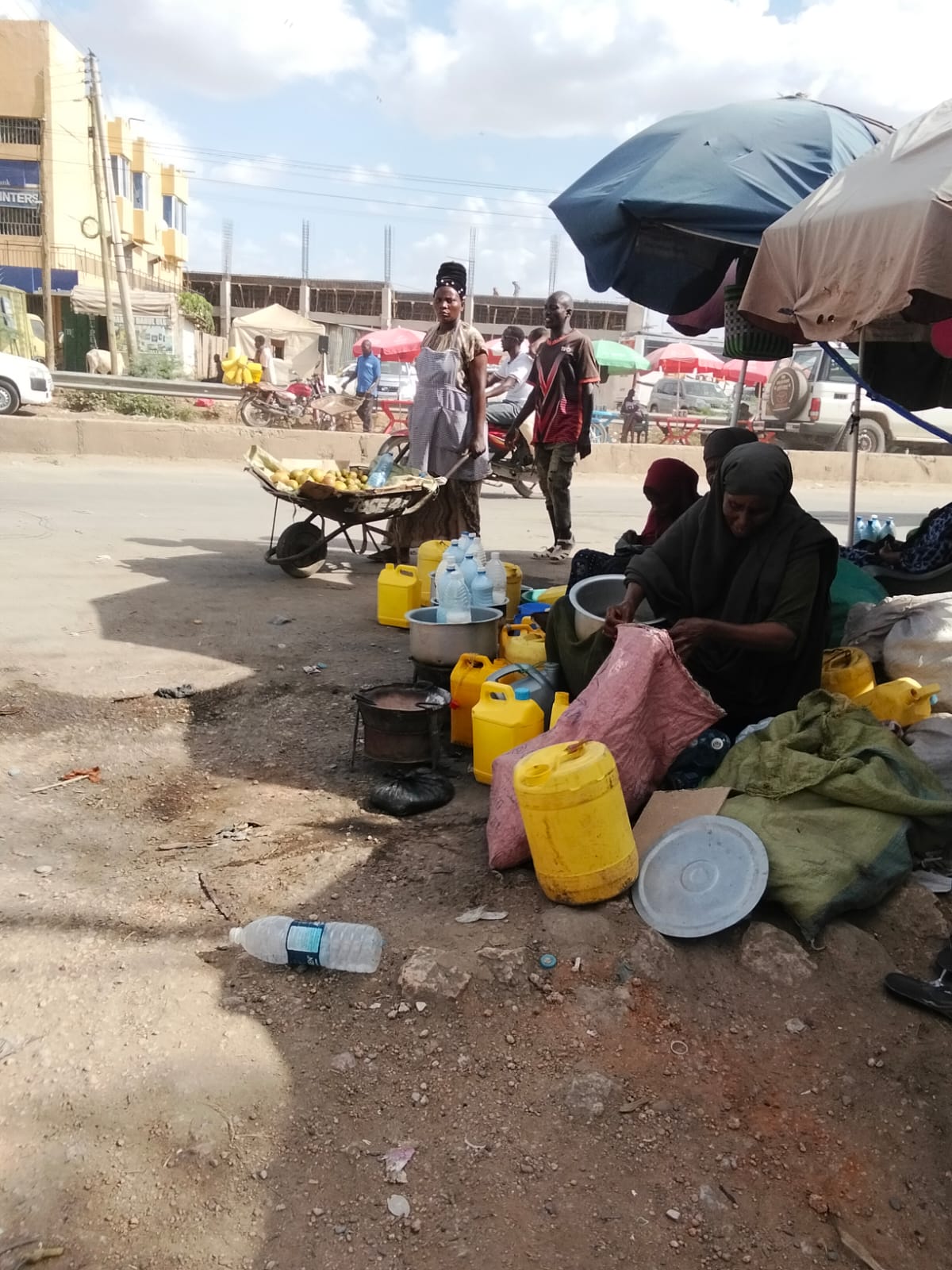
 Milk vendors in Garissa town.
Prolonged drought in Garissa county is tightening its grip on residents, disrupting livelihoods and driving up the cost of basic commodities, with milk vendors among the hardest hit.
At Soko Ng’ombe market, rows of empty yellow jerrycans now tell a story of deepening scarcity as traders wait anxiously for milk deliveries that often arrive late—or not at all.
Milk that was once sourced from nearby areas is now transported from as far as Holugho, Balambala and Dadaab, nearly 300 kilometres away, after herders migrated in search of pasture and water.
The long distances and harsh weather conditions have made supplies unpredictable. Vendors say milk frequently reaches the market late in the day, sometimes already spoiled, forcing traders to absorb the losses.
“We wait the whole day not knowing whether the milk will come. Sometimes it arrives in the evening when it is already spoilt. That is a total loss for us,” Ambiya Hussein said.
Garissa’s economy is heavily dependent on livestock, with about 80 per cent of residents relying on animals and their products for income. However, successive failed rainy seasons have drastically reduced milk production, affecting pastoralist families and urban traders.
Vendors say herders are barely producing enough milk for household consumption, leaving little for sale. As a result, prices have surged over the past two months.
A litre of cow milk that previously sold for about Sh100 now goes for up to Sh150, while goat milk—once widely available and central to local diets—has become scarce, fetching as much as Sh200 per litre when available.
Despite the price increases, traders say profits have shrunk due to dwindling supplies and rising operating costs.
“This business is hand to mouth. On a good day, you might get 10 litres. From that, you make about Sh20 per litre after expenses. It is not enough to feed a family,” Hussein said.
Many vendors rely on daily sales to meet basic household needs, paying expenses in small instalments. A single day without milk means no income at all.
The situation has been particularly difficult for older women who have depended on the trade for decades, using small daily earnings to raise families and educate children, but who now risk losing their only source of livelihood.
“There is no other work we can do,” Fatuma Mohamed said.
“This has always been our lifeline.”
As the drought persists, traders say there has been little support to cushion them from the economic shock. With no safety nets in place, many fear the prolonged dry spell could push them out of business entirely.
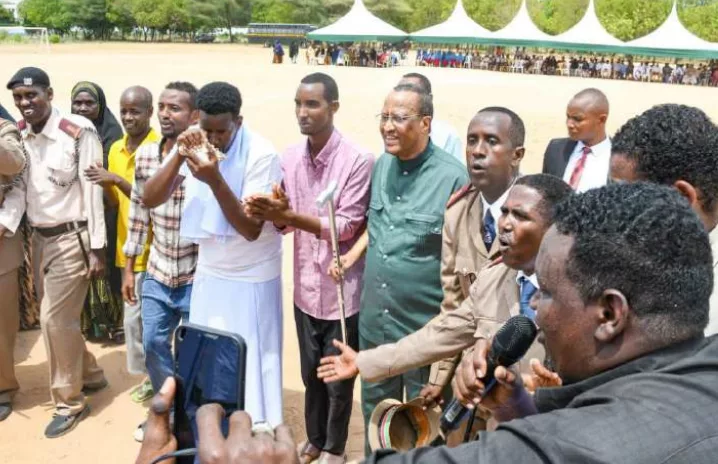
On Tuesday, the government activated its drought response mechanism to cushion vulnerable communities in arid and semi-arid lands following worsening conditions that threaten both human lives and livestock.
Speaking in Garissa during the flagging off of water trucking and relief food assistance, county commissioner Mohamed Mwabudzo said the intervention was part of a wider national response being rolled out across affected regions.
The current drought follows three consecutive failed rainy seasons—the October–December 2024 short rains, the complete failure of the March–May 2025 long rains, and the October–December 2025 short rains.
The National Drought Management Authority has classified Mandera county in the alarm phase, while nine counties, including Garissa, are currently in the alert phase, with several showing a worsening trend and drought hotspots emerging beyond traditional arid and semi-arid areas.
Instant analysis
The milk shortage in Garissa exposes how prolonged drought is unravelling fragile pastoral economies and urban supply chains. As herders migrate farther in search of pasture, small traders absorb the economic shock through spoilage, rising costs and shrinking margins. The sharp rise in milk prices reflects scarcity rather than profit, deepening vulnerability for women who depend on daily sales for survival. While the government’s drought response offers short-term relief, the crisis underscores the need for sustainable water access, livestock resilience and targeted support for informal traders to prevent long-term livelihood collapse in arid and semi-arid regions.