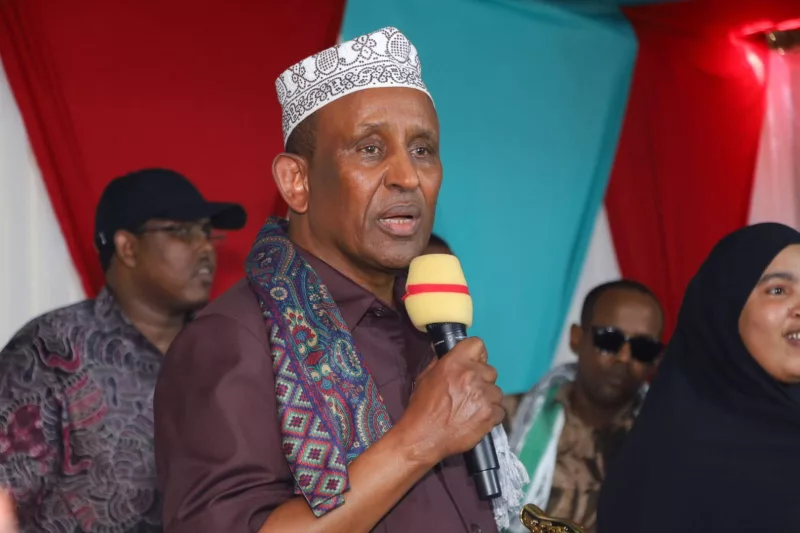
 Ugas Sheikh Mohamed, the current chairperson of the Capital Markets Authority (CMA), speaking at a recent function. He is among the front runners/STEPHEN ASTARIKO
Clans in Wajir county have begun mobilising members to consolidate their votes behind single candidates ahead of the 2027 election targeting the gubernatorial position.
The move is informed by previous divisions that have proved costly at the ballot.
The Fai clan which is the largest of the Degodia community and dominant in Tarbaj and Wajir East constituencies, has already constituted a committee to identify and endorse a single candidate behind who all members will rally in the next election.
A member of the committee, who spoke to The Star on condition of anonymity, said the selection process was progressing smoothly and is expected to be concluded by the end of April.
“Yes, I can confirm the process is ongoing. Initially, several aspirants from the Fai sub-clan expressed interest in the governorship seat, but most have since stepped aside, leaving four contenders,” the committee member said.
The remaining aspirants have committed themselves to respecting the outcome of the process.
“The four have promised to abide by the committee’s decision. As a committee, we will ensure the process is free and fair, and at the end we shall settle on one consensus candidate,” the member said.
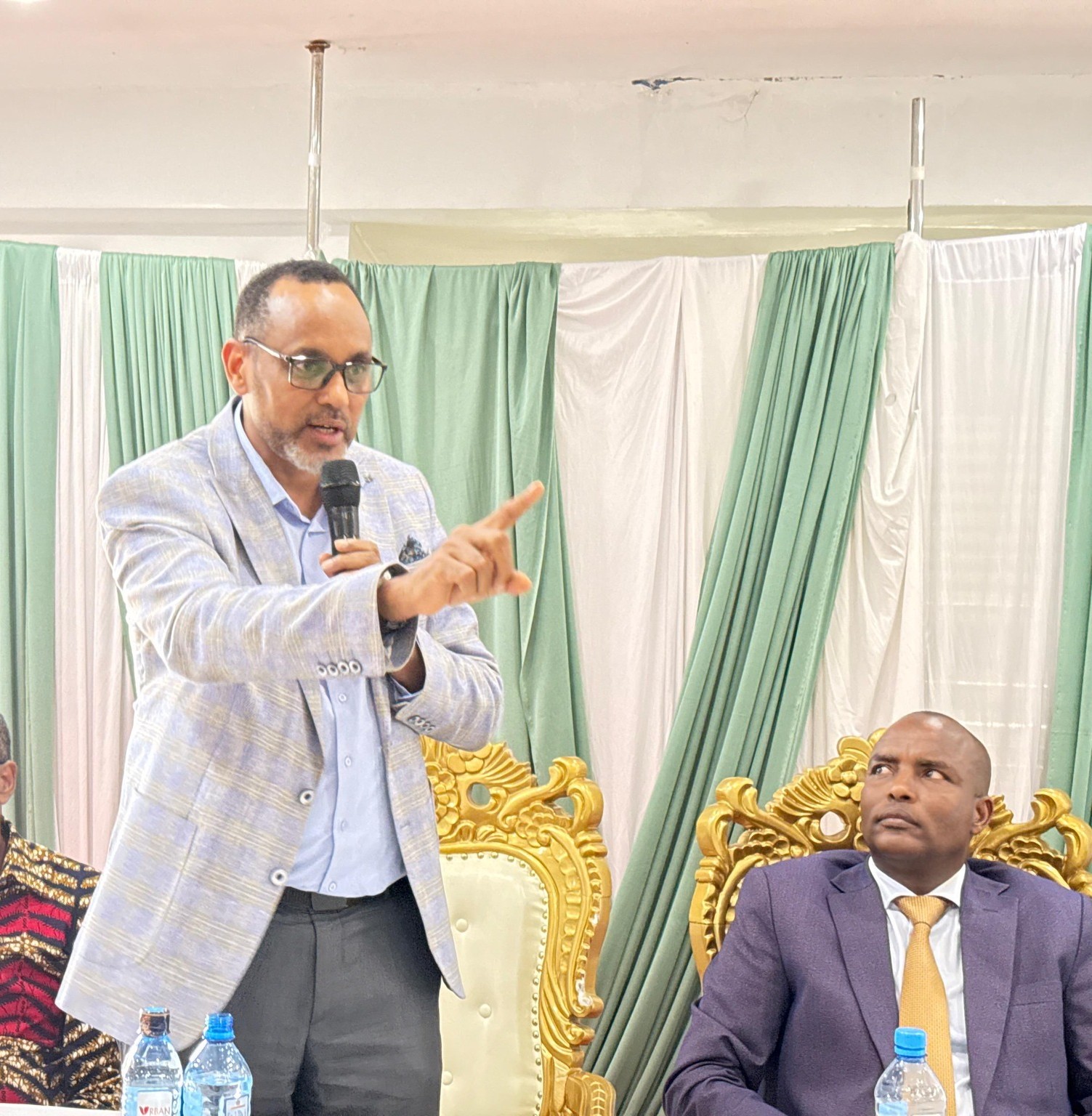
The four aspirants seeking the clan’s endorsement are Ugas Sheikh Mohamed who is the current chairperson of the Capital Markets Authority; Dr Hassan Mohamed, the owner of Nairobi South Hospital; Hassan Wehliye, a deputy director at the Ethics and Anti-Corruption Commission; and Mohamed Elmi, the non-executive chairperson of the National Livestock Development and Promotion Service.
All four contested the Wajir governorship seat in the 2022 General Election but lost to Governor Ahmed Abdullahi, who hails from the Matan clan—another Degodia sub-clan that is dominant in Wajir West.
Wajir-based political analyst Mohamed Hussein said the fragmentation witnessed in 2022, where multiple candidates from the same community split the vote, was not merely a tactical misstep but a symptom of deeper leadership and governance challenges.
“It is an open secret that the Fai sub-clan has the single largest voting bloc in Wajir. When united, they are virtually unbeatable. But when internal divisions dilute that strength, as happened in the last election, everyone loses,” Hussein said.
He noted that the renewed push for consensus reflects political maturity and lessons drawn from past defeats.
The Fai clan last secured the governorship in 2017 after rallying behind a unity arrangement. At the time, Ugas Sheikh Mohamed stepped down in favour of Mohamed Abdi, a move that paved the way for Abdi's victory in 2017.
Hussein described Sheikh Mohamed’s decision as rare in Kenya’s competitive political culture and one that should be emulated.
“Many questioned his decision to step aside, but it preserved clan unity and ultimately delivered victory. For that reason alone, he is someone the elders may look at favourably when choosing a flag bearer,” Hussein said.
Sheikh Mohamed’s political journey began in 2013 when he unsuccessfully contested the Tarbaj parliamentary seat, marking his entry into competitive politics.
By 2022, when he entered the gubernatorial race, the political landscape had shifted, but the emergence of four candidates from the same sub-clan exposed internal fractures that weakened the community’s bargaining power.
With the 2027 election cycle approaching, clan elders and political observers say the renewed push for unity could significantly reshape the Wajir governorship contest and potentially redefine the county’s political trajectory.