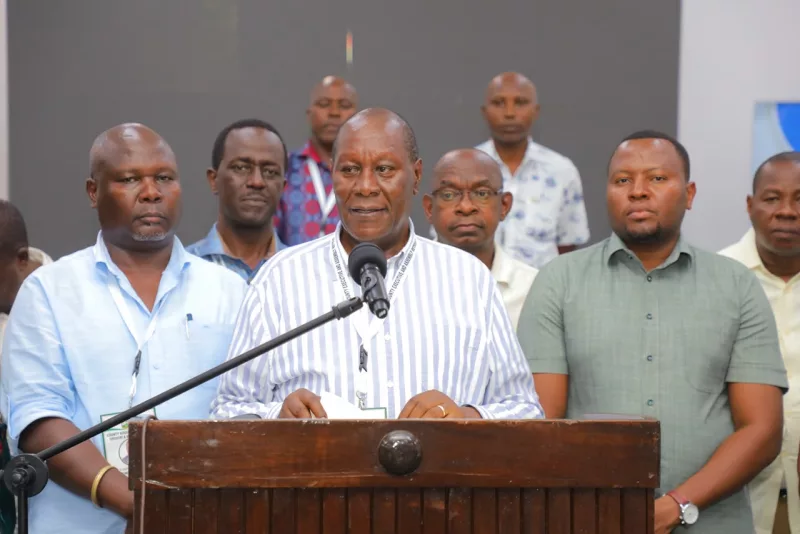
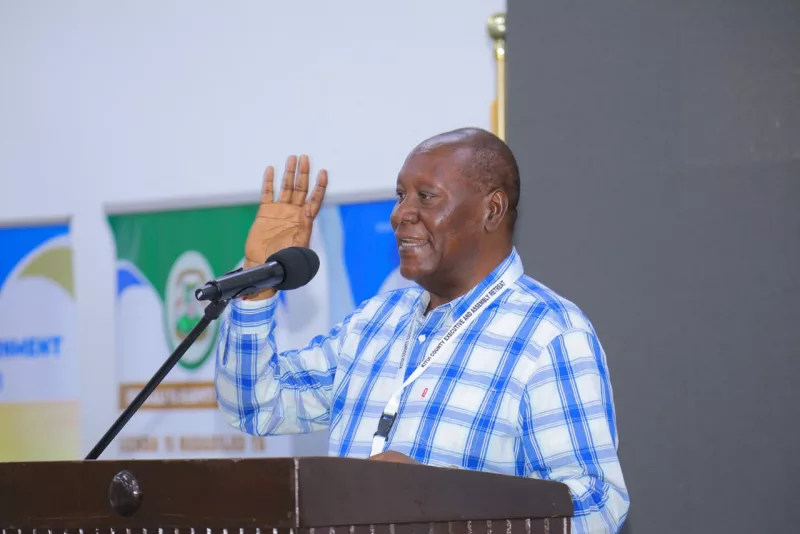
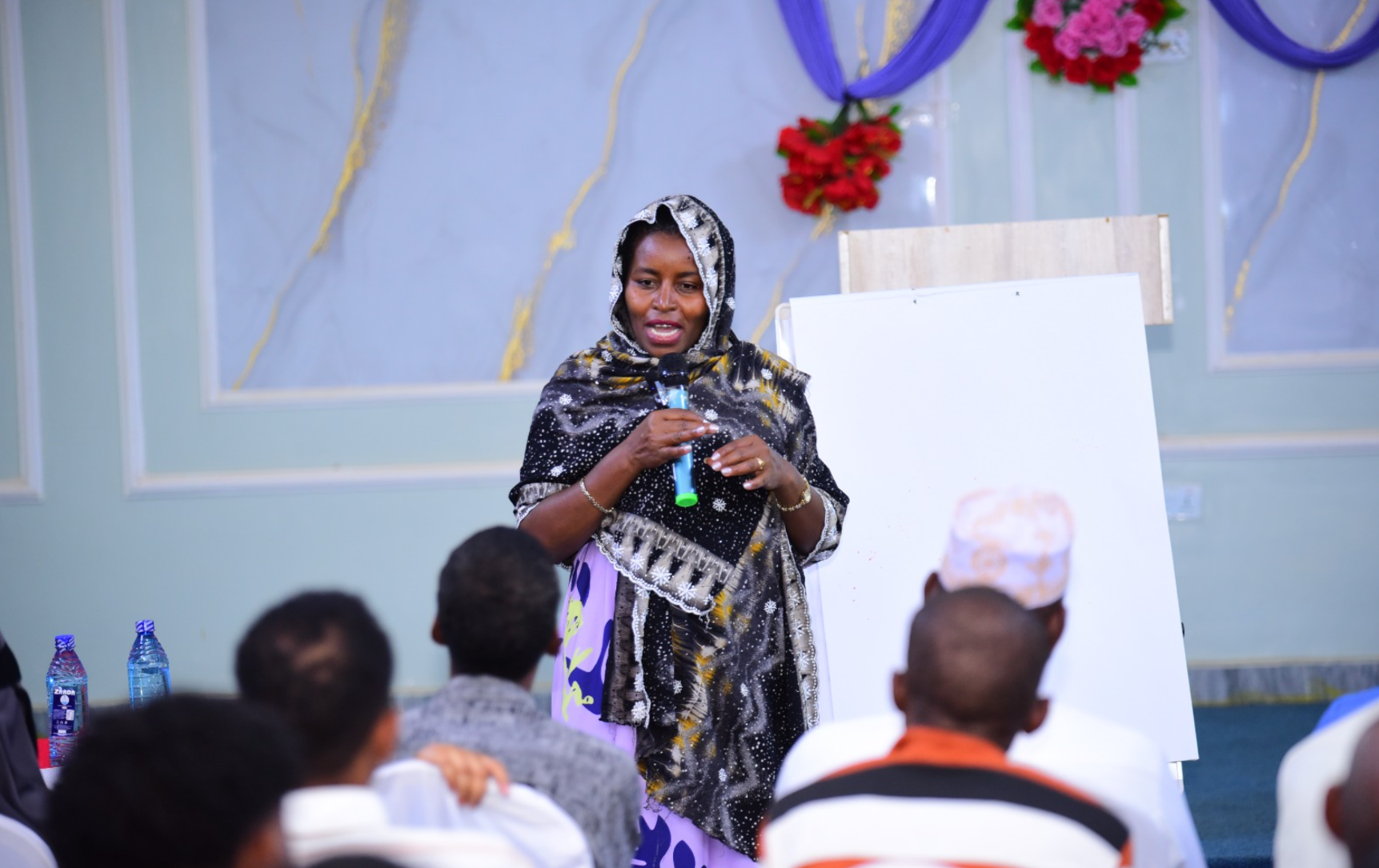
 20X Entrepreneur Founder and CEO Eunice Mburu speaks during the training in Mandera.
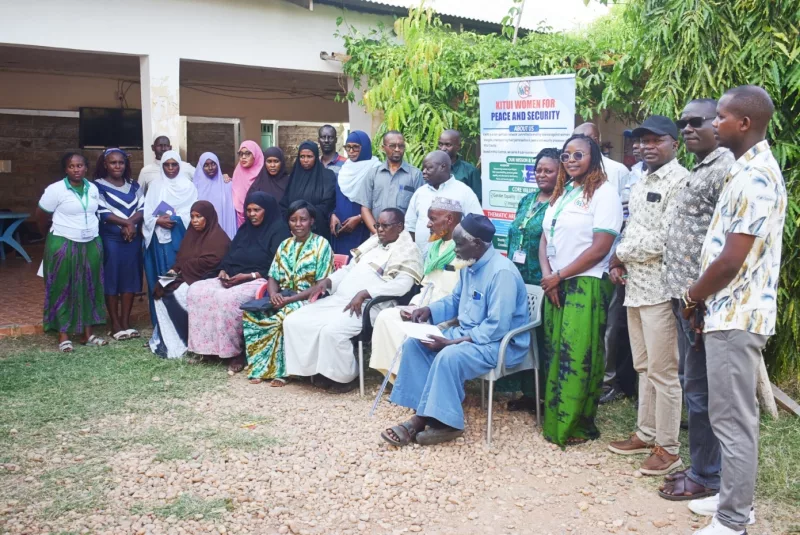
This was the key message during a Chanuka Jipange na Business Opportunities training held in Mandera this week, which brought together more than 300 micro and small enterprise owners, local leaders, and community members to interrogate one fundamental question: How can Mandera move from dependency to value creation?
The session, facilitated by 20X Entrepreneur, was part of a broader national initiative aimed at equipping micro and small businesses with mindset, skills, and strategic awareness to participate meaningfully in Kenya’s evolving economy.
Speaking during the engagement, participants and facilitators alike emphasised that Mandera’s geographical position:- bordering Ethiopia and close to Somalia, should not be viewed as a disadvantage, but as a strategic economic asset.
“Mandera is a border town. Borders are not just about security; they are toggle points for trade,” one facilitator observed. “Where there is population, even a small one, there is capital. The question is whether we see people as dependents or as customers.”
Trade flows from Ethiopia into Mandera are already active, and livestock remains a dominant economic pillar. However, much of this activity remains informal, fragmented, and low-value, limiting the benefits accruing to local entrepreneurs.
A recurring theme throughout the discussions was the county’s heavy reliance on aid, cash transfers, and relief-driven programming. While acknowledging the role of social protection, facilitators challenged participants to consider its long-term implications.
“Mandera has become highly dependent on aid and government cash transfers,” said 20X Entrepreneur Founder and CEO Eunice Mburu, the lead facilitator. “The critical question is: how do we transition from dependency to value addition? How do we move from waiting for support to building businesses that generate income, dignity, and resilience?”
Participants were encouraged to explore opportunities in livestock value chains, cross-border trade logistics, agro-processing along riverine areas, and small-scale manufacturing sectors where Mandera already has natural advantages.
Beyond the training hall, observations along the Daawa River, which forms the natural boundary between Kenya and Ethiopia, revealed active farming and irrigation activities that challenge the perception of Mandera as barren or unproductive.
“There is water. There is farming. There is movement of goods,” the facilitator noted. “The issue is not absence of opportunity, but absence of systems — systems for organisation, value addition, and market access.”
The presence of arable land along the river raises important questions about irrigation, food production, and agro-enterprise development in a county often associated solely with pastoralism.
The session also highlighted significant information asymmetries. While local administrators demonstrated awareness of national programmes such as the Social Health Authority (SHA) and youth and enterprise funds, many participants expressed scepticism, citing low approval rates and limited access.
“There is a trust gap,” one participant said. “People feel programmes exist on paper, but not in their lived reality.”
Facilitators emphasised the need for better information flow, simplified processes, and community-level engagement to bridge this divide.
Gender dynamics were evident throughout the engagement, with women forming a significant portion of the informal economy but remaining largely unheard in mixed forums. Facilitators noted that unlocking Mandera’s economic potential would be impossible without deliberately engaging women and youth as economic actors rather than passive beneficiaries.
“Women are already working,” the facilitator observed. “The task is to give structure, voice, and pathways to scale what they are already doing.”
The Mandera engagement underscored a broader national lesson: that development models designed for urban or central regions cannot be replicated wholesale in border and pastoralist counties.
“National transformation cannot be imagined from boardrooms alone,” the facilitator concluded. “It must be understood by walking the land, listening to the people, and designing solutions that respect context.”
As Kenya pursues inclusive growth under Bottom Up economic transformation agenda, Mandera’s experience raises a critical question for policymakers, development actors, and entrepreneurs alike: What would a first-world Mandera look like? and what will it take to build it?