Africa’s urban landscape is expanding rapidly, with several cities experiencing unprecedented population growth.
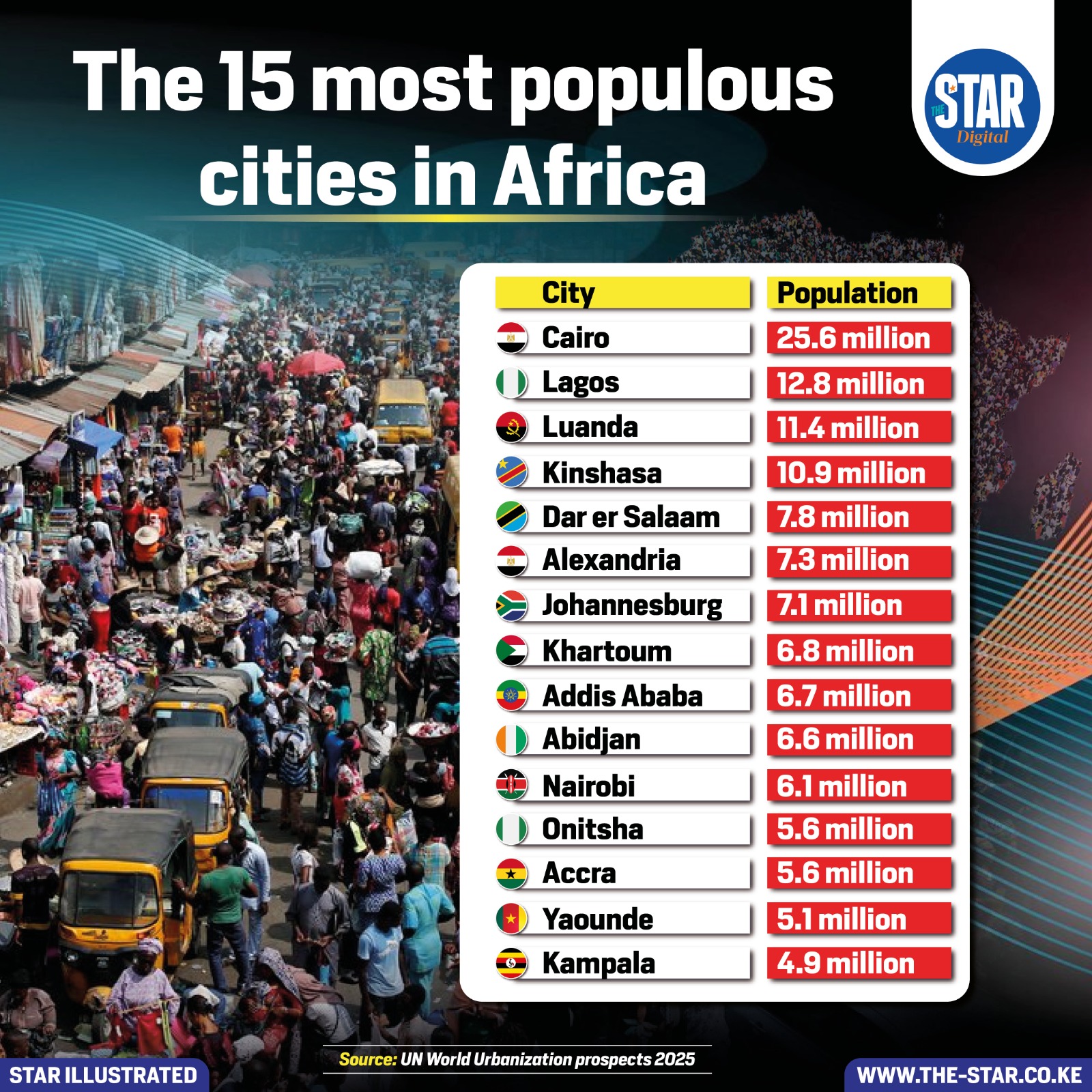
According to UN World Urbanisation Prospects 2025, Cairo tops the list with 25.6 million residents, followed by Nigeria’s commercial hub Lagos at 12.8 million, and Angola’s Luanda at 11.4 million.
The Democratic Republic of Congo’s Kinshasa houses 10.9 million people, while Tanzania’s Dar es Salaam reaches 7.8 million.
Other major urban centers include Alexandria, Johannesburg, Khartoum, and Addis Ababa, each with populations exceeding six million.
This concentration highlights both opportunities and challenges. Urban areas drive economic growth, innovation, and service delivery, yet they also face pressures on infrastructure, housing, and healthcare.
Cities like Nairobi and Onitsha, with 6.1 million and 5.6 million residents respectively, exemplify the growing strain on transport, sanitation, and urban planning.
The data highlights the need for strategic policies to manage urban expansion, enhance living conditions, and promote sustainable development. With Africa projected to become the world’s most urbanised continent in the coming decades, understanding population distribution is crucial for governments, investors, and planners shaping the future of the continent’s megacities.