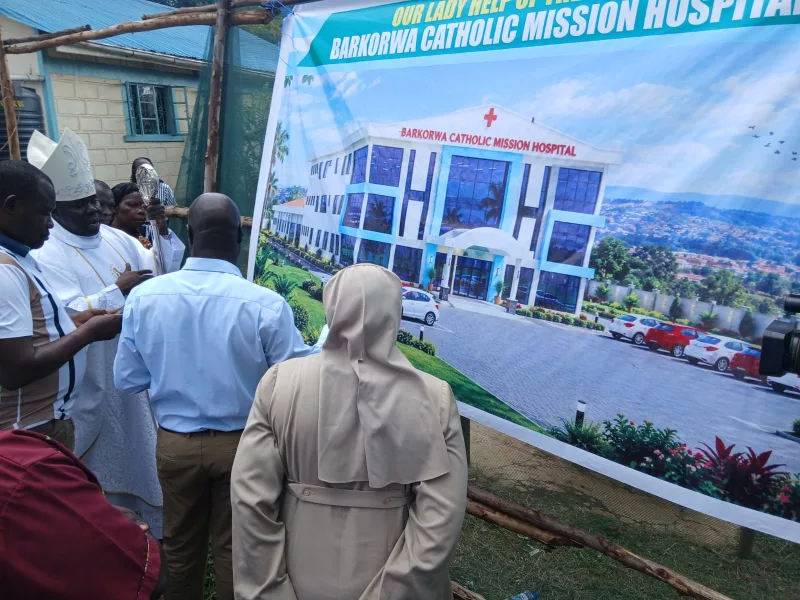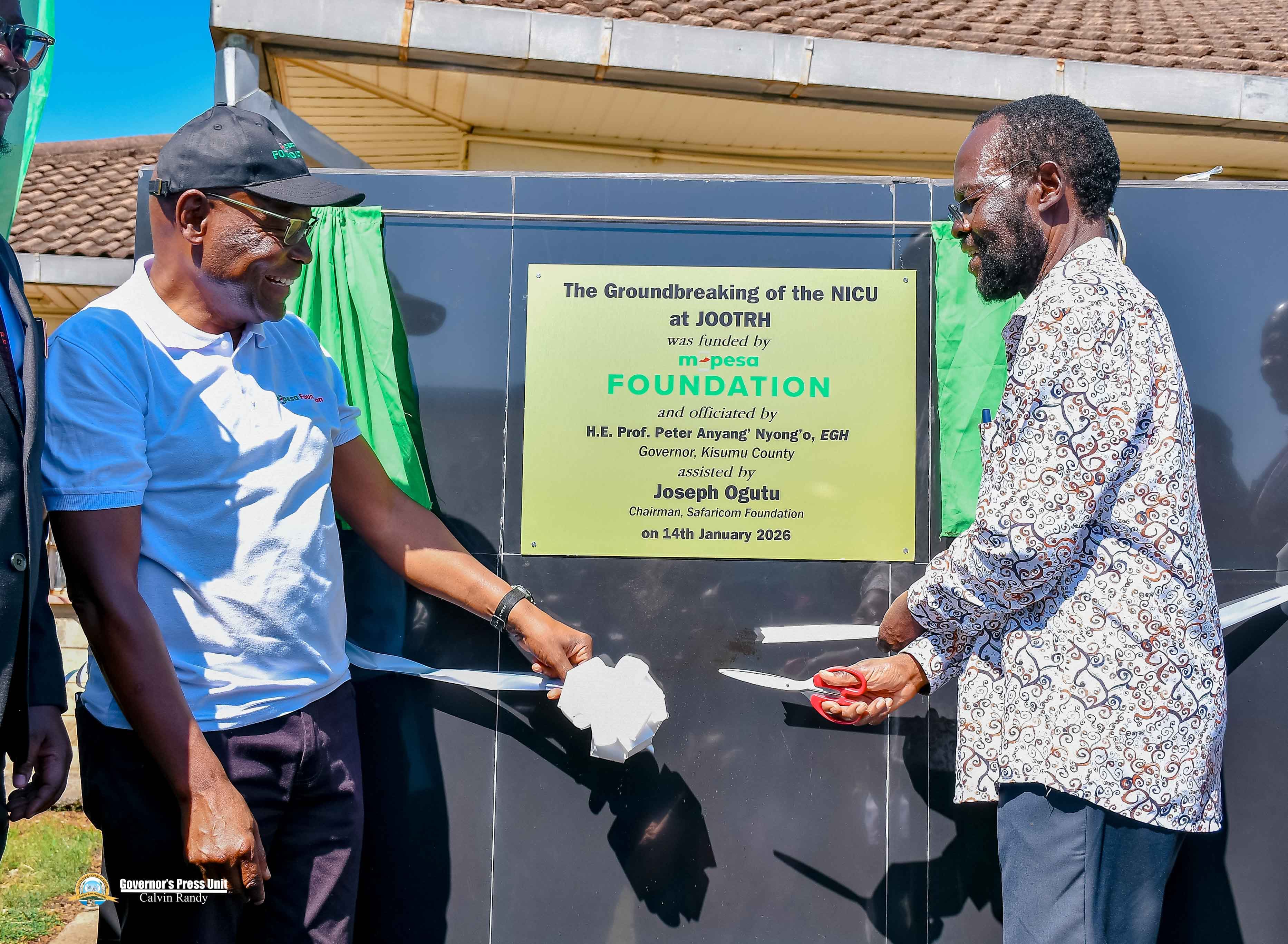
Jaramogi Oginga Odinga Teaching and Referral Hospital (JOOTRH) has broken ground on a modern Paediatric and Neonatal Intensive Care Complex at Obama Children’s Hospital, a major boost for child health services in the lake region.
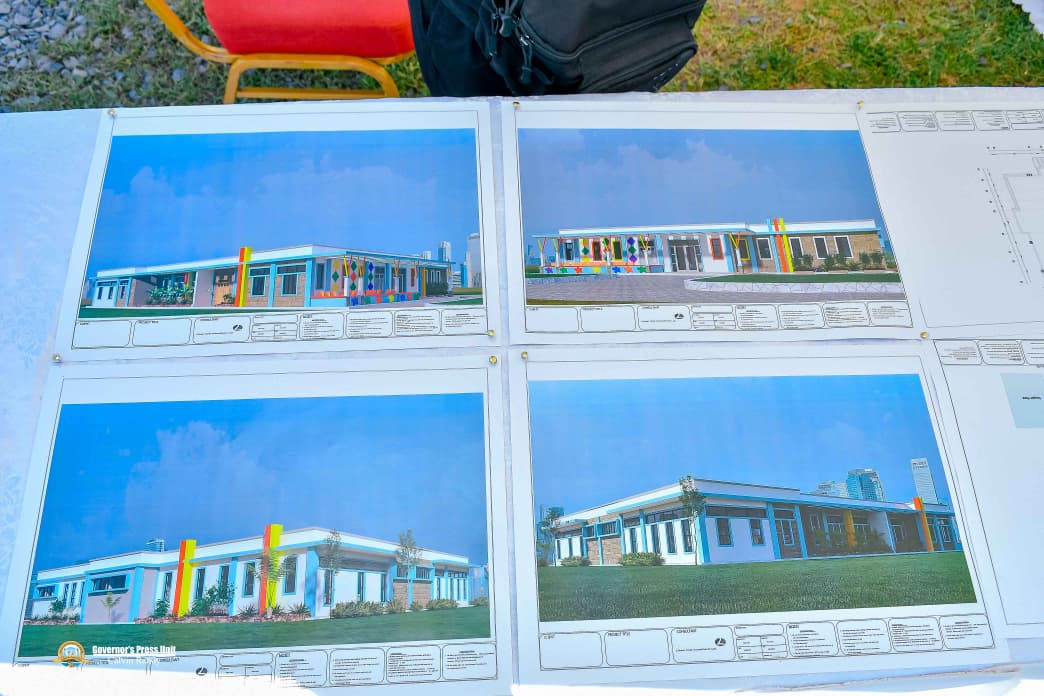
The Sh123 million project is funded through a Sh98 million grant from the M-PESA Foundation, with JOOTRH contributing Sh25 million. Once completed, the complex will house an eight-bed Paediatric Intensive Care Unit (Picu) and a nine-bed Neonatal Intensive Care Unit (Nicu).
Additional facilities will include consultation rooms, a pharmacy, boardrooms and other supporting clinical spaces. Construction is expected to take 10 months, with operations set to begin by October.
Safaricom Foundation chairman Joseph Ogutu said the investment responds to the growing demand for specialised paediatric critical care in a region serving an estimated 10 million people.
“This hospital serves a very large catchment area and is already highly congested. This facility will be a game changer for neonatal and paediatric care, easing the burden on children and mothers who currently struggle to access specialised services,” Ogutu said.
He added that the foundation will ensure the units are fully equipped to meet modern critical care standards.

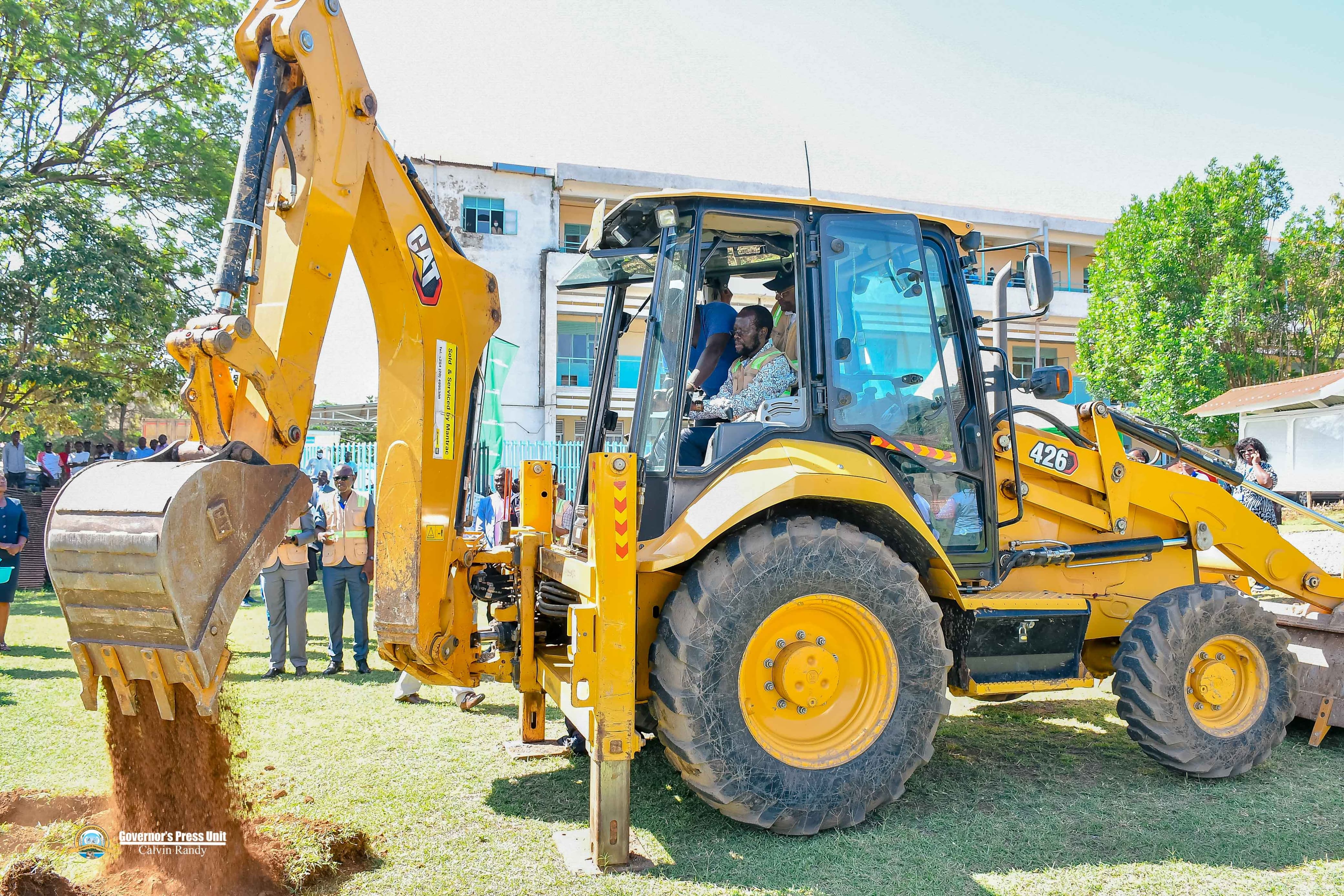
Kisumu Governor Prof Anyang’ Nyong’o described the project as a decisive step toward addressing a long-standing gap in Kenya’s public health system, where neonatal and paediatric intensive care has lagged behind adult ICU services.
“In this region, JOOTRH, our principal referral hospital, is only now operationalising its first dedicated 10-bed PICU/HDU. For many years, we have depended heavily on Moi Teaching and Referral Hospital in Eldoret, which operates at near-constant full capacity,” Nyong’o said.
He noted that when referrals fail, children are often treated in adult ICUs or general wards using equipment not designed for their size or physiology.
“This is not a failure of dedication by our health workers; it is a structural gap in our system — and it is a gap we must close,” the governor said.
Nyong’o highlighted the human cost of the shortage, noting that Kisumu county has a sickle cell carrier rate of nearly 32 per cent, placing many children at risk of life-threatening crises requiring advanced monitoring and care.
Malaria and sepsis, still among the leading causes of paediatric admissions, also record significantly lower survival rates without access to dedicated intensive care.
“Most troubling is that approximately one-third of paediatric deaths in our region occurs within the first 24 hours of admission. These are not deaths from incurable conditions, but from delayed or inadequate access to critical care at the most decisive moment,” he said.
The governor described the Nicu project as a strategic social investment rather than charity.
“It is the kind of partnership that strengthens public institutions and delivers lasting impact directly benefiting the public,” Nyong’o said.
He added that the facility forms part of a broader county strategy to build sustainable critical care capacity through three pillars: infrastructure, human resources and appropriate technology.
“On infrastructure, we are ensuring reliable oxygen and power systems and clinical-standard space. On human resources, we are addressing shortages of intensivists and specialised nurses through targeted training and deployment. On technology, we are transitioning from improvised adult equipment to paediatric- and neonatal-specific devices,” he said.
Nyong’o said the project reinforces JOOTRH’s position as the region’s leading referral hospital as it advances toward Level 6A status.
“No child should have to travel to Nairobi or Eldoret to survive a treatable condition. These services are for the newborn struggling to breathe, the child battling severe infection and the parent seeking hope in the most difficult hour,” he said.
JOOTRH CEO Dr Joshua Clinton Okise welcomed the development, saying the units are central to the hospital’s ambition to become a referral and teaching hub for East and Central Africa.
“We receive patients not only from the lake region economic bloc but also from Tanzania, Uganda, Burundi, Somalia and even Nairobi and the Coast,” Dr Okise said.
Dr Lollah Molla, head of Obama Children’s Hospital, said the project would bridge a critical care gap in the region. Currently, the hospital operates with six paediatric critical care beds, occasionally stretching to 10 due to overwhelming demand.
She added that the new building has been designed with future expansion in mind, potentially accommodating a comprehensive paediatric complex.
“This is more than a building; it is a foundation for a referral centre of excellence for children in the lake region,” Dr Molla said.
Representing the Ministry of Health, Dr Hezron Omollo reaffirmed government support for expanding specialised healthcare infrastructure.
Once operational, the Nicu and Picu are expected to improve survival outcomes for critically ill newborns and children, reduce long-distance referrals, and strengthen JOOTRH’s role as a teaching, research and referral hospital.