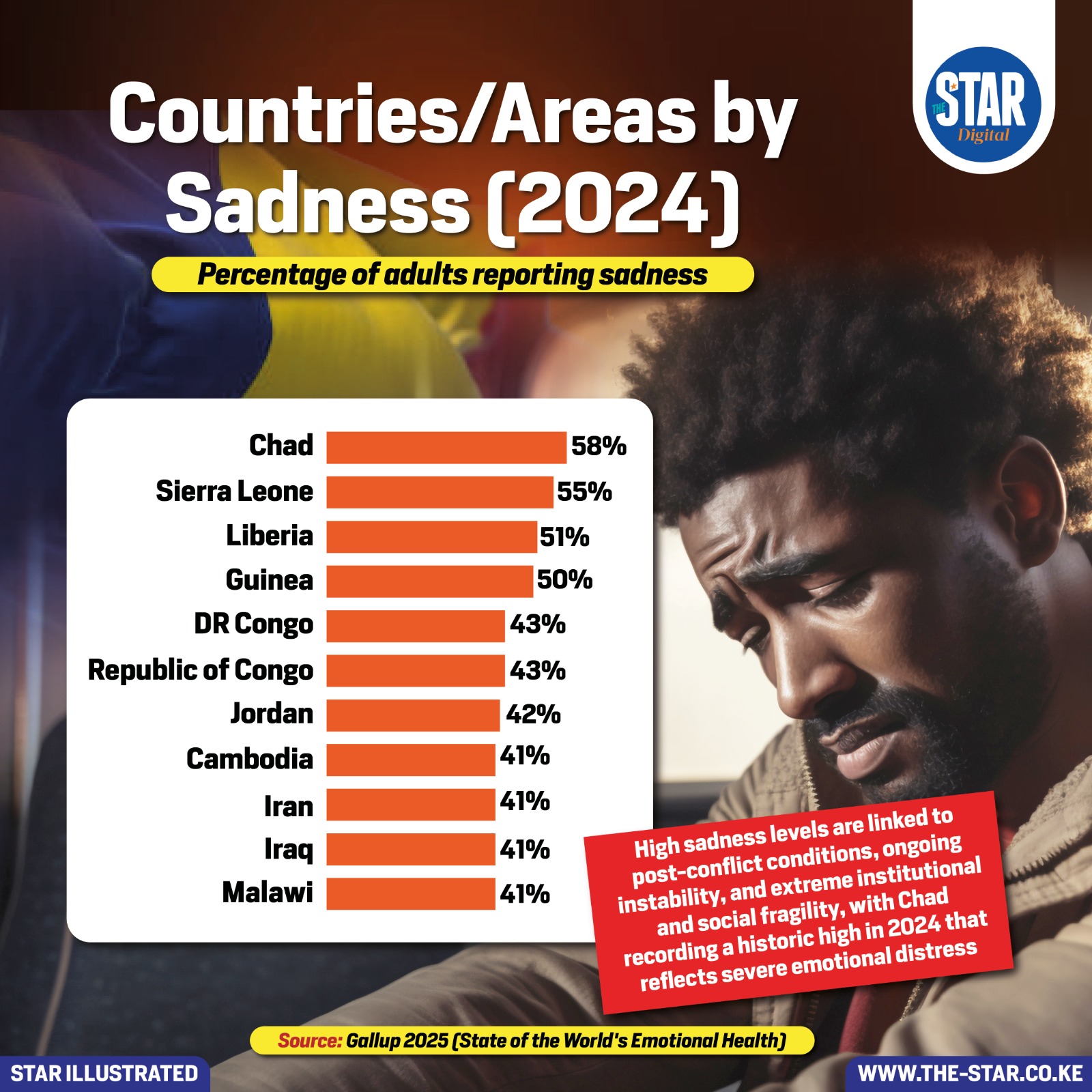
In 2024, Chad recorded the highest global sadness levels, with 58% of adults reporting frequent emotional distress.
Sierra Leone followed at 55%, Liberia at 51%, and Guinea at 50%, placing West Africa at the center of the global emotional burden. These figures reflect the lingering effects of post-conflict recovery, institutional fragility, and socio-economic instability.
The Democratic Republic of Congo and Republic of Congo both reported 43%, indicating widespread emotional strain across Central Africa.
Jordan, Cambodia, Iran, Iraq, and Malawi each registered 41%, showing that emotional distress extends beyond Africa into parts of the Middle East and Southeast Asia.
The data suggests a strong correlation between sadness and regions facing political instability, economic hardship, or fragile public services. In Chad’s case, the historic high points to compounded pressures from governance challenges, insecurity, and limited mental health infrastructure.
These findings raise critical questions about the global emotional health landscape. While sadness is a universal human experience, its prevalence in certain regions signals deeper systemic issues.
The emotional toll in post-conflict and fragile states may hinder recovery, productivity, and social cohesion.
Addressing sadness at scale requires more than clinical interventions—it demands inclusive governance, economic stability, and community-based support systems.