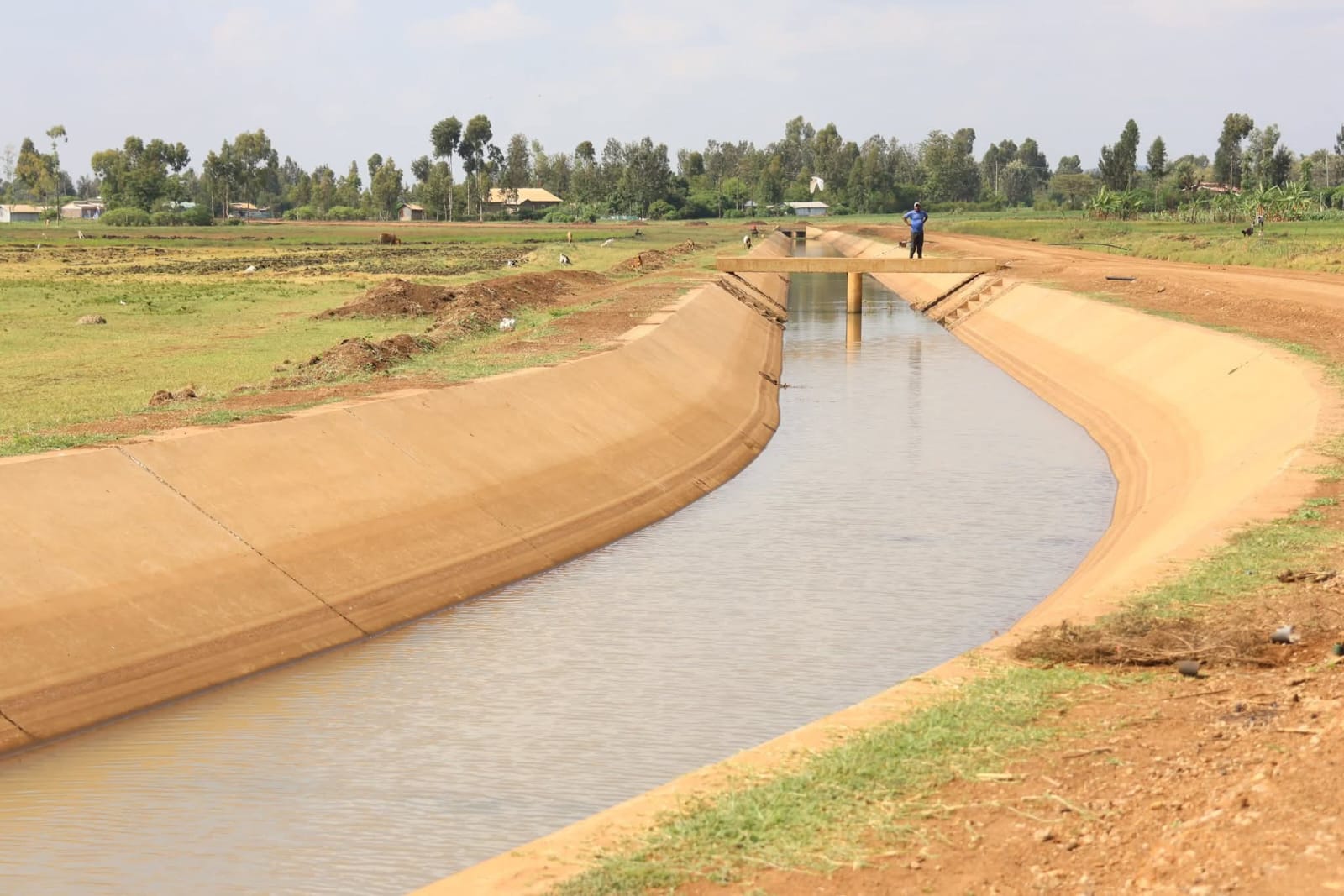
 One of the new canals channeling water from Thiba Dam to Mwea Irrigation Scheme/ ALICE WAITHERA
The expansion of the Mwea Irrigation Scheme in Kirinyaga is significantly boosting rice production and improving incomes for farmers, with beneficiaries now calling on the government to invest further in the project.
Farmers in Karaba section report increased rice yields following improved and reliable water supply to their farms.
The expansion has increased the acreage under irrigation and enhanced water distribution, leading to a sharp rise in annual rice production.
The development has involved construction of new canals, improvement of water management systems and increasing efficiency in farming, including value addition.
These improvements have transformed farming practices and reduced the challenges previously associated with water shortages.
Mwea Irrigation Scheme chairperson Peter Chege said farmers struggled to access adequate water for irrigation in the past, limiting production to a single crop season each year.
However, the completion of Thiba Dam has significantly increased water availability in the section, enabling farmers to grow rice for up to three seasons annually.
“The steady water supply has completely changed farming here. We can now plant rice three times a year, unlike before when water shortages allowed only one season,” he said.
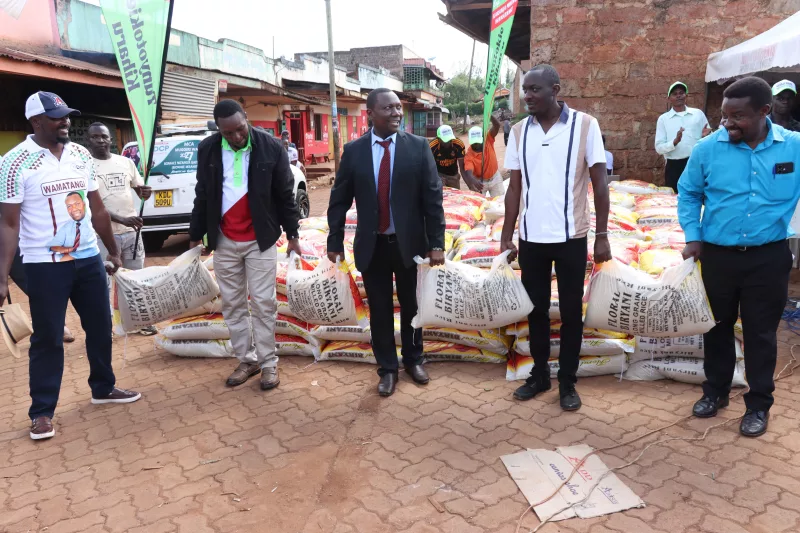
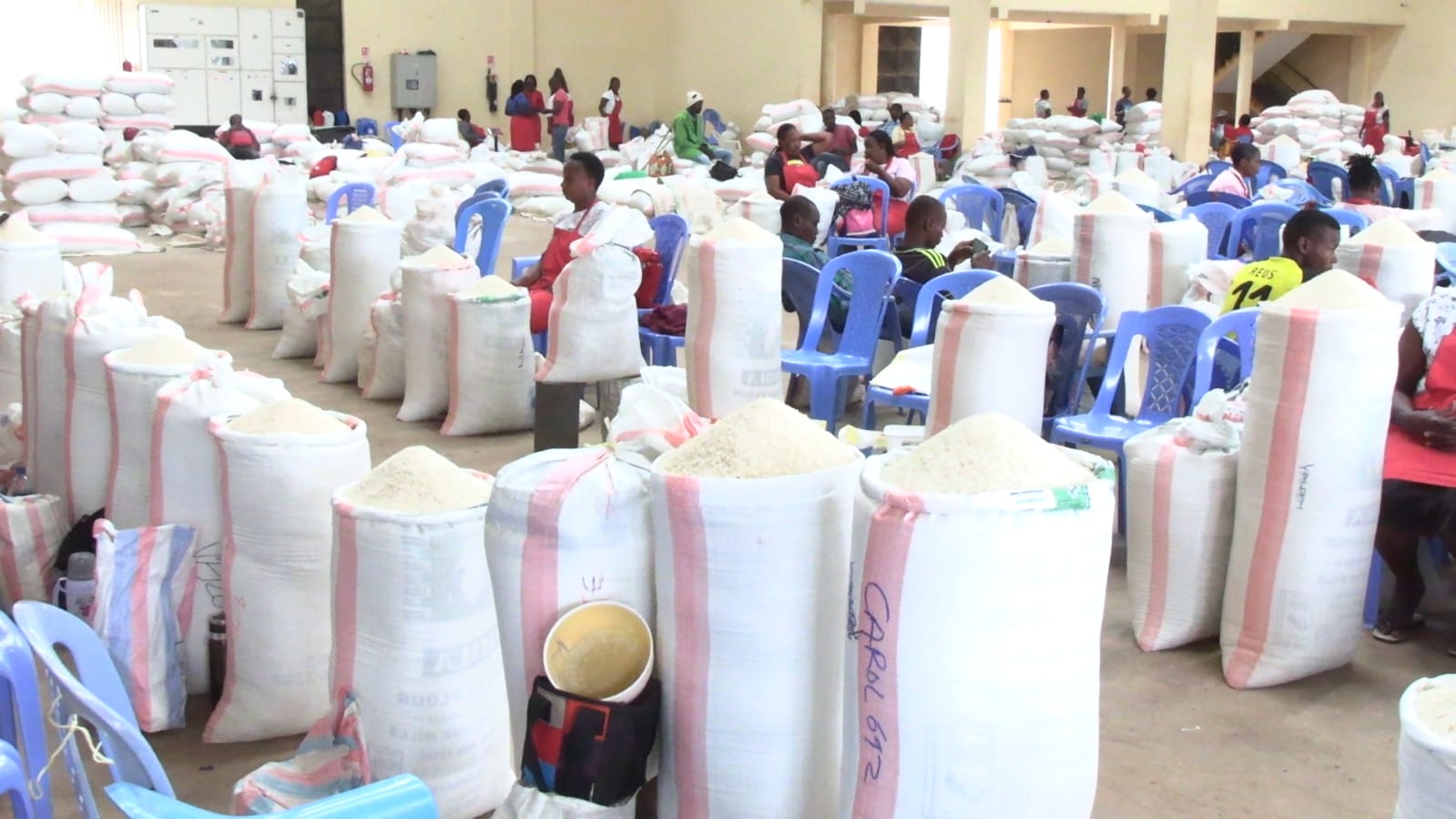 Farmers queue to sell their produce to Mwea Rice Growers Multipurpose Cooperative Society in Kirinyaga county /ALICE WAITHERA
The expanded irrigation scheme has also contributed to job creation and improved livelihoods for local residents, as more people return to farming.
Farmers said the project plays a critical role in enhancing national food security and reducing Kenya’s reliance on imported rice.
Chege noted that the expansion of irrigation canals has had a positive impact on rice production, despite occasional challenges during prolonged dry seasons.
“We have introduced better water management measures to ensure fair distribution so that all farmers benefit, even when water levels are low,” Chege said.
He added that many residents who had abandoned farming have returned to the fields, driven by improved yields and better returns.
Chege called on the government to consider constructing an additional dam along River Nyamindi to further support the expansion of the sScheme.
The project is managed by the State Department for Irrigation through the National Irrigation Authority and aligns with national efforts to increase domestic rice production and reduce imports, with an annual production of about 160,000 metric tonnes.
Kenya currently produces about 304,000 metric tonnes of rice annually against an estimated demand of 1.3 million metric tonnes, forcing the country to rely heavily on imports to bridge the deficit.
Chege said expanding irrigations schemes such as Mwea is key to closing this gap and strengthening food security.