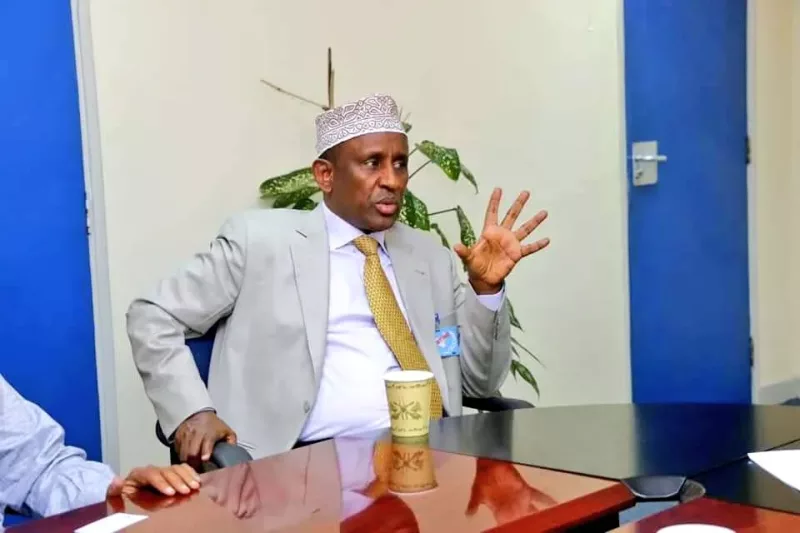
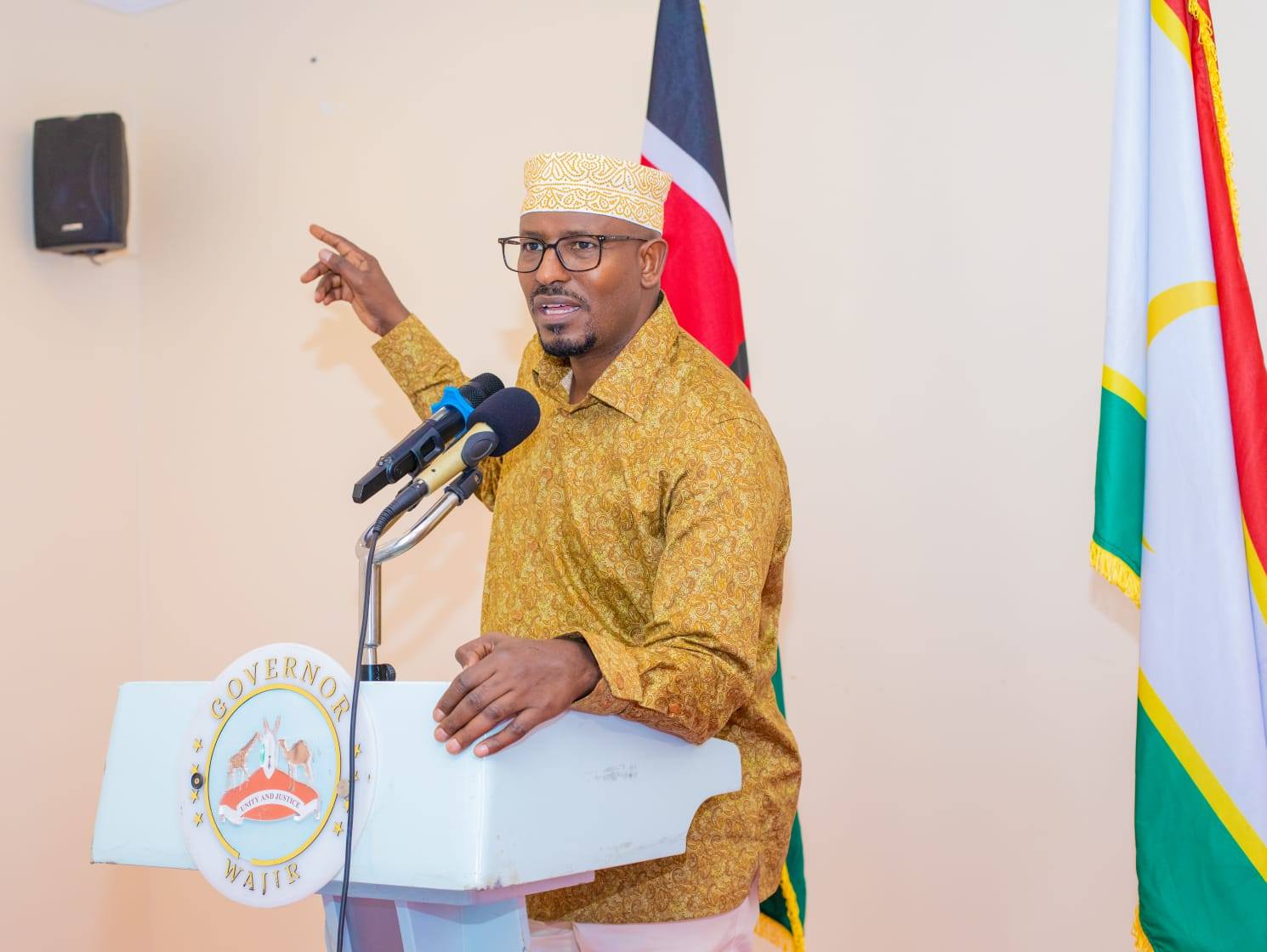
 Wajir Governor Ahmed Abdullahi. He has challenged Gachagua to back his claims with evidence./STEPHEN ASTARIKO
  Residents of Wajir going about their business. Former Deputy
President Rigathi Gachagua recently criticized leadership in Northern Kenya./STEPHEN ASTARIKO
Residents of Wajir going about their business. Former Deputy
President Rigathi Gachagua recently criticized leadership in Northern Kenya./STEPHEN ASTARIKO
Former Deputy President Rigathi Gachagua’s recent blunt criticism of leadership in northern Kenya has triggered an unusually open debate across the region.
While sections of residents, professionals and intellectuals publicly agreed with his assessment, elected leaders pushed back strongly.
What began as a national discussion on Grade 10 admissions into ‘elite’ schools quickly escalated into a broader interrogation of devolution and its impact on one of Kenya’s historically marginalised regions.
In counties such as Wajir, Garissa and Mandera, the comments have opened the floodgates for conversations long held behind closed doors—about accountability, governance and the fate of billions of shillings channelled to the region since the introduction of county governments in 2013.
Ahmed Hussein, a Garissa-based human rights defender, said in an interview that the former DP voiced frustrations that locals have quietly harboured for years.
“He said what many people fear to say openly. He questioned our leadership and why devolution has not translated into real development. When you look around, you ask yourself where all the money went,” Ahmed said.
He pointed to the sharp contrast between annual county budgets and the lived reality of residents, arguing that the region has seen little transformation despite receiving substantial allocations over the past decade.
“Devolution brought resources, but we don’t see the impact. Our leaders are elected, then disappear to Nairobi. They invest and live there while services here remain stagnant,” he said.
Mukhtar Dahir, head of Garissa county Human Rights Defenders Network, described the debate sparked by Gachagua as long overdue.
“This exchange is revealing. While the former Deputy President’s tone may be harsh, there are uncomfortable facts in what he is saying. His assessment of regional leadership is factual,” he said.
“The leadership record is indefensible. There is very little development to show. Beyond infrastructure, there is a failure of ideas and vision.”
Also in support of Gachagua’s statement was Ismail Hussein, a retired teacher in Wajir, who noted he was speaking for the voiceless in the region.
“Haven't we seen resources meant for development consumed by tribal mobilisation, token projects and outright looting. This automatically leaves the leaders unable to defend themselves against criticism,” Hussein said.
But the criticism has drawn rebuttals from elected leaders, who say the remarks ignore historical injustices and oversimplify complex realities.
Wajir Governor Ahmed Abdullahi challenged Gachagua to back his claims with evidence.
“I am ready for an objective comparison,” Abdullahi, who is also the Council of Governors chair said.
“Let him choose any county and any independent agency to assess what devolution has achieved in Wajir over the eight years I have served.”
He dismissed suggestions that devolution alone should have equalised the country within a decade, calling such expectations unrealistic.
He also rejected comparisons between county-level development and nationally funded infrastructure projects elsewhere.
“National roads and electricity connections in other regions were not built through devolution.”
Mandera Senator Ali Roba mounted a broader defence, warning against what he termed ‘historical amnesia’.
He likened the criticism to elite detachment, referencing the famous “let them eat cake” metaphor from the French Revolution.
“When people mock northern Kenya for lacking skyscrapers, they erase decades of deliberate exclusion,” Roba said.
He argued that for over half a century, national investment largely bypassed the region.
“Major infrastructure, industries and national institutions were built elsewhere, while this region was neglected during colonial times and long after independence,” he said.
According to the senator, devolution inherited counties with no functioning systems, forcing early administrations to build from the ground up.
“We had to establish training colleges, medical institutions, urban roads and even support security operations,” he said, noting that insecurity compelled counties to fund initiatives normally handled by the national government.
Roba acknowledged shortcomings but rejected ridicule.
“Our leadership is not perfect. But no one has the moral authority to mock us without objectively comparing devolution investments alone, stripped of decades of prior national spending elsewhere.”