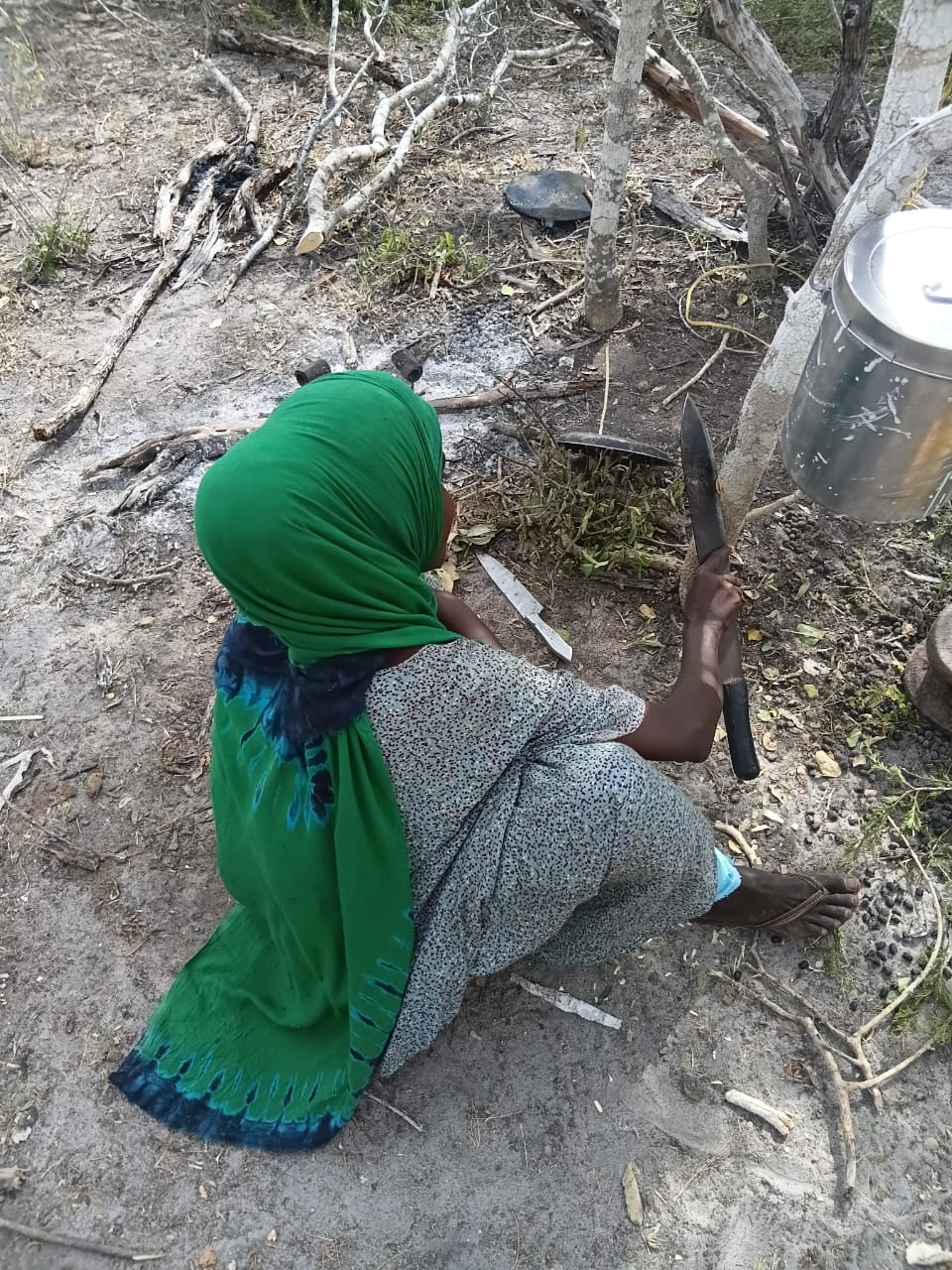
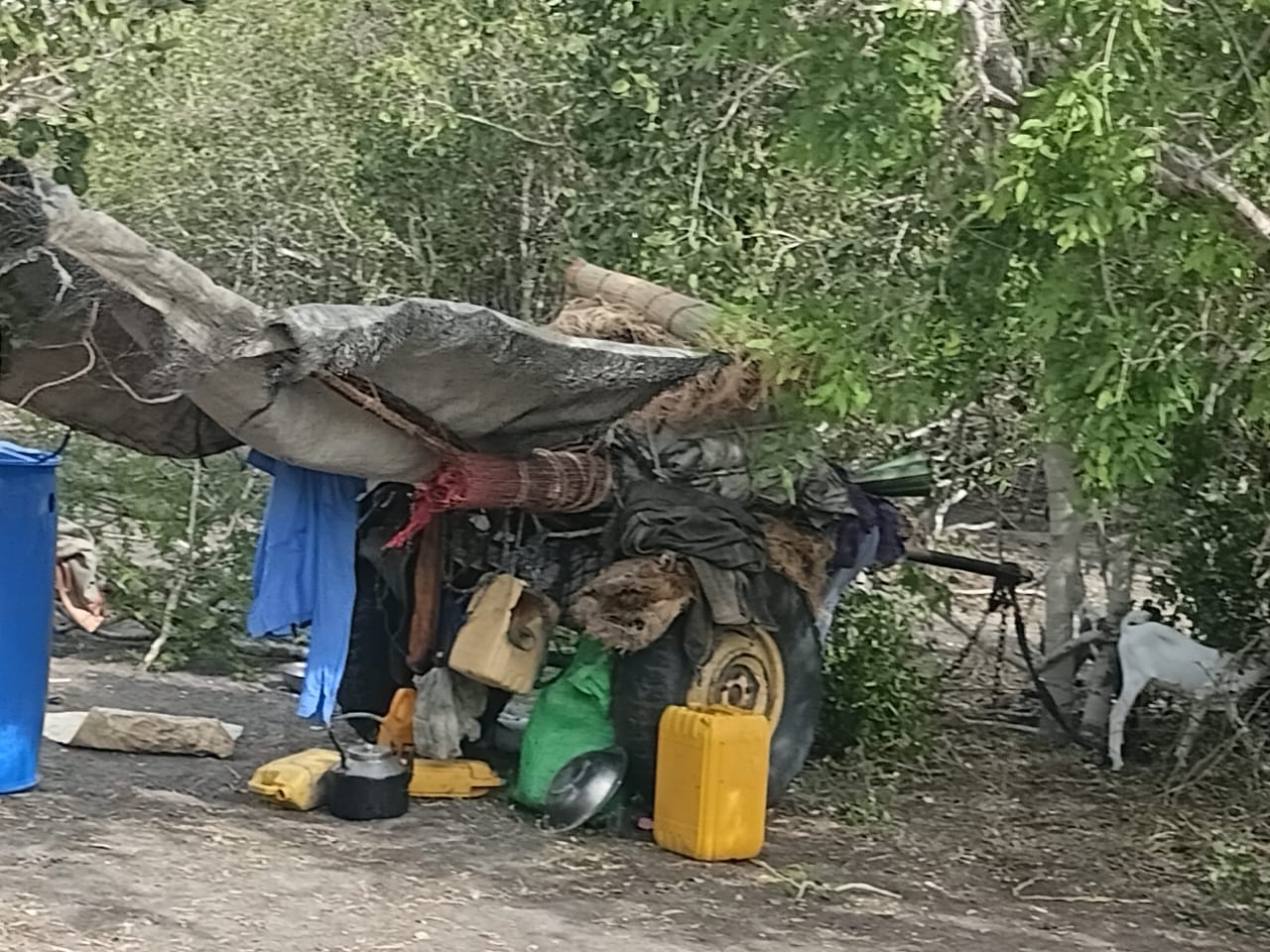
 A family from Somalia at a makeshift structure in Hadi
location, Holugho, Garissa sub county.
A family from Somalia at a makeshift structure in Hadi
location, Holugho, Garissa sub county.
A biting drought affecting northern Kenya and neighbouring Somalia has triggered increased cross-border migration of livestock and families into border villages in Hulugho, Garissa county, raising fears of a deepening humanitarian crisis.
Families fleeing Somalia are crossing into Kenya in search of pasture, water and food as prolonged dry conditions continue to devastate livelihoods on both sides of the border.
The situation has been compounded by inter- and intra-county livestock movements from Garissa, Mandera and Wajir counties, further straining already scarce resources in the region.
The current emergency follows three consecutive failed rainy seasons — the October–December 2024 short rains, the complete failure of the March–May 2025 long rains, and the October–December 2025 short rains.
While better-off households have managed to transport livestock by trucks to areas with relatively better pasture, poorer families are bearing the brunt of the crisis. Many report rapid livestock deterioration and deaths, wiping out their primary source of livelihood.
Increased southward migration towards Boni Forest has also been observed, with the forest serving as a fallback area for pasture and water amid widespread depletion of grazing lands.
Abdi Noor, a father of six from Somalia, is among those affected. He is currently camping with his family in Hadi, Hulugho subcounty.
“We have lost everything. All my goats and camels are dead. There is no pasture and no water. My children sleep hungry, and I do not know what tomorrow holds,” Noor said. “I had to act fast and cross over to see if we could get any assistance.”
Amina Hassan, a mother of five who also recently arrived from Somalia, described the journey as heartbreaking, saying desperation forced her family to move.
“We walked for days with our children. We came here because we heard there might be help, but life is still very hard,” she said. “My appeal to the government of Kenya and well-wishers is to rescue us before we all perish.”
Noor Abdi Damoy, the Chief of Hadi location, appealed for urgent food aid, warning that many families were already skipping meals.
“I want to bring the drought situation to the attention of all relevant authorities. I am currently hosting victims of drought who need food, water and shelter. Some have young children,” Damoy said.
He warned that failure to act swiftly could result in loss of lives. “There is an urgent need for intervention before the situation escalates into deaths,” he added.
The unfolding crisis has intensified pressure on the national government to declare drought a national disaster.
Last month, MPs from Arid and Semi-Arid Lands (Asal) counties urged the government to take that step, citing growing distress among pastoralist communities.
Led by Eldas MP Adan Keynan, chair of the Northern Kenya Parliamentary Group, the legislators said a disaster declaration would unlock emergency funding, streamline humanitarian response and enable international partners to scale up interventions.
They added that leaders from the region were also pursuing longer-term, sustainable solutions to address the worsening drought.
Below-average rainfall, compounded by La Niña conditions and a negative Indian Ocean Dipole, has resulted in unusually high temperatures and suppressed rainfall across much of northern Kenya.
The cumulative impact has left water sources depleted, livelihoods disrupted and thousands of families struggling to survive, particularly in Asal counties.
INSTANT ANALYSIS
The unfolding drought crisis in northern Kenya exposes the deep vulnerability of pastoralist livelihoods to climate shocks and weak safety nets. Cross-border migration from Somalia into Garissa underscores the regional nature of the emergency, where environmental stress ignores political boundaries. Repeated failed rains have eroded coping mechanisms, leaving poorer households disproportionately affected as livestock deaths wipe out incomes and food security. The strain on host communities heightens risks of resource conflict, disease outbreaks and malnutrition. Without a formal national disaster declaration, response remains fragmented. Urgent humanitarian aid must be matched with long-term investments in climate resilience, water infrastructure and sustainable pastoral systems.