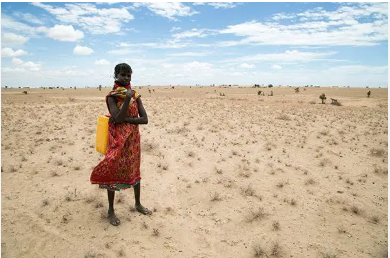
Prolonged drought and recurring climate shocks are undermining healthcare delivery and livelihoods in Turkana, a county government official has warned.
Health chief officer Gilchrist Lokoel said climate change has intensified droughts, leading to loss of livestock, displacement of communities and increased human–wildlife conflict.
He said the climate shocks have weakened key community health strategies such as Integrated Community Case Management, which had previously helped bring essential healthcare services closer to households.
“Climate-driven malnutrition is one of the most pressing challenges affecting children in our county, as well as women, caregivers and the elderly,” Lokoel said.
According to the county, malnutrition rates among children under five remain alarmingly high.
The World Health Organization recommends that malnutrition levels remain below 15 per cent, but Turkana records rates ranging between 23 and 36 per cent annually, following predictable seasonal patterns.
Lokoel cited findings from previous studies, including the Nawiri longitudinal study, which showed that economic shocks worsened by climate change are major drivers of malnutrition, threatening the county’s social and economic stability.
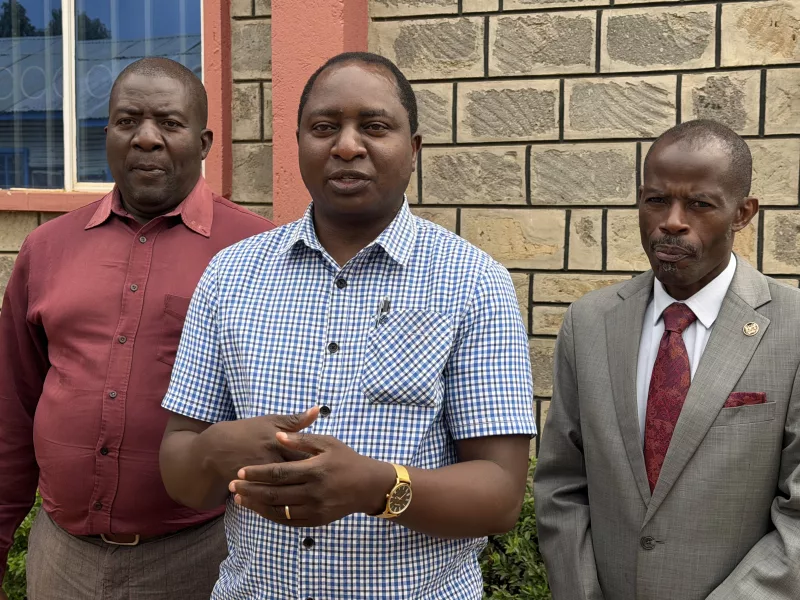
He spoke when Turkana hosted a joint delegation from Duke University and Moi University to explore areas of partnership and collaboration, with a focus on global health, climate change and health systems strengthening.
The delegation was led by Wendy O’Meara, a professor of medicine and global health at Duke University. The team discussed research, training and locally driven solutions to address the growing health impacts of climate change.
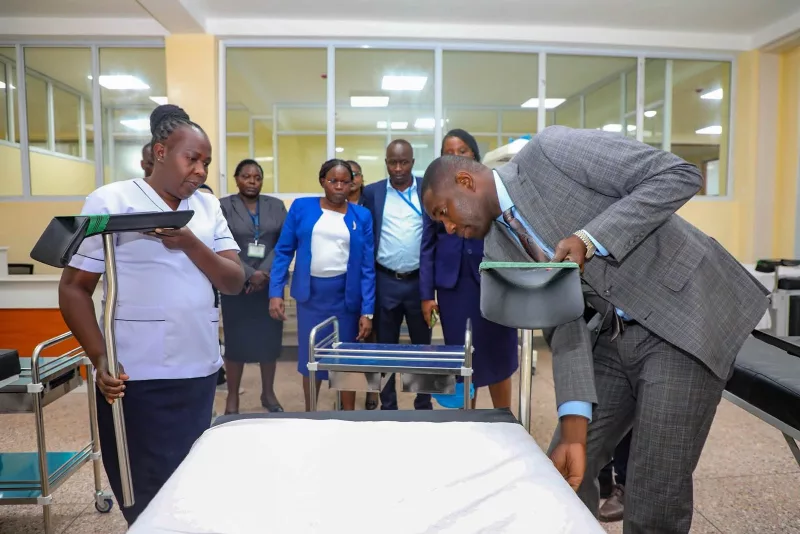
Lokoel said the county remains committed to its vision of a healthy population and will continue investing in health infrastructure, human resources, medical products and technologies, health information systems and governance to strengthen services.
“We also need to enhance climate–health surveillance and early warning systems as part of our mitigation efforts,” he said.
Lokoel said climate data should be systematically integrated into health planning to improve preparedness and response.
He raised concerns over maternal, neonatal and child health outcomes, noting that Turkana’s maternal mortality ratio stands at 381 per 100,000 live births, while the under-five mortality rate is 66 per 1,000.
“These figures are likely to worsen under increasing climate stress and persistent malnutrition,” he warned.
O’Meara welcomed the dialogue and highlighted the strong potential for research collaboration between Turkana county and the joint university team.
“There is a lot to reflect on. My role will be to act as a matchmaker, linking Duke colleagues with expertise in areas such as mental health, maternal and neonatal health, and climate science to create platforms for deeper exchange and collaboration,” she said.
O’Meara emphasised the importance of locally led and context-appropriate interventions developed with and for the communities served, noting that sustained partnerships could deliver meaningful and lasting solutions.
Lokoel said research and learning partnerships would help generate evidence-based interventions capable of influencing policy and safeguarding the future of healthcare in the county.
“Through research and learning collaborations, we can generate the evidence needed to inform policy and improve health outcomes for the people of Turkana,” he said.
The county is currently implementing several programmes, including improving access to healthcare services and increasing Social Health Authority registration, as part of efforts to enhance health outcomes for residents.