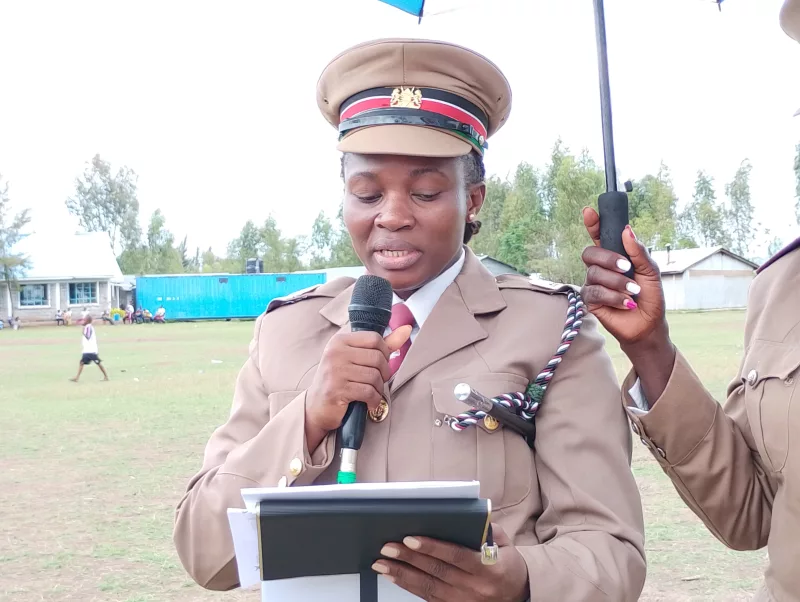
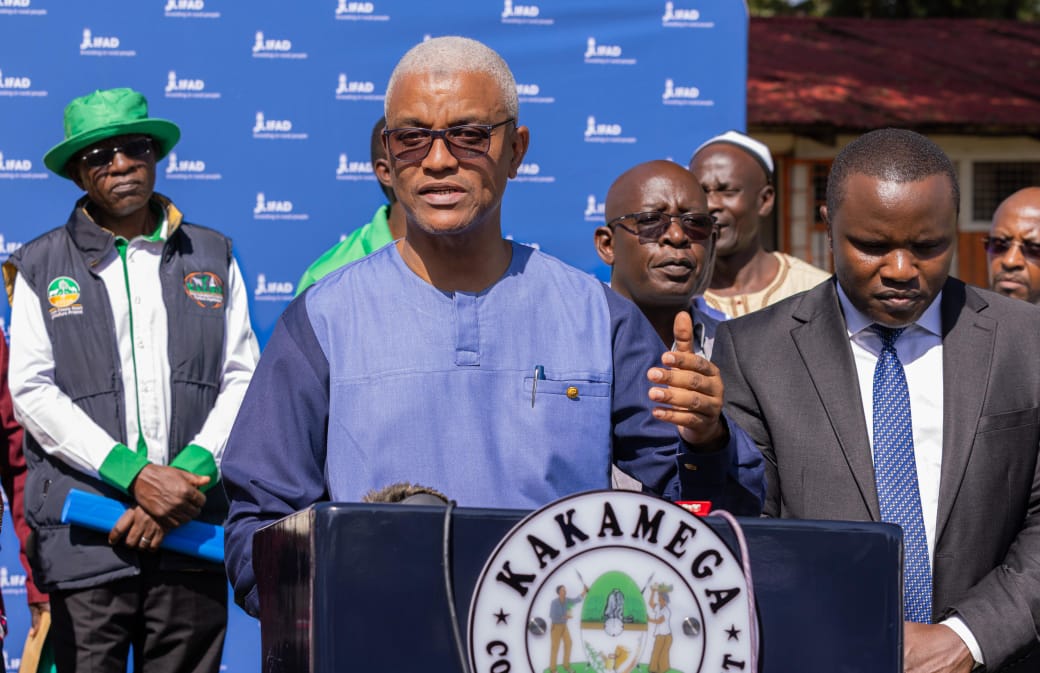
 Representing the Principal Secretary for Agriculture, Senior Secretary of Administration Harun Khattor/Faith Matete
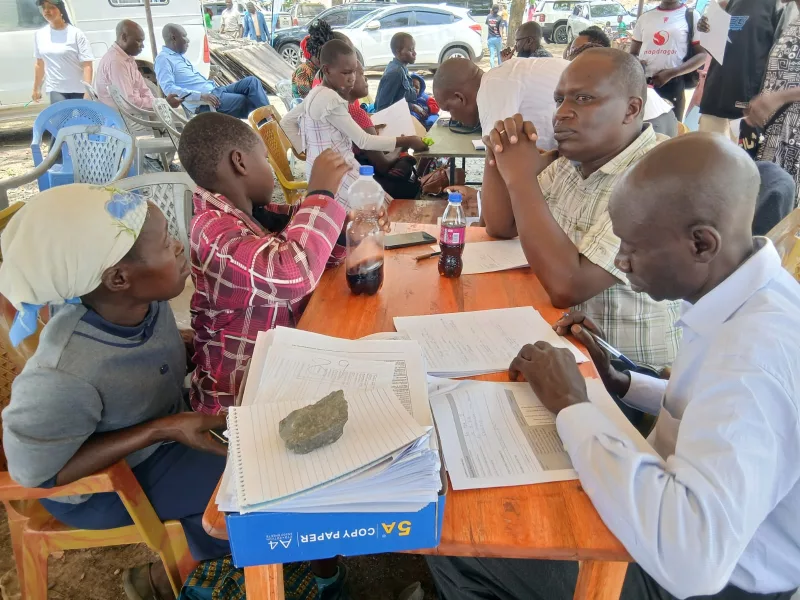
 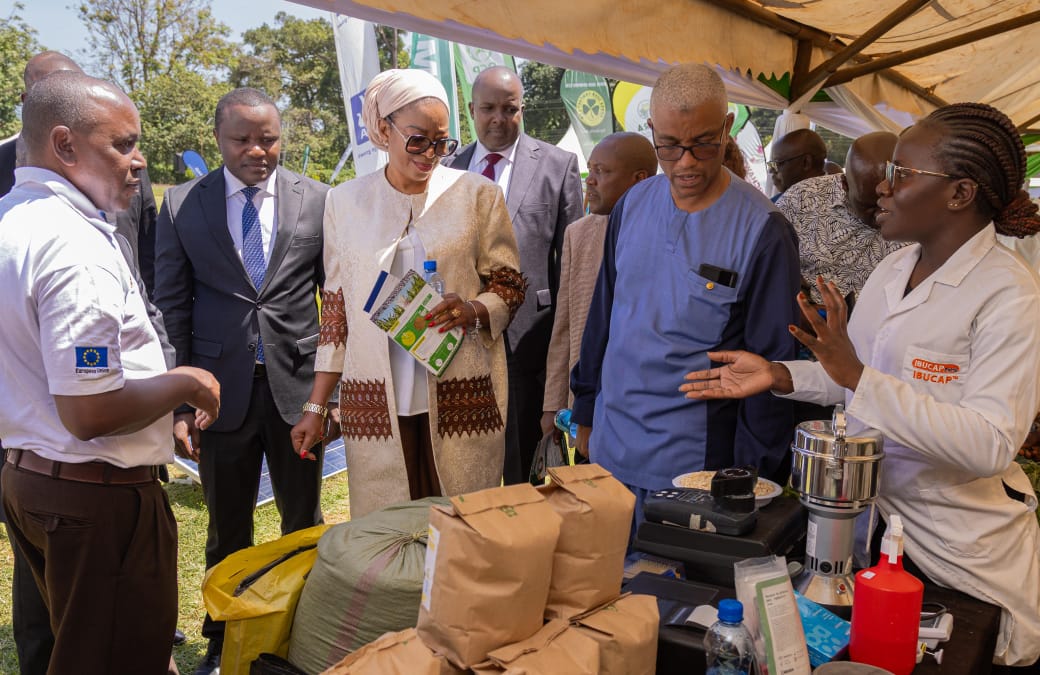 Exhibition during the official launch of the KCEP-CRAL Soil/ILSA programme in Kakamega county /Faith Matete
 About 40,000 smallholder farmers in six counties are set to benefit from a Sh600 million European Union-funded programme aimed at restoring soil health and improving farm productivity.
The €4.3 million grant is being implemented by the International Fund for Agricultural Development in partnership with the national and county governments, with a focus on sustainable and climate-resilient farming practices.
Launched on Tuesday in Kakamega county, the programme targets declining soil fertility, land degradation and climate-related shocks that continue to undermine food production across the country.
The three-year initiative, known as Investing in Livelihood Resilience and Soil Health, is being rolled out under the Kenya Cereal Enhancement Programme–Climate Resilient Agricultural Livelihoods (KCEP-CRAL), which has been running since 2015.
Farmers will receive support in soil testing, integrated soil fertility management, agroecology, agroforestry, climate-smart agriculture and post-harvest handling.
Most of the services will be accessed through a digital e-voucher system linking farmers to approved private input suppliers and service providers.
Ifad Kenya director Mariatu Kamara said the programme builds on systems and lessons from earlier EU-backed agricultural interventions rather than introducing a new approach.
She said previous phases of KCEP-CRAL enabled smallholder farmers in 13 counties to access farm inputs through e-vouchers, with later expansions promoting bio-inputs, agroecological practices and digital delivery models.
“This is about scaling up what has already been tested and shown results. We are strengthening systems that are already working,” Kamara said.
The six implementing counties—Kakamega, Trans Nzoia, Embu, Kilifi, Makueni and Taita Taveta—were selected based on climate vulnerability, agricultural potential and county capacity to sustain the interventions.
Kamara said sustainability was a core pillar of the programme, noting that projects are deliberately implemented through county structures to ensure continuity after donor funding ends.
State Department for Agriculture secretary of administration Harun Khator said the initiative aligns with the government’s policy shift towards sustainable soil management and long-term productivity.
He said the funding will enable farmers to access certified seeds, fertilisers, bio-inputs, soil testing services and post-harvest technologies, while also strengthening extension services and monitoring systems to track soil health improvements.
“These interventions are critical to improving yields, food security and household incomes, while building resilience to climate change,” Khator said.
He added that the project supports national priorities on food and nutrition security, climate adaptation and sustainable economic growth.
CEC for Agriculture Moffat Mandela, who represented Governor Fernandes Barasa, noted that Kakamega is the only county to have benefited from all EU-IFAD agricultural programmes implemented so far.
“This programme directly addresses soil health and agroecology, which are key to making agriculture productive, profitable and resilient,” Mandela said.
He said the county plans to integrate the interventions into its agricultural programmes, in a bid to move farmers from subsistence production to commercially viable farming that can attract youth and raise rural incomes.