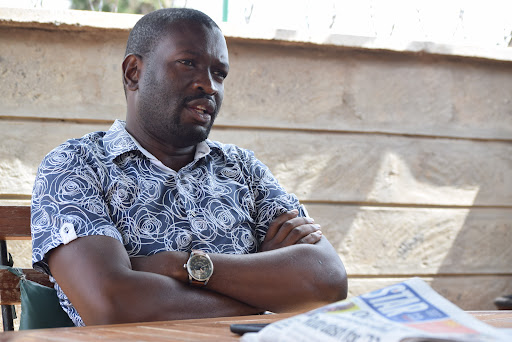
Nairobi Senator Edwin Sifuna has warned against the erosion of democratic norms in the region, citing recent developments in Uganda and earlier events in Tanzania as a cautionary signal for African democracies.
In a statement responding to Uganda’s decision to shut down the internet, Sifuna said such actions undermine fundamental freedoms and threaten the integrity of political processes.
He argued that restrictions on digital access during politically sensitive moments weaken public trust and limit citizens’ ability to participate meaningfully in governance.
“What we saw in Tanzania and what is unfolding in Uganda is the reason we must insist on the centrality of our values in all political discourse,” Sifuna said, linking the internet shutdown to a broader pattern of democratic backsliding in parts of the region.
The senator emphasised that democracy is anchored not only in elections but also in the protection of basic rights and freedoms, including access to information.
He noted that the internet has become a critical platform for civic engagement, political organising and accountability, particularly among young people.
Sifuna said governments must ensure that security concerns or political interests do not override constitutional principles and internationally recognised standards.
“Democracy, Human Rights, Freedom, Rule of Law, Social Justice and Equality,” he said, “everything else must be done within the framework and in accordance with these values.”
His remarks come amid criticism from civil society organisations and rights groups over Uganda’s internet shutdown, which they argue restricts freedom of expression and the media’s ability to operate independently.
Similar measures in Tanzania in past electoral cycles have also drawn condemnation from regional and international observers.
Sifuna cautioned that normalising such actions sets a dangerous precedent for the region, where democratic institutions in several countries remain fragile.
He said political leaders have a responsibility to safeguard civic space rather than constrict it during critical moments.
The Nairobi senator urged Kenyan leaders and citizens to remain vigilant in defending constitutional values, warning that democratic erosion often begins with small but deliberate restrictions on freedoms.
He added that regional solidarity is essential in promoting accountable governance and resisting practices that weaken democracy.
On Tuesday, the Uganda Communication Commission ordered a ' temporary' shutdown of internet until further notice.
The shutdown orders came two days before the Uganda General Elections set for Thursday, January 15, 2026
According to the UCC, the directive follows a recommendation from the Inter-Agency Security Committee, which cited the need to mitigate the rapid spread of online misinformation, disinformation, and other election-related risks.
The regulator said the measure is also intended to prevent content that could incite violence or affect public confidence during the elections.
“The suspension is effective 13th January 2026, at 1800hrs and will remain in force until a restoration notice is issued by UCC. During this period, all non-essential public internet traffic must be blocked,” stated UCC Executive Director Thembo Nyombi.
The notice defined public internet traffic to include social media platforms, personal email services, web browsing, video streaming, and messaging applications.
The suspension will cover Mobile Broadband (Cellular), Fibre Optic, Leased Lines, Fixed Wireless Access, Microwave Radio Links, and Satellite Internet Services.