President William Ruto is betting on the Sh5 billion Nyota Fund to win back youth support months after the Gen Z-led revolt that nearly sank his administration.
Framed as seed capital for small businesses, the fund is being rolled out to young people and women—two critical voting blocs—as the government grapples with deepening public frustration over unemployment and the soaring cost of living.
The initiative closely mirrors the 2022 “hustlers” empowerment drive that helped propel Ruto to power, when cash handouts and business tools formed the backbone of his grassroots campaign.
This time, however, the programme is financed not from Ruto’s personal networks but through the exchequer, with backing from the World Bank.
Beyond economic relief, the Nyota Fund has handed the President a political platform, enabling him to crisscross the country and push back against an increasingly hostile opposition narrative.
Since the 2024 Gen Z revolt, scepticism has grown over the Kenya Kwanza administration’s ability to deliver jobs for young people, even as economic pressures intensify.
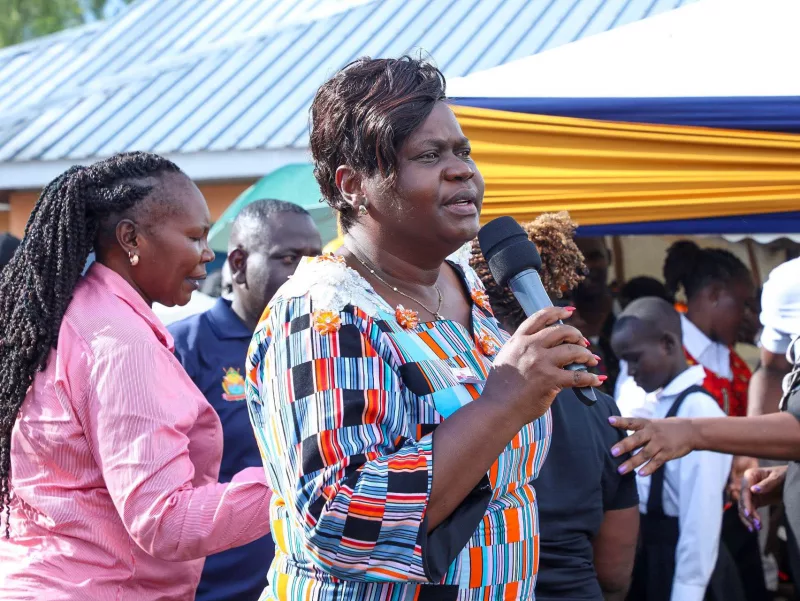
On Tuesday, President Ruto—accompanied by Deputy President Kithure Kindiki—presided over the disbursement of Sh50,000 business grants in Archer’s Post, Samburu county.
He later held engagements with small-scale traders from Laikipia and Isiolo counties, using the forums to highlight his administration’s record.
“Is there any other government that has disbursed money to the youth to start businesses like mine?” Ruto posed.
The event followed a three-day blitz in Nyeri where, besides project inspections, he oversaw the launch of disbursements to hundreds of sole proprietors.
“We must place young people at the centre of our national agenda to tap into their energy, skills, knowledge and expertise to drive our national transformation,” the President said.
The Star has established that the President will hold fewer boardroom meetings going forward.
Instead, he is banking on tours of ongoing projects and the Nyota empowerment meetings to woo voters locally.
It is understood that for much of 2026, Ruto’s team plans fewer large public rallies – that is, where locals are mobilised to a central ground.
The new plan, according to insiders, is to meet the people in small groups at project sites to address the specific local needs.
The aim is “to give the people a tangible feel of the progress the government of the day has made.”
The plan is for the President to engage directly with Kenyans who have “seen, touched, and felt” government projects.
The President is scheduled to visit the Meru region today for the same, bringing together small business players from Embu and Tharaka Nithi.
He is also expected to inspect ongoing works at Gakoromone market, the largest in the region, and a KDF-built hospital.
On Thursday, the President and his deputy are expected in Machakos to preside over Nyota Fund disbursements and inaugurate road projects.
Kitui and Makueni business owners are also expected to attend, with similar engagements planned for Nairobi the next day.
On Friday, the President is expected to tour parts of Nairobi, tentatively make a stop at Talanta Stadium, before heading to Kajiado.
Thereafter, he is scheduled for back-to-back meetings in Nyanza and Western to accelerate project delivery.
Kindiki on Tuesday said the activities fulfil the promises the President made during the 2022 campaigns.
“Young people are a great asset to our country. Many countries have an ageing population, but ours is young and energetic and willing to work to build our country,” the DP said in Samburu.
He said the Nyota grant is designed to uplift the youth who are skilled in entrepreneurship.
“We are supporting the youth because they possess diverse talents in academics, sports or business,” Kindiki said.
Under the fund, business owners receive Sh50,000, but only Sh25,000 is released in the first phase.
Of the amount, Sh22,000 is a direct capital injection and the balance is channelled to a savings scheme.
The remaining balance of Sh25,000 will be released to the benefactors once a business proves viable.
“It will make a huge difference in their businesses. Some are saying it is useless, but we know it is life-changing,” Kindiki explained.
“It is a good start, and the government will work with you to ensure you succeed,” he assured, taking a swipe at opponents for inciting young people.
Critics argue that the Sh5 billion fund is a drop in the ocean.
The opposition says the interventions, which follow hot on the heels of the women empowerment programmes, will not solve the jobs crisis.
The team led by Wiper boss Kalonzo Musyoka see it as a large-scale voter inducement bankrolled by the state ahead of the next election.
“How can Sh22,000 help one start an industry? We saw what happened last year in empowerment. This Nyota programme is just but bribery,” Kalonzo said.
Ruto’s team disagrees. He challenged the rivals to show "even the little amount they gave when they were in power".
He paraded youths at yesterday’s meeting who said the money would significantly unlock their businesses.
“Those saying this money is little should know that with a proper mindset, it can do a lot,” a cosmetics trader from Samburu said.
Ruto's national rallies and addresses serve as the primary platform for his administration to communicate achievements and outline future plans.
He earlier said the administration had disbursed over Sh39 billion directly to mama mbogas, boda boda riders and other small traders.
Ruto has also stated with conviction the interventions by his team that saw fertiliser prices drop from the Uhuru Kenyatta-era’s Sh7,000 to Sh2,500.
He showcases construction as symbols of progress, and cites affordable housing and roads.
On education, Ruto has touted his achievements to include hiring 76,000 teachers, with 24,000 others expected this year.
He has also cited the expansion of school infrastructure and timely disbursements of capitation.
Ruto also champions his digital transformation record. “We inherited about 350 government services on e-Citizen. Today, we have taken that to over 20,000 services,” he said recently.
Addressing youth empowerment directly, he points to the broad strategy beyond the Nyota Fund.
“We have secured jobs abroad for hundreds of thousands of our young people, boosting the remittances that support families here at home.”
The second phase is to cover Uasin Gishu, Elgeyo Marakwet, Nandi, Trans Nzoia, Turkana, West Pokot, Nakuru, Narok, Bomet, Kericho, Baringo, Laikipia, Isiolo, Samburu, Nyeri, Murang’a, Kirinyaga, Nyandarua, Meru, Tharaka Nithi, Embu, Machakos, Kitui, Makueni, Nairobi, Kiambu, and Kajiado counties.
Beneficiaries will participate in a two-month mentorship programme, receiving structured business development support from experienced entrepreneurs and industry experts.
This will be followed by a second phase of business development support training to prepare participants for the next tranche of business grants.
Phase three will cover Kilifi, Lamu, Tana River, Mombasa, Kwale, Taita Taveta, Kisumu, Siaya, Homa Bay, Migori, Nyamira, Kisii, Marsabit, Garissa, Mandera, and Wajir counties.
INSTANT ANALYSIS
As President Ruto’s caravan moves from region to region, from inspecting Gakoromone market in Meru, inaugurating roads in Machakos, and eventually to sweeping through Nyanza and Western, the 2027 election campaign is being conducted in plain sight, albeit under the banner of government service delivery.