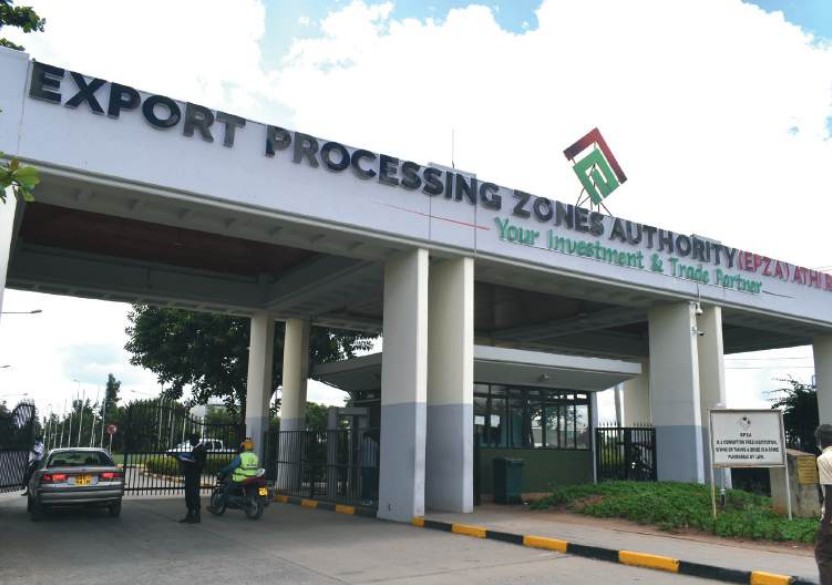
EPZ, Athi River on April 14, 2020 /FILE

Strict new guidelines now govern how investors are selected to lease public land, particularly in Special Economic Zones and Export Processing Zones.

The guidelines by the National Treasury would also apply to investors taking up public land for commercial agriculture.

In a circular dated December 4, 2025, the Treasury CS John Mbadi directed all government entities to ensure applicants comply with a 10-point criterion before granting leases.

He directed ministries to apply the points-based evaluation system to ensure the agreements do not expose public land to undue risk.

Enjoying this article? Subscribe for unlimited access to premium sports coverage.
View Plans

Treasury says the government recognises public land as a "strategic asset critical to Kenya’s industrial development agenda."

The strictures come at a time when President William Ruto has announced that his administration is leveraging partnerships with the private sector.

He has invited private players to increase manufacturing, create jobs and enhance foreign exchange earnings through export-led growth.

In the new framework, the heart of Circular No. 09/2025, ad-hoc deals will not be allowed.

It details an investor evaluation matrix of 10 key criteria, each assigned a specific weight.

Prospective investors will be scored on a scale of one to five across the stated areas, with their total weighted score determining their suitability. 

Financial strength and investment capacity carry the highest priority (15 per cent).

In this subset, investors would be required to demonstrate a solid track record, adequate capital and robust risk management strategies.


Equal weight (15 per cent) is given to job creation and export potential.

“Investments should contribute significantly to employment creation and human capital development,” the circular read.

Other critical factors include alignment with national blueprints such as Vision 2030 and the Bottom-Up Economic Transformation Agenda (BETA) (10 per cent), commitment to innovation and technology (10 per cent) and adherence to sustainability and environmental responsibility (10 per cent).


Social impact, long-term commitment and integration with local supply chains will also be measured, ensuring investors contribute to broader socio-economic development.


An investor scoring above 4.0 will be deemed "Highly Suitable," while a score below 3.0 will disqualify them.


In one of the most significant provisions, the circular imposes strict conditions on investors seeking to use leased public land as collateral to secure financing.


The practice has previously raised concerns about the potential loss of public assets.


The Treasury has directed that any such use outside Special Economic Zones (SEZs)/Export Processing Zones (EPZs) requires explicit approval from the relevant ministry’s board and Cabinet Secretary.


“Any land outside SEZ/EPZ will require approval of the Board and the line Ministry Cabinet Secretary to authorise government-leased land to be used as collateral for purposes of raising capital by private parties,” the memo reads.


Crucially, approvals must stipulate that all original lease conditions remain binding throughout the loan period.


A breach of lease terms would immediately release the government from any related obligations.


To prevent the permanent transfer of land, the government will implement policy measures ensuring in the event of a loan default, the land reverts to public ownership rather than being claimed by financial institutions.


Additional safeguards include requiring the Master Lease to be at least 10 years longer than any sub-lease.


It also mandates a lessor’s written consent for using a leasehold interest as collateral, contingent on the investor’s continued compliance.


The circular also calls for a clear framework for granting investment incentives, such as tax holidays.


Furthermore, it outlines a three-stage process for investor onboarding and performance monitoring.

There will be a process of pre-screening, thorough due diligence, and final approval at the accounting officer or board level before a lease is granted.


 

Entities giving leases will be required to submit reports to authorities to ensure investors deliver on their promises regarding job creation, export targets, and environmental standards.