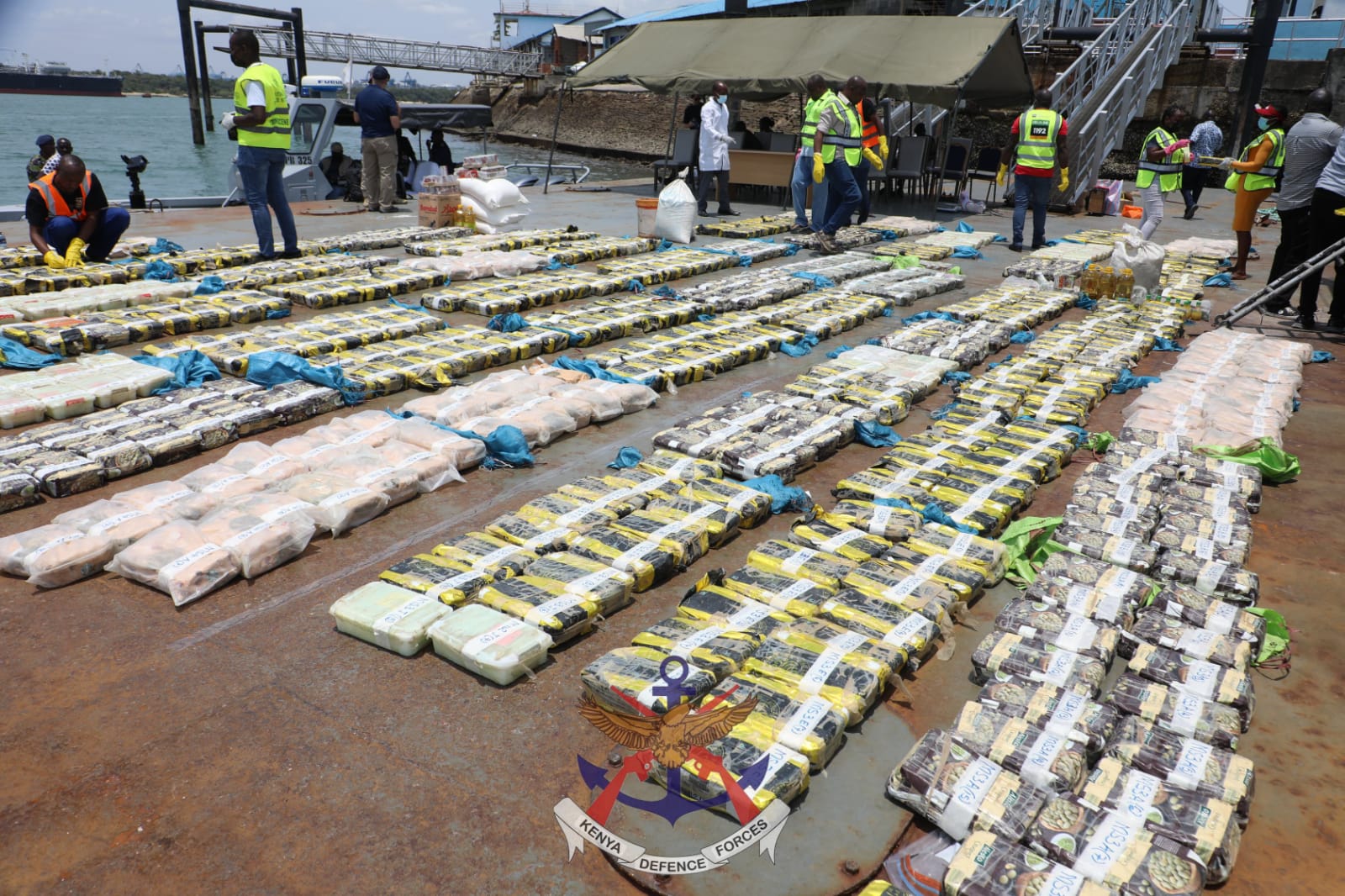
 Part of the drugs that were seized at the Indian Ocean./FILE
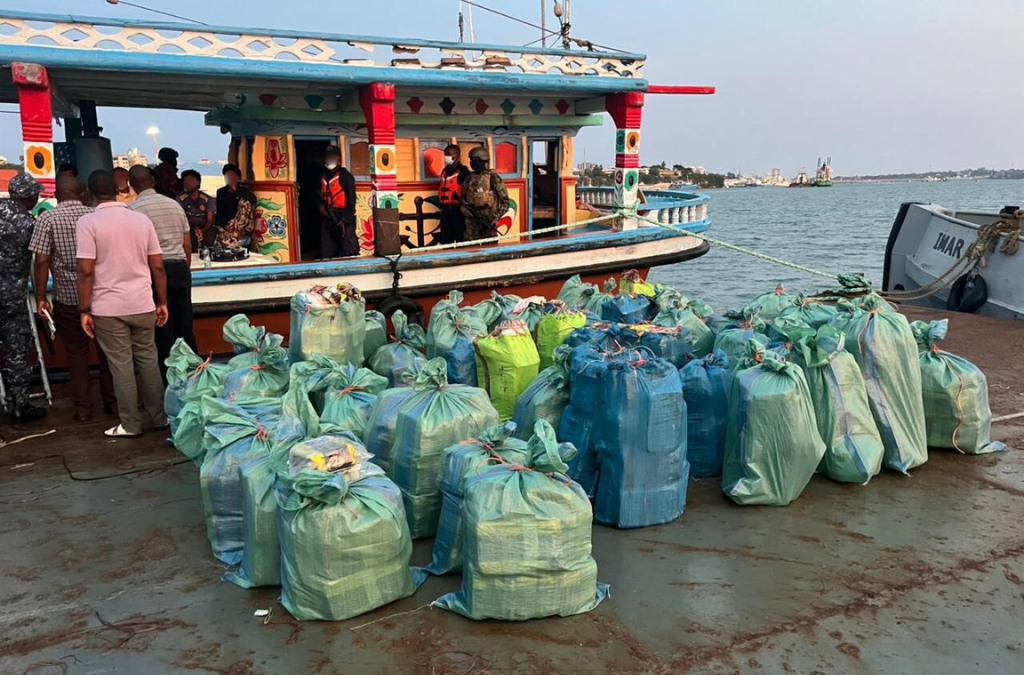 Some of the seized meth at the Indian Ocean./FILE
Six Iranian nationals have pleaded guilty to trafficking more than a tonne of methamphetamine valued at Sh8.2 billion, in a case the Director of Public Prosecutions (DPP) says underscores Kenya’s intensified crackdown on international narcotics syndicates using the Indian Ocean corridor.
The suspects admitted to the trafficking charges before Chief Magistrate Anthony Mwicigi at the Shanzu Law Courts in relation to 1,036 kilogrammes of methamphetamine seized on the high seas between October 17 and 20, 2025, at a location approximately 350 nautical miles east of the Port of Mombasa.
Prosecutors told the court the narcotics were ferried aboard a stateless vessel, a tactic commonly deployed by transnational drug networks to obscure jurisdiction and evade naval patrols.
The suspects were apprehended on October 25, 2025, and arraigned on January 12, 2026, after what authorities described as a complex maritime investigation.
The charges were preferred under Section 4(a)(ii) of the Narcotic Drugs and Psychotropic Substances (Control) Act, 1994, as amended in 2022 legislation that significantly enhanced penalties and enforcement tools against large-scale narcotics trafficking.
Prosecutors sought two weeks to consolidate and present the full case facts, requesting that the next proceedings be convened on January 30 2026 at the Kenya Navy base in Mtongwe, where the impounded vessel and drug exhibits are secured.
The court was also asked to remand the suspects at Shimo La Tewa Prison pending the hearing.
ODPP said the case marks a strategic win for them and signals Kenya’s growing resolve to protect its territorial waters and high-seas maritime routes from narcotics trafficking, amid heightened international coordination and surveillance across the Western Indian Ocean basin.
In December 2025, President William Ruto announced plans to overhaul Kenya’s narcotics laws to introduce the death penalty for individuals convicted of trafficking hard drugs.
The move marked the most far-reaching policy shift yet in the government’s campaign against alcohol and substance abuse.
The President said the proposed changes would replace what he described as lenient penalties under the current legal framework, where traffickers can be fined as little as Sh1 million.
Under the new proposal, the sale of hard drugs such as heroin and cocaine would be classified as a capital offence.
Ruto argued that the trade is destroying families, fueling addiction among young people and undermining the country’s future.
“People who are selling heroin and cocaine are destroying our children. Those who are selling or their children don’t use it themselves; they come to sell to other people’s children,” he said.
“The past law stated that such people should be fined Sh1 million. We are now changing the law to make it a capital offence. Those found guilty would face the ultimate penalty.”
He accused traffickers of profiting from addiction while insulating their own families from the harm caused by drugs, describing the practice as morally indefensible.