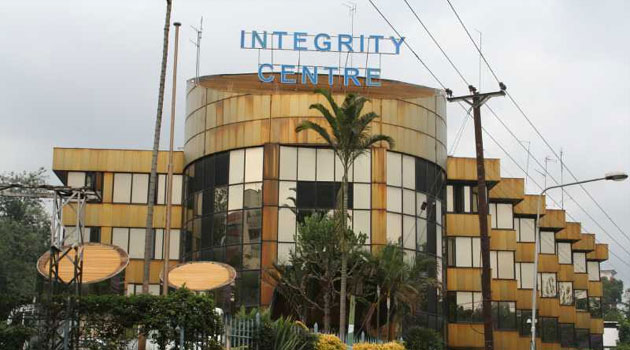
The Ethics and Anti-Corruption Commission (EACC) has summoned a government official to record a statement as part of ongoing investigations into matters relating to asset verification and procurement processes.
A requisition dated January 8, 2026, and issued by an officer attached to the EACC Police Station at Integrity Centre, directs the official to appear before investigators on January 9, 2026, at 9 am.
The summons, issued under Section 52 of the National Police Service Act No. 11A of 2011, notes that the Commission has “reasons to believe” the official may have information relevant to the investigation.
The acknowledgement section of the document shows that the summons was received and signed for.
The requisition follows a search operation conducted earlier the same day at the official’s residence and office.
According to EACC, the search is part of a wider review of allegations concerning graft, procurement issues, and the acquisition of assets whose value is stated to be approximately Sh1 billion.
The review period covers January 1, 2021, to January 8, 2026.
A portion of the inquiry also concerns procurement processes from the official's earlier public-sector role.
EACC investigators indicated that materials obtained during the operation will undergo further examination to determine the appropriate next steps in line with the Anti-Corruption and Economic Crimes Act (ACECA).
The Commission has clarified that no charges have been preferred and that the summons is part of routine investigative procedures intended to gather information.
EACC further noted that any subsequent action will depend on the outcome of the ongoing review.
Possible measures under ACECA, where applicable and subject to evidence, may include recommending prosecution, initiating forfeiture proceedings for assets that cannot be explained, or seeking confiscation of property found to be linked to corruption.
The Commission has not issued additional public comments beyond what is contained in the requisition and accompanying communication.