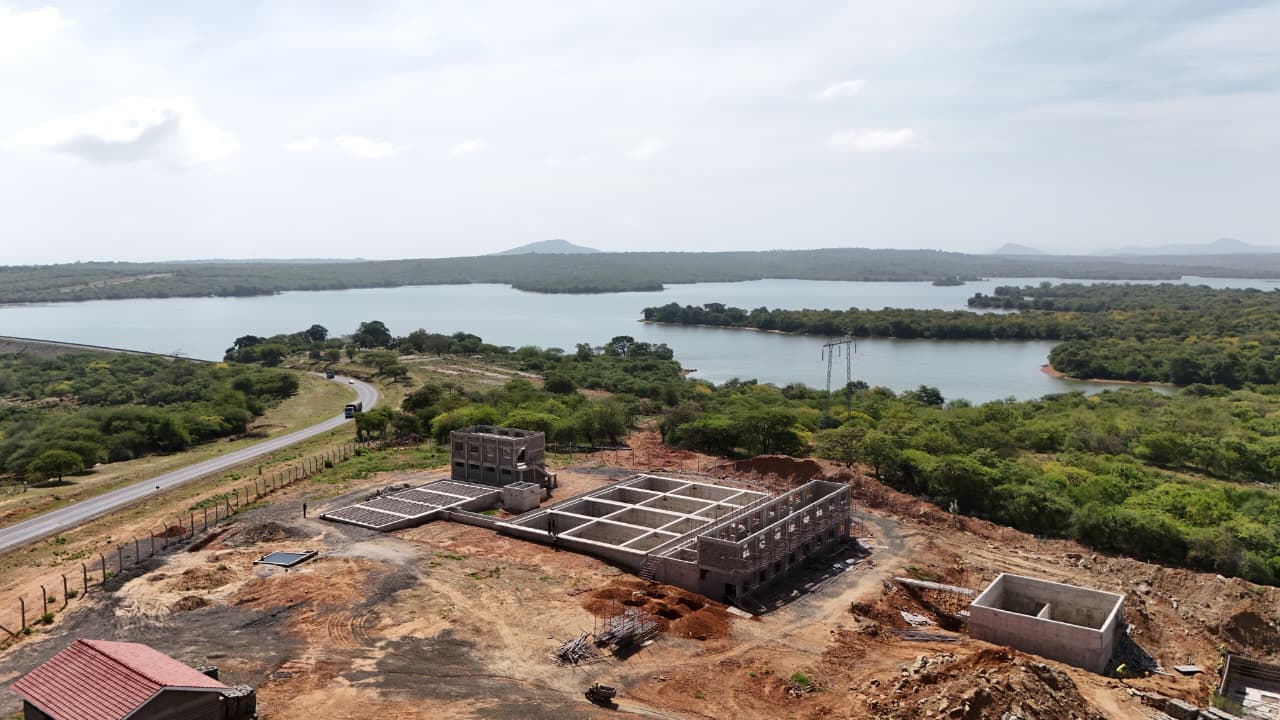
 An aerial view on a treatment plant on the banks of Kamburu dam. The plant will process 10,000 cubic metres of water daily for supply to residents/ ALICE WAITHERA
More than 80,000 residents of the semi-arid Mbeere South in Embu county are set to benefit from a Sh800 million water project, stemming perennial shortages spanning decades.
Kamburu Water Supply Project involves the channeling of water from Kamburu dam, establishing a treatment plant, storage and laying of 120 kilometres long of distribution lines, with the aim of resolving long-standing water scarcity in the area while supporting local agriculture.
The project was launched by President William Ruto in April 2024 and construction works started in August.
It will channel about 10,000 cubic metres of water daily to households who have been forced to take long walks in search of water despite living near the Seven Folks dams.
Dorcas Kithaka, a resident of Mavuria area, said the project will mostly reprieve women who are forced to use two hours everyday to fetch water from Kamburu dam using donkeys.
“This project will be a life-saver for us women. Without water, it becomes very difficult for women to tend to their families. It will also improve hygiene in our homes,” Kithaka said.
She pointed out that numerous residents have lost their limbs to hippos and crocodiles as they fetch water from the dam.
Fredrick Thiga, another resident, said the human-wildlife conflict in the area has been aggravated by lack of water that forces wild animals out of Mwea Game Reserve.
With the project, Thiga noted that they will be able to improve their farming activities and boost food security while raising their income.
“Water is life. There’s nothing that can survive without it. As it is now, it’s very difficult for us to farm or even keep livestock because of lack of water,” he said.
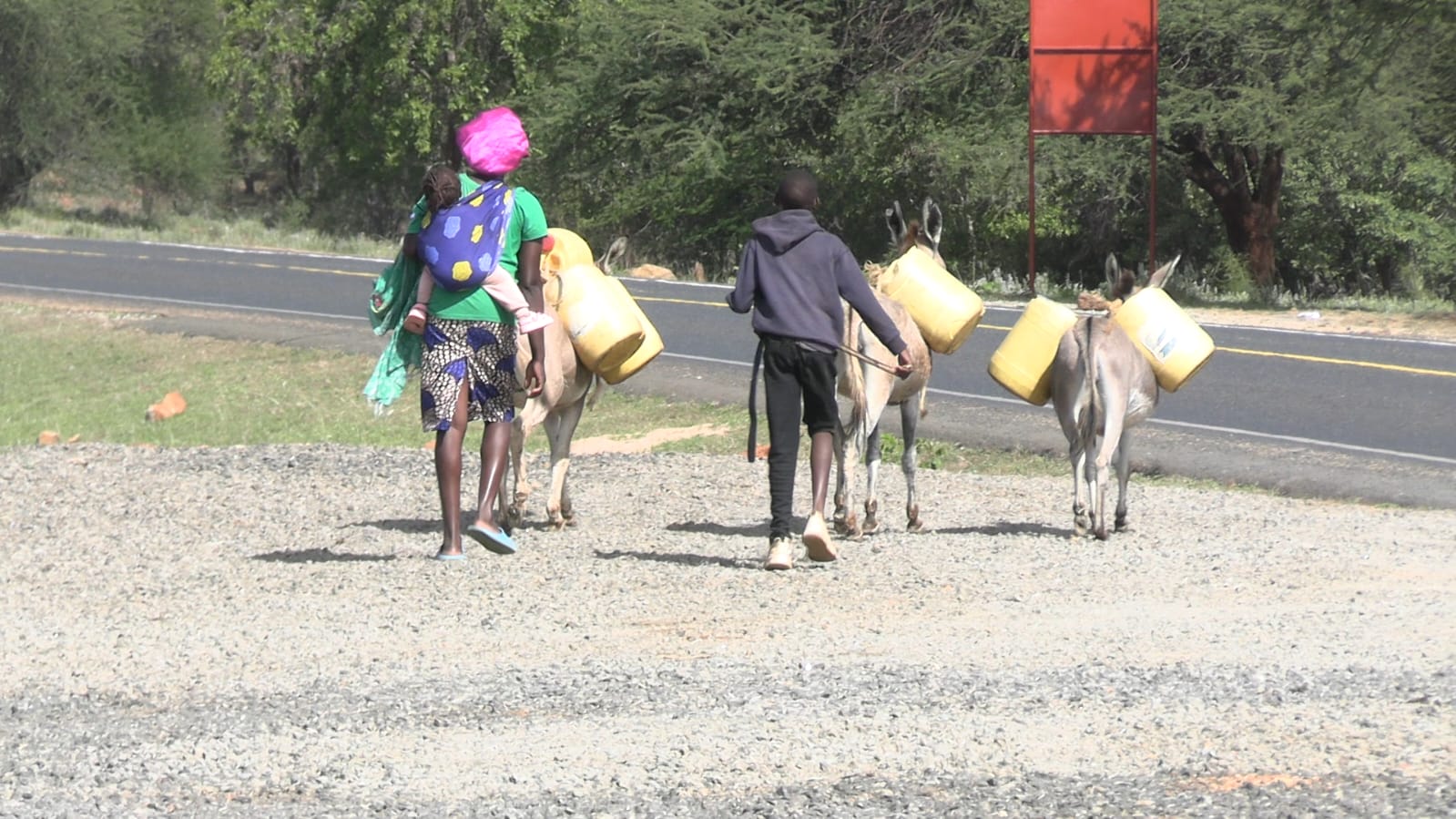 Residents of Mbeere South using donkeys to fetch water /ALICE WAITHERA
The project’s community liason officer Mwaniki Nyaga explained that the project is part of a larger Sh2.1 billion project that will draw water from three dams, Kamburu, Kiambere and Masinga, and supply it to locals.
Kamburu water supply project, he said, will address numerous challenges that residents have been facing, and drastically raise the economy of the area.
Learning institutions will also be heavily reprieved as they are currently forced to use water bowsers to provide water to learners.
“If you go to the markets, you will see many water bowsers. They are there because they are the ones that provide water to schools. The water fetching costs in turn make learning operations very expensive,” he added.
In homes, Nyaga said improved hygiene will reduce the prevalence of diseases and cut the number of people seeking health treatment in local facilities.
Residents will also be able to use the time they have been using in search of water to engage in other economically productive activities.
“We are also encouraging them to start kitchen gardens to boost their families’ nutrition and further improve their health,” he said.
Nyaga called on the government to ensure it’s completed in the stipulated time saying the availability of the commodity will enable residents to better contribute to the economy.