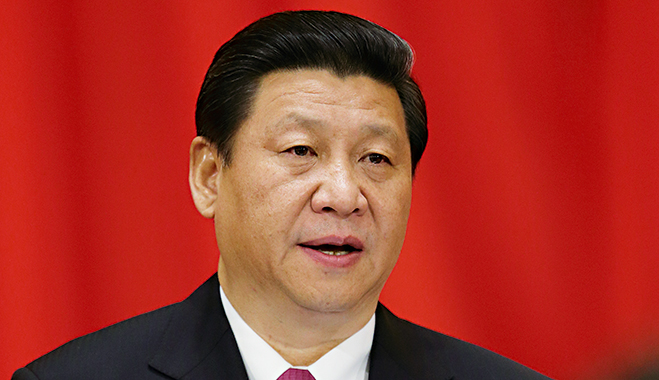
 President Xi Jinping/HANDOUT
Volume Five of President Xi Jinping’s book, “The Governance of China,” was recently released and has already gained significant attention, including here in Kenya. I managed to get a copy of the 635-page edition, thanks to the Chinese Embassy in Nairobi, and I am currently reading it. The book provides the international community with clear insights into China’s policy thinking and global engagement between 2022 and 2024.
A key section includes a chapter on President Xi Jinping’s keynote speech at the opening of the 2024 Beijing Summit of the Forum on China-Africa Cooperation (FOCAC), where he reaffirmed China’s long-standing commitment to Africa and elevated China-Africa relations to a new strategic level.
At a time when the continent tries to speed up implementation of the African Union’s Agenda 2063, President Xi declared that modernization is the right of all nations, not just a select few. He stressed that true global modernization cannot happen without the modernization of Africa, which, together with China, represents one-third of the world’s population.
At the heart of President Xi’s vision is the rejection of a "one-size-fits-all" development model. He stressed that modernization should be fair and equitable, reflecting national realities rather than imposed solutions. In this spirit, China committed to deepening exchanges of governance experiences with African countries, assisting them in finding development paths that resonate with their own histories, cultures, and socio-economic conditions. This approach directly responds to Africa’s long-standing call for development partnerships based on mutual respect and sovereign choice.
Equally significant is his emphasis on open and mutually beneficial modernization. At the Beijing Summit, President Xi announced a landmark decision to grant zero-tariff treatment on 100 percent of tariff lines to all least-developed countries with diplomatic relations with China, including 33 African nations. This unprecedented move positions China as the first major economy to take such a step, turning its vast domestic market into a genuine opportunity for African exports, especially agricultural products. It also indicates a shift from aid-based cooperation to trade-driven, sustainable growth.
President Xi further placed people at the heart of the modernization agenda. He reiterated that development should ultimately enhance people’s sense of gain, fulfilment, and security. To this end, China pledged concrete actions in poverty reduction, job creation, and skills development. The commitment to provide 60,000 training opportunities, largely targeting African youth and women, along with vocational education initiatives, Luban Workshops, and an engineering technology academy, directly supports Africa’s demographic dividend and human capital ambitions.
Industrialization and digital transformation, now recognized as key to Africa’s structural transformation, were highlighted in the speech. China committed to fostering industrial cooperation clusters, empowering African small and medium-sized enterprises, and launching 20 digital demonstration projects. These initiatives aim to integrate African economies more deeply into global and regional value chains while enabling the continent to retain greater added value and create at least one million jobs.
Infrastructure connectivity, a long-standing barrier to Africa’s development, remains a priority. According to Xi, China plans to implement 30 infrastructure connectivity projects while supporting the African Continental Free Trade Area (AfCFTA). By enhancing transport, logistics, and financial links, these efforts promise to unlock intra-African trade and strengthen Africa’s position in the global economy.
The Chinese leader also underscored green development as a defining feature of modernization in the new era. China’s pledge to launch 30 clean energy projects, establish early warning systems for climate-related disasters, and cooperate on biodiversity conservation reflects Africa’s dual challenge of development and climate vulnerability. Importantly, China reaffirmed the principle of common but differentiated responsibilities, aligning its cooperation with Africa’s call for climate justice.
He also presented peace and security as essential foundations for development. Through the Global Security Initiative (GSI), Xi committed to supporting Africa’s independent capacity to safeguard stability, including military assistance, training for security personnel, and joint efforts towards a mine-free Africa. This holistic view, linking security with development, resonates strongly in regions where instability has undermined decades of progress.
Financially, he pledged RMB 360 billion over the next three years to support the ten partnership actions, combining credit lines, assistance, and investment. This support underscores that China-Africa cooperation is not just rhetorical but results-oriented.
Beyond policies and projects, The Governance of China, Volume V aims to deepen global understanding of China’s worldview and its flagship initiatives, including the Belt and Road Initiative (BRI), the Global Development Initiative (GDI), the Global Security Initiative (GSI), and the Global Civilization Initiative (GCI). Together, these frameworks aim to foster development, security, and cultural inclusiveness while building a community with a shared future for humanity.
President Xi’s message at FOCAC 2024, as captured in this latest volume, is clear: Africa is not walking its modernization journey alone and has a genuine partner in China.
Kipkorir Kesses is a current affairs journalist based in Nairobi