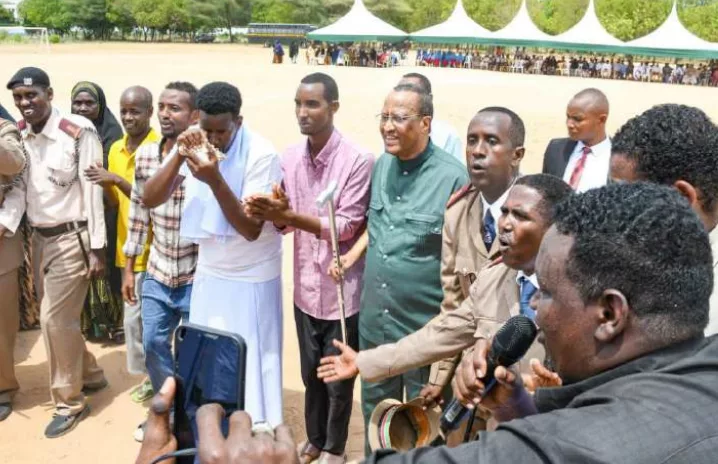
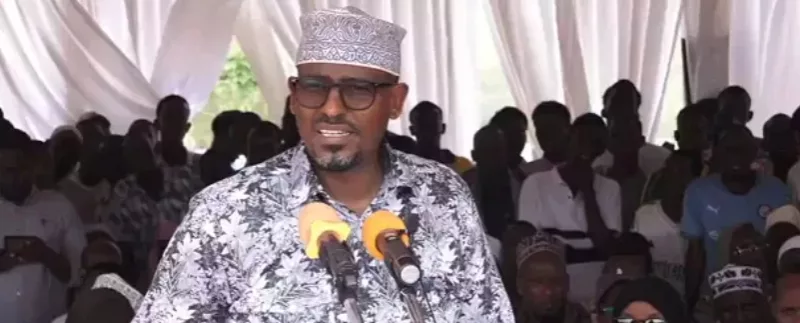
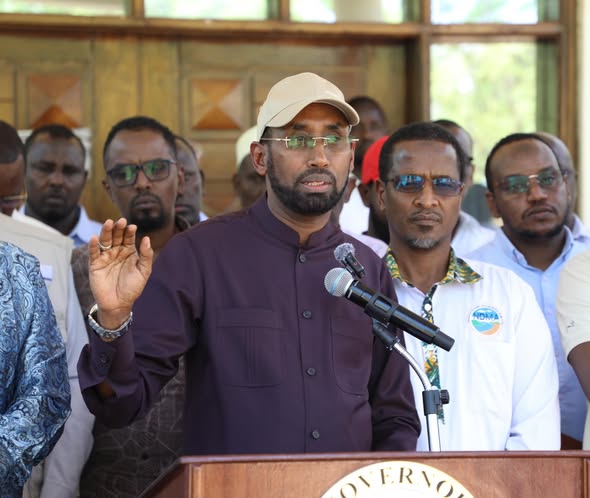
 Mandera governor, Mohamed Khalif, speaking to the press/STEPHEN ASTARIKO
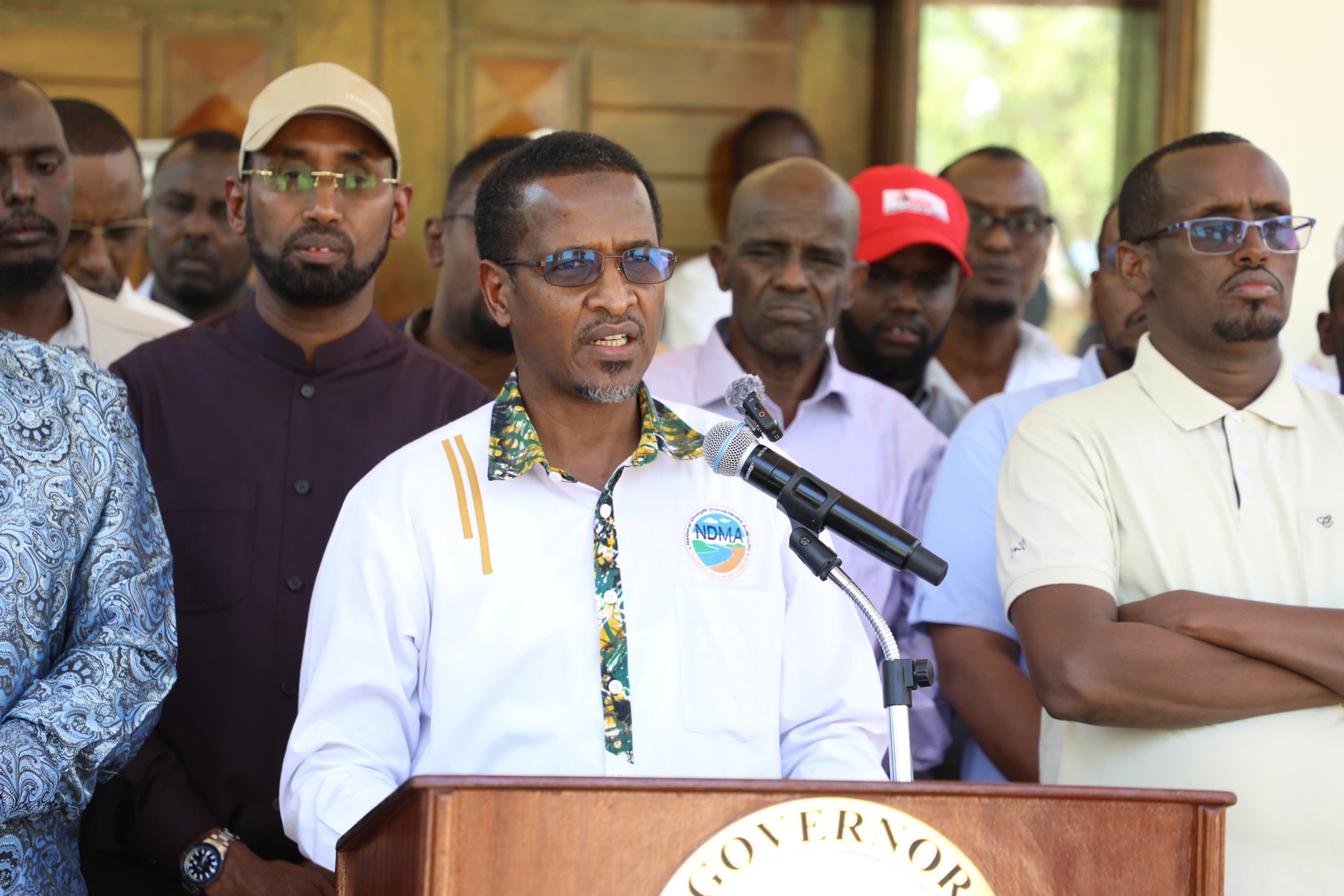 NDMA Chief Executive Officer Hared Adan speaking to the
press./STEPHEN ASTARIKO
NDMA Chief Executive Officer Hared Adan speaking to the
press./STEPHEN ASTARIKO
Mandera County has slipped into a full-scale drought emergency, with more than 335,000 residents now in need of humanitarian assistance.
In a press statement issued on Tuesday, Governor Mohamed Khalif said the situation in the county remains critical, confirming that Mandera is currently classified under the alarm drought phase, with conditions continuing to deteriorate.
“The drought situation in Mandera remains critical. The county is currently classified in the alarm phase and the trend is worsening,” Khalif said.
He attributed the crisis to successive seasons of below-average rainfall, which have severely affected pasture regeneration and water availability across the county.
“These conditions have significantly constrained the regeneration of pasture and water resources,” he said.
As a result, livestock are trekking longer distances in search of water and pasture, leading to poor body condition and declining milk production. This, the governor said, has weakened household purchasing power and undermined food and nutrition security.
The most affected groups include children under five years, pregnant and lactating women, older persons and persons with disabilities.
The drought has also triggered increased livestock migration within the county and into neighbouring Wajir county, raising concerns over growing pressure on scarce resources and the risk of conflict.
In response to the escalating crisis, Khalif on Tuesday convened a County Steering Group meeting, bringing together senior national and county government officials, humanitarian agencies and development partners.
The meeting was attended by County Commissioner Charles Chacha, National Disaster Management AuthorityChief executive officer Lt Col (Rtd) Hared Adan, county secretary Billow Issack Hassan, Lafey MCA Adan Hussein, county executive committee members, technical departments and representatives of humanitarian partners. World Food Programme teams from Wajir and Nairobi participated virtually.
According to the governor, the meeting reaffirmed the commitment of both national and county governments to safeguard lives and livelihoods through a coordinated drought response.
Key interventions include water trucking to 266 sites—203 domestic and 63 livestock—using 33 water bowsers operated by the county government. Emergency borehole programmes are also underway.
“So far, 39 boreholes have been drilled. Twenty-four have been equipped and are operational, while the remaining 15 are currently being equipped by the county government and partners,” Khalif said.
The county government has also initiated food distribution targeting 67,000 households across Mandera. Health and nutrition interventions are ongoing, including integrated health, nutrition and WASH outreaches, mass nutrition screening and disease surveillance, led jointly by the county government and partners.
Livestock support measures, including vaccination and treatment programmes, are being implemented by the county government in collaboration with Rural Agency for Community Development and Assistance (RACIDA).
Additionally, RACIDA—with support from the State Department, Diakonie Katastrophenhilfe and ACTED—is targeting 7,943 households with cash transfers amounting to Sh68.1 million.
Khalif further announced the rollout of livestock feed and water interventions under World Bank-supported programmes, through which the county will access Sh20 million to supply crop residues as livestock fodder under a revolving fund mechanism.
Warning of worsening conditions, the governor said if the current trend persists, Mandera faces heightened risks of livelihood asset depletion, worsening malnutrition and increased competition over scarce water and pasture resources.