
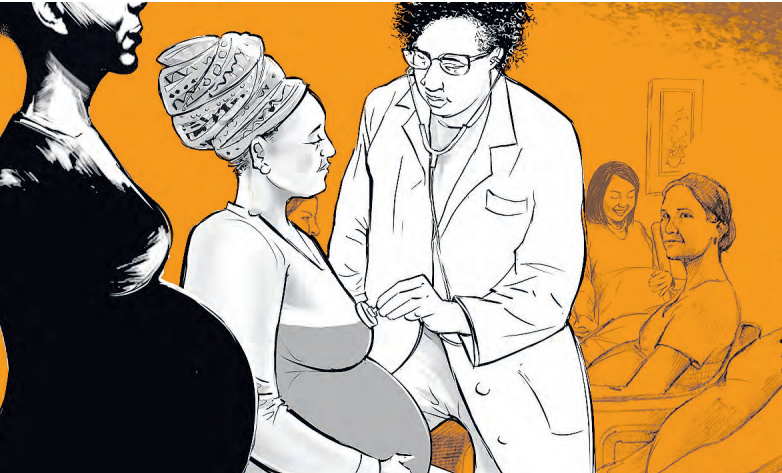
 Kenya has an insurance system that rewards caesarean deliveries more than normal births.
Caesarean births are becoming more common in Kenya, but a new global analysis suggests that many of these surgeries are driven less by medical need and more by money, fear and weak health systems.
The World Health Organization says caesarean sections should make up only about 10 to 15 per cent of all births because there is no additional health benefit beyond that level.
But about 17 per cent of all children in Kenya are currently delivered by caesarean section. In some counties, the figure is above 30 per cent.
A new review co-authored by Kenyan gynaecologists who oppose unnecessary C-sections, shows that financial incentives for health providers are among the strongest reasons.
The study, which reviewed 144 articles published between 1990 and 2025, reveals five non-medical factors.
These are doctors’ fear of lawsuits, which encourages defensive use of surgery; financial or insurance systems that reward caesarean deliveries more than normal births; Social and cultural beliefs where some women see surgery as safer or more convenient.
The fourth reason is weak health systems, including staff shortages and poor service organisation, which make planned surgery easier than managing long labour. Finally, many women are not fully informed or properly asked for consent, meaning their rights and choices are sometimes ignored.
“Increasing cesarean delivery rates are the cumulative result of multiple drivers, such as structural imbalances, commodification of care and institutional accountability gaps, and not just due to clinical processes,” says the article co-authored by Prof Anne Kihara, a senior lecturer at the University of Nairobi’s College of Health Sciences and President of the International Federation of Gynaecology and Obstetrics.
The other Kenyan co-author is Prof Marleen Temmerman, who heads the Centre of Excellence in Women and Child Health at Aga Khan University in Nairobi.
Their review is published in the current issue of the American Journal of Obstetrics and Gynaecology.
It is titled “Why do cesarean delivery rates persistently rise despite evidence-based efforts to reduce them?”
According to the Kenya Demographic and Health Survey 2022, the CS rate already exceeds the WHO recommendation in 19 counties.
For instance, Kirinyaga (40 per cent), Kiambu (33 per cent), Tharaka-Nithi (30 per cent), Nairobi (28 per cent) and Taita/Taveta (27 per cent) all have high CS rates.
In contrast, counties like Wajir (two per cent), Mandera (four per cent) and Samburu (five per cent) have very low CS rates, suggesting that many women there cannot access the surgery even when they need it.
The medics called on health insurers to remove financial incentives associated with CS.
“Regarding healthcare financing, there is an urgent need for reforms that hinder or eliminate insurance-driven perverse incentives, such as unchecked fee-for-service and profit-linked reimbursement models that commodify labour and delivery. In addition, countries could consider implementing outcome-seeking, quality-of-care–based financing models,” they said.
They warned that repeated or unnecessary CSs come with risks.
They also noted that caesarean births are linked to higher illness and death among mothers, and to immune and metabolic problems in children born through surgery.
Their study revealed that Latin America displayed the highest cesarean delivery rates, linked to private sector incentives and cultural constructs and Africa and South Asia highlighted underuse or coerced use in public systems.
The research also highlights how media and social messages shape childbirth choices. Online stories, television shows and social media influencers often present caesarean delivery as modern, painless or safer, without explaining the risks or the longer recovery.
For some women, surgery becomes a way to avoid fear, pain or disrespect during labour, rather than a medical last resort.
The experts called on providers to inform women that vaginal delivery is possible and safe even after a past CS.
“Cesarean delivery rates are considerably higher among women with a previous uterine scar, often due to default repeat cesarean deliveries in the absence of clear contraindications,” they said.
“Despite robust evidence supporting vaginal births after cesarean deliveries (VBAC) safety for most women, uptake remains low due to provider hesitancy, institutional restrictions, and lack of informed counseling.”