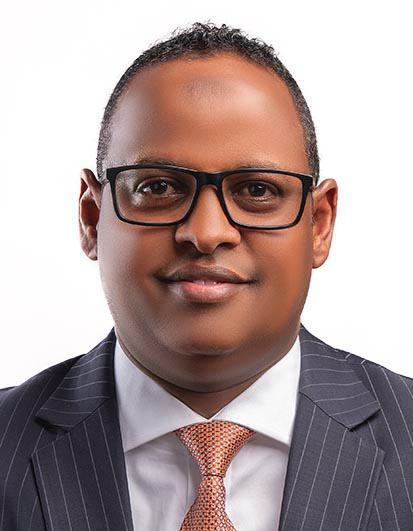
 Hon. Mustafa Abdirashid Ahmed MCA Iftin and current Deputy Speaker of Garissa County Assembly./COURTESY
Kenya’s democracy thrives on diversity, debate, and accountability. Yet recent public statements and actions attributed to Hon. Rigathi Gachagua, the former deputy president, raise concerns about the potential impact of identity-based politics on national cohesion.
While criticism and scrutiny are essential in a healthy democracy, rhetoric that singles out communities or individuals based on ethnicity or origin risks undermining the very foundations of the nation.
The strength of Kenya lies in its diversity. With over forty ethnic communities contributing to the social, cultural, and economic fabric of the country, the nation’s unity has historically been a source of resilience and progress.
However, history has also shown how political leaders can exploit ethnic differences for short-term gain, often at the expense of long-term stability.
Recent incidents involving the targeting of Somali Kenyan businesspeople and critiques of students from other regions seeking admission to national schools in central Kenya illustrate the dangers of such rhetoric.
These actions do not merely spark controversy; they threaten social cohesion and risk deepening divisions among citizens.
Education has long been a unifying force in Kenya. National schools bring together students from different backgrounds, promoting understanding, tolerance, and shared identity. Questioning or politicising access to these institutions based on ethnicity undermines this purpose.
Every child, regardless of origin, deserves equal opportunity to succeed. Leadership that politicises such matters sends the wrong message that opportunity is conditional on identity rather than merit, a stance that is inconsistent with the principles of modern governance.
Similarly, targeting entrepreneurs and businesspeople along ethnic lines is counterproductive to economic growth. Kenya’s prosperity depends on inclusivity and fair competition, where talent and hard work not ethnicity determine success.
Singling out specific communities for scrutiny neither addresses structural challenges nor contributes to national development.
Instead, it perpetuates stereotypes, fosters resentment, and creates an environment of uncertainty. Leaders are expected to protect the rights and dignity of all citizens, ensuring that no group feels marginalised or unfairly treated.
Democracy allows for robust debate, dissent, and accountability, but it also demands responsibility. Criticism of government policy or officials is legitimate, yet public figures must avoid language that mobilises citizens against one another.
When political identity becomes a tool for personal ambition, trust between communities erodes, suspicion replaces dialogue, and division overshadows national unity.
Kenya’s history shows that divisive politics carry consequences that extend well beyond the ballot box, impacting generations. Leadership that promotes unity strengthens democracy; rhetoric that fosters division weakens it.
Calls for unity are not merely rhetorical, they are essential for Kenya’s stability and development. Public figures have a responsibility to model civility, fairness, and inclusivity.
Rhetoric that encourages division undermines these values and carries tangible consequences; social tensions escalate, businesses face uncertainty, and young people grow up internalising a worldview where identity takes precedence over merit and collaboration. A nation cannot progress when its leaders prioritise division over unity.
However, it is equally important to balance critique with fairness. Hon. Gachagua, like all leaders, has the right to express opinions and critique policies. Freedom of speech is a cornerstone of democracy, but it comes with responsibility.
Words from public figures have ripple effects far beyond immediate audiences; they influence societal behavior and shape national discourse. Responsible leadership requires language that informs rather than inflames, that unites rather than divides.
Citizens, too, play a critical role. Engaging critically with political discourse, rejecting attempts to sow division, and holding leaders accountable ensures that accountability is rooted in justice and civic responsibility.
Upholding merit, inclusivity, and fairness in public life signals that leadership is evaluated based on competence and integrity rather than ethnicity or regional affiliation. By doing so, citizens reinforce the culture of unity that sustains national progress.
Kenya’s experience demonstrates that division carries costs that extend across generations. Politically motivated rhetoric that exploits ethnicity may yield short-term gains, but it threatens long-term stability, social cohesion, and economic development.
Conversely, leadership that prioritises inclusivity, fairness, and national unity strengthens institutions, nurtures democracy, and allows every citizen to participate fully in society. The responsibility lies with both leaders and citizens to ensure that discourse remains civil, constructive, and rooted in shared national identity.
The recent statements and actions attributed to Hon. Gachagua highlight the urgency of this responsibility. Leaders’ words matter, they shape national consciousness, influence civic behavior, and set the tone for public discourse. Kenya cannot afford leadership that encourages suspicion, resentment, or division.
The nation’s diversity must be celebrated as an asset, not weaponised for political purposes. Inclusive leadership and civil discourse are not optional; they are prerequisites for a prosperous, stable, and modern Kenya.
Lastly, Kenya’s unity is non-negotiable. Leadership that promotes respect, fairness, and inclusivity strengthens the nation, while rhetoric that fosters division undermines progress.
Citizens, institutions, and leaders share the responsibility of safeguarding cohesion, ensuring that the country continues to thrive as one people with shared aspirations.
The path forward is clear; respect, civility, and a commitment to one Kenya must guide public discourse and leadership. Now is the time to uphold these values, not only for the present but for generations yet to come.
The author is the MCA for Iftin ward and Deputy Speaker Garissa County Aasembly. A columnist and A playwright.