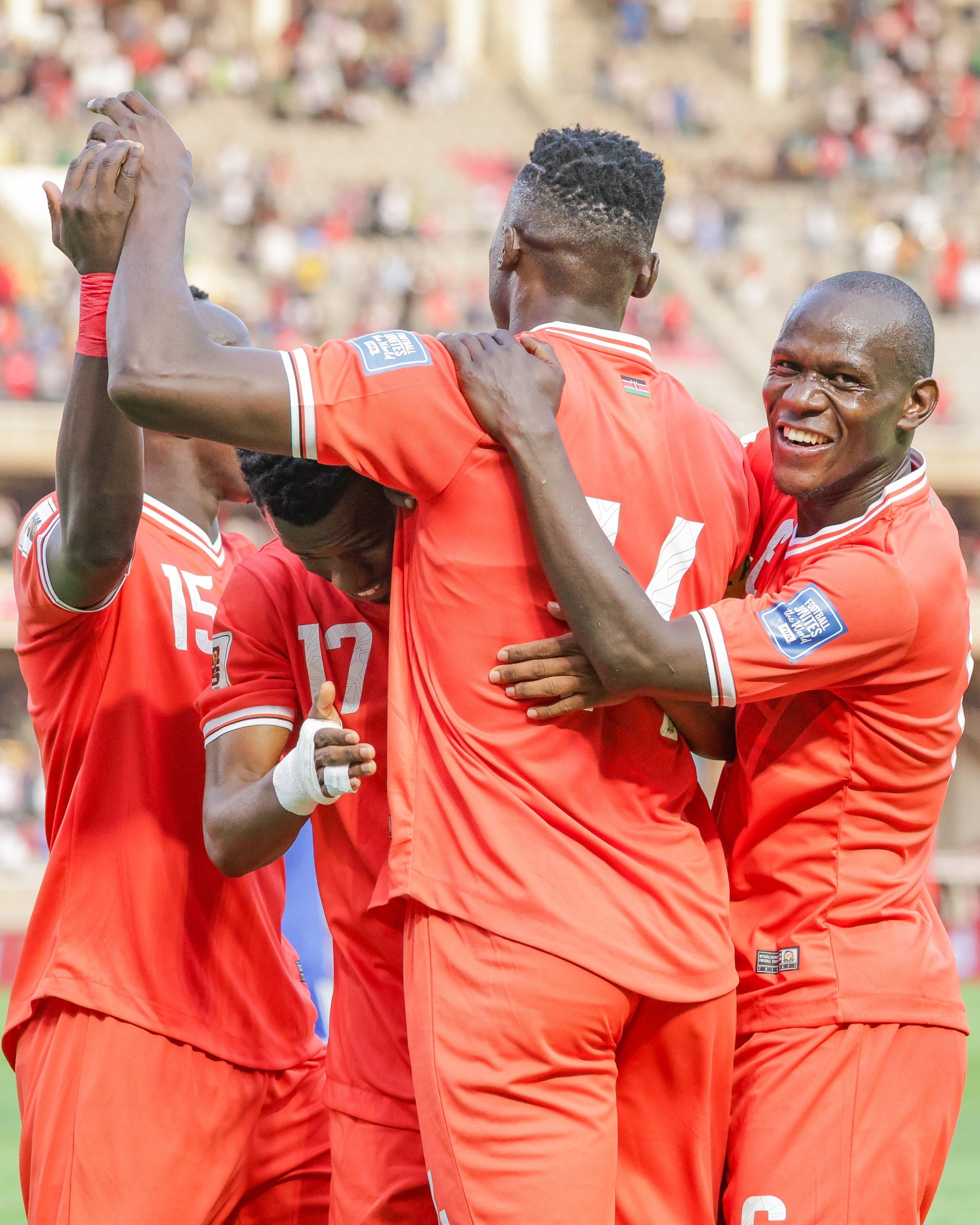
 Harambee Stars/HANDOUT
Read Also
There is a particular cruelty in absence. It is quieter than defeat, less dramatic than controversy, yet far more revealing.
As Africa gathers in Morocco for this year’s Africa Cup of Nations, Kenya watches from a distance — not because the door was closed to us, but because we failed to walk through it.
While stadiums glow under North African lights and anthems rise from packed terraces, Harambee Stars are missing from the roll call of the continent’s elite. It is an absence that should trouble the nation deeply.
The pain is sharpened by an uncomfortable irony.
Kenya will co-host the next edition of Afcon alongside Uganda and Tanzania — two neighbours who are not only present in Morocco, but actively learning from it.
They are absorbing the tempo of elite competition, the demands of tournament football, the logistics of continental travel and the mental steel required to survive the group stages.
Kenya, meanwhile, prepares to host the party without having tasted the cuisine.
This is not merely about football pride. It is about preparedness, credibility and the kind of sporting nation Kenya aspires to be. Morocco’s Afcon is not just a tournament; it is a masterclass.
From infrastructure to organisation, from fan experience to team preparation, the hosts have demonstrated what long-term vision looks like.
This success did not happen by accident. Morocco invested for years in facilities, youth development, coaching education and administrative competence. Their run at the 2022 Fifa World Cup was not a miracle — it was a harvest.
Kenya must learn from this with humility and urgency. First, hosting is not a shortcut to football excellence; it is a test of it. AFCON 2027 will expose every weakness in our systems if it is treated as a construction project rather than a footballing journey.
Stadiums matter, but so do training grounds, sports science departments, medical units and data analysis teams. A national team cannot be assembled on enthusiasm alone. It must be engineered.
Second, Kenya must confront the uncomfortable truth that Harambee Stars’ absence is the product of systemic failure, not bad luck. Coaching instability, administrative wrangles, inconsistent funding, weak domestic competition and broken player pathways have all played their part.
A country with Kenya’s population, talent pool and football passion should not be missing consecutive major tournaments. That is not misfortune; it is mismanagement.
Football governance must be boring, professional and predictable. Clear technical plans, transparent recruitment of coaches, long-term contracts with performance benchmarks and continuity of philosophy are non-negotiable.
Successful nations do not change direction every time results dip; they correct course without tearing the map.
Third, Kenya must invest seriously in youth development. Morocco’s strength lies in what cannot be seen on matchday: academies, school competitions, regional scouting networks and a clear pathway from grassroots to national team.
Kenya’s talent often burns brightly and briefly, then fades into obscurity — not for lack of ability, but for lack of protection and patience. School football, county leagues and youth national teams must form one coherent pipeline.
Fourth, exposure matters. Uganda and Tanzania will return from Morocco sharper and more realistic about AFCON standards. Kenya must ensure Harambee Stars are regularly tested against strong opposition. Fear of losing must never outweigh the need to learn.
Finally, the nation must rally behind a shared football vision. The government should support infrastructure and protect the game from administrative chaos. Fans, media and former players must demand accountability without poisoning belief.
Missing Afcon in Morocco should sting — but it should also teach. If Kenya treats this absence as a mirror rather than an excuse, Afcon 2027 can be more than a hosting duty. It can be a homecoming for Harambee Stars — not as ceremonial participants, but as credible competitors.
The continent is moving forward. Kenya cannot afford to keep applauding from the stands.