In Kenya, hustle culture is more than a buzzword. It is a way of life, a survival strategy, and increasingly, a defining feature of the country’s economic and social fabric.
From Nairobi’s bustling estates to rural towns, young people are turning to side hustles—digital, physical, and hybrid—to navigate unemployment, inflation, and shifting expectations.
What was once seen as a temporary fix has become a permanent reality.
These efforts reflect the country’s deeply entrenched culture of ingenuity and grit in the face of economic adversity. Beneath this entrepreneurial spirit, however, lies a quieter, more troubling reality: a generation running on empty, juggling multiple jobs, sacrificing rest, and quietly burning out.
Historical Roots of Hustle Culture
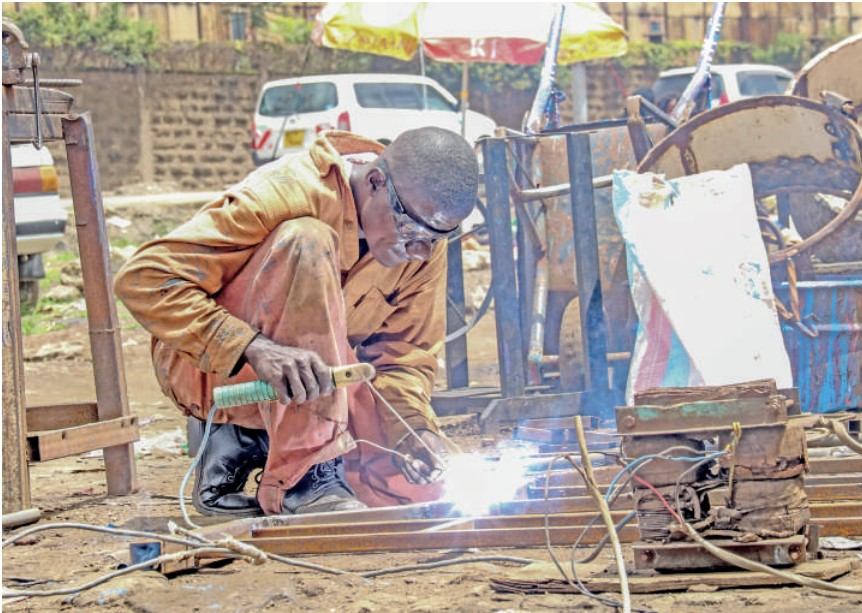
Jua Kali tradition: Since the 1970s, Kenya’s informal sector, known as jua kali (literally “hot sun”), has provided livelihoods for millions. Artisans, mechanics, and traders built an economy outside formal structures.
Formal jobs have never matched Kenya’s population growth. Today, youth unemployment hovers around 35 percent, according to the Kenya National Bureau of Statistics.
Hustling is celebrated as resilience and ingenuity. Proverbs like “maisha ni kujikaza” (life is about hustling hard) reflect this ethos.
In November 2025, 300 Jua Kali artisans in Eldoret were awarded Recognition of Prior Learning certificates by the National Polytechnic, formally acknowledging skills acquired informally.
Chief Principal Charles Koech noted that this was the first time RPL graduates received certificates at the institution’s 20th graduation ceremony.
In collaboration with the Jua Kali Federation and the Ministry of Education, the college identified skilled artisans who acquired expertise informally and assessed them for partial certification. Some are yet to complete all competency units but will have opportunities to extend their learning.
Koech emphasised the role of dual training, where learners spend half their time in college and the other half gaining practical experience in industry. He described the model as a game changer, equipping graduates with practical skills that enhance employability.
The Modern Hustle: Digital and Diversified
Kenya’s hustle culture has shifted dramatically over the past decade:
Digital platforms: TikTok, Instagram, WhatsApp, Jiji, and Jumia have become marketplaces for thrifted clothes, food delivery, and digital services. Licensed brokers now offer apps that let everyday Kenyans trade equities, bonds, and even global assets directly from their phones. The Capital Markets Authority (CMA) has supported this shift with progressive licensing.
Gig economy: Kenya’s gig economy is rapidly expanding, driven by ride-hailing, delivery apps, and online freelancing. It offers flexibility and income opportunities for youth and women but comes with challenges such as unstable earnings, lack of social protection, and job insecurity.
Apps like Upwork, Fiverr, and Toptal connect Kenyan freelancers to global clients. Ride-hailing (Uber, Bolt, Little Cab), delivery services (Glovo, Jumia Food), and domestic service apps are growing. Gig work allows youth and women to balance multiple roles while accessing the global digital economy.
KICTANet Think Tank notes that gig work is “transformative for youth and women” but warns of “unstable incomes and arbitrary account suspensions.”
Diversification: Young Kenyans often juggle multiple hustles—selling online, farming, tutoring, or boda-boda investments—balancing ambition with exhaustion. A 2024 GeoPoll survey found that 71 percent of employed youth aged 18–35 have side hustles, with nearly half earning less than Sh30,000 per month. A KNBS report showed that more than 60 percent of young adults in urban areas juggle at least one side hustle alongside formal jobs or studies.
The Double-Edged Sword
Benefits of hustle culture
Earning a livelihood: The entrepreneurial spirit behind the culture provides young people with income to pay bills, enroll in schools, and expand businesses.
Resilience: Hustling provides income where formal jobs fail. With youth unemployment above 35 percent, many Kenyans turn to side hustles for survival. Platforms like Balozy, which connects informal workers—from tailors to DJs—with clients, show how hustling sustains families despite limited formal opportunities.
Innovation: Youth-driven enterprises in digital marketing, agribusiness, and creative industries are reshaping Kenya’s economy. Hustle culture allows young Kenyans to redefine work through online stores, freelance photography, and farming ventures, creating multiple income streams and new business models. This innovation is not just economic—it’s cultural, reframing hustling as ambition rather than desperation.
Community networks: Hustlers rely on peer support, WhatsApp groups, and cooperative models. The National Summit of Community Networks in Kenya highlighted how grassroots digital networks in Kisumu, Siaya, and Homabay counties provide connectivity and collaboration for hustlers. These networks help share resources, pool investments, and amplify opportunities.
Challenges
Many hustlers run on empty, juggling multiple jobs, sacrificing rest, and facing burnout. According to the World Health Organization, burnout is a growing occupational risk. Across the country, workers report mental fatigue, sleep deprivation, and health issues tied to overwork.
Youth often ignore these risks, compounded by crackdowns on small online businesses by the Kenya Revenue Authority, adding stress for digital entrepreneurs.
Precarity: Hustles often lack social security, healthcare, or pensions. Jedca Media notes that Kenya’s hustle economy is vibrant but “undervalued, unstructured, and vulnerable to exploitation,” leaving workers exposed to shocks. Without formal contracts or protections, hustlers face unstable incomes and no safety nets.
Inequality: Not all hustles scale. Digital divides leave rural youth behind. While urban hustlers thrive on Instagram shops and delivery apps, rural areas struggle with poor connectivity and limited access to digital tools. This reinforces inequality between urban and rural workers.
Case Studies
Thrift fashion sellers: Instagram and TikTok have become central marketplaces for mitumba (second-hand clothes). The Mitumba Consortium Association of Kenya reports that the sector employs over two million people and contributed around Sh16 billion in tax revenue in 2023. Young sellers often brand themselves as “stylists” rather than traders, turning global waste streams into local fashion economies.
Boda-boda investments: The Boda Boda Safety Association of Kenya estimates about 1.6 million riders nationwide, including nearly 1.3 million youth. The sector grows at about 25 percent annually. It provides steady daily income and has become a popular side hustle for students and unemployed graduates.
Freelance creatives: Kenya’s creative economy includes photography, design, and influencer marketing. A 2023 report by Kenya Film Commission (KFC) and KNBS valued the film and entertainment industries at Sh86.9 billion. Platforms like Upwork, Fiverr, and TikTok allow Kenyan creatives to monetize skills globally. Digital freelancing blends opportunity with vulnerability, as youth are globalized workers but remain unprotected by local labor laws.
Agribusiness hustles: Urban youth increasingly invest in poultry, hydroponics, and vegetable farming. Kenya Institute for Public Policy Research and Analysis (KIPPRA) notes that youth involvement across agrifood value chains contributes to job creation, innovation, and social inclusion. WhatsApp groups and TikTok accounts are used to share farming tips, pool resources, and market produce. Agribusiness is more sustainable than gig work but requires upfront capital and patience.
Together, these examples show Kenya’s hustle culture is diversified. Fashion connects global supply chains to local youth economies; transport hustles leverage collective savings and digital coordination; creative freelancing globalizes talent but exposes vulnerability; agribusiness hustles reconnect urban youth to food security and sustainability.
Mental Health Risks of Hustle Culture
Globally and in Kenya, “hustle culture”—the pressure to constantly grind, multitask, and side-hustle—can seriously harm mental health.
Multiple studies link chronic overwork and long hours to burnout, anxiety, depression, stress, exhaustion, fatigue, and psychological distress. Hustle culture often normalizes poor work–life balance, undermining rest, personal relationships, and sleep, leading to emotional collapse and loss of motivation.
Julia, an online thrift fashion seller, recalls how burnout in April led to depression, costing more than her earnings for the month.
“It started with fatigue. At some point, I even hated waking up to post or tell my customers what was new in the bale. Then came nightmares of failure,” she said. “I had to start therapy—10 sessions—which ate into my March savings. Now, I make efforts to manage a healthy work–me balance.”
Chronic stress from overwork can also elevate stress hormones, disturb sleep, increase cardiovascular risk, and aggravate emotional strain.
Policy and Structural Implications
Informal work dominates, social protection is limited: A large share of Kenya’s workforce operates outside formal employment. The National Social Protection Secretariat notes about 16 million informal workers, many without pensions, unemployment benefits, or safety nets.
A 2025 labour market study highlights a “structural paradox”: despite sustained economic growth, around 90 percent of new jobs are informal, constraining productivity and denying security associated with formal employment. KIPPRA notes that labour laws and social security systems often exclude gig and informal workers.
Digital and gig-economy initiatives: The Ajira Digital Programme provides youth with digital skills and connects them to online or gig work. Critics argue that many listed centres do not exist in practice, courses may be sub-standard, and participants struggle to secure stable work. Many digital jobs remain precarious, lacking benefits, security, or labor protections.
Youth unemployment and education-to-work mismatch: Limited access to capital, mentorship, and training, and a mismatch between education output and labour market needs, push graduates into informal or gig work as fallback.
Gender, youth, and digital inequality: Informal and digital work disproportionately draws youth and women. The ILO notes that women make up a high proportion of informal platform work. Rural youth and women in marginalized areas face infrastructure, credit, and market access barriers.
Hustle culture in Kenya is both a testament to youth resilience and a symptom of systemic failure. It reflects creativity, adaptability, and determination but also exposes cracks in formal employment and social protection. Experts warn that the challenge is balancing ambition with sustainability, ensuring hustling is not just survival, but a pathway to dignity and opportunity.