 Communities were also urged to prepare for heat stress, water shortages and increased pressure on food supplies as the dry season continues.
The Meteorological Office said the January-March period will be predominantly hot and dry.
The forecast comes as farmers across the country assess the condition of crops planted during the October-December season, some of which remain in the fields.
“The outlook for January 2026 indicates that most parts of the country will experience predominantly dry weather conditions,” Met deputy director Kennedy Thiong’o said in a statement.
"However, a few areas, including the highlands west of the Rift Valley, the Lake Victoria Basin, the central and southern Rift Valley, the highlands east of the Rift Valley, including Nairobi county, the southeastern lowlands, and the coastal strip, are likely to receive occasional rainfall.”
He said temperatures will be high across the country, adding pressure on crops, livestock and water supplies.
Thiong’o warned that heat will be a defining feature of the January to March period.
“Temperatures are expected to be warmer than average over the whole country. Daytime (maximum) temperatures over the northeast and northwest are expected to be high and may occasionally rise beyond 37°C,” he said.
The forecast says the weather outlook for the next three months points to continued dryness across much of Kenya, with only scattered rainy days in selected areas.
“The outlook for the next three months indicates that most parts of the country are likely to experience sunny and dry weather conditions throughout the forecast period," the statement said.
"However, a few areas over the western sector and especially those around the Lake Victoria region and the Southern Rift Valley may experience occasional rainfall in January and February. In March, the rainfall is expected to spread to several places.”
The department links the dry conditions to global climate drivers, particularly the ongoing La Niña phenomenon.
“Overall, the combination of persistent La Niña conditions in the Pacific and a neutral Indian Ocean Dipole suggests a tendency towards suppressed rainfall over parts of East Africa, including Kenya, during January 2026, although localised rainfall may still occur due to transient weather systems,” the statement said.
These global conditions mean that even where rain falls, they are likely to be short-lived and unevenly distributed.
For western Kenya, the Lake Victoria Basin and parts of the Rift Valley, the department says dry weather will prevail for most of the month, punctuated by brief rainfall episodes.
“Areas are likely to experience generally dry conditions for most of the month. However, occasional light to moderate rainfall is expected during the month,” the outlook says for counties including Kisumu, Kakamega, Nakuru, Kericho and Narok.
In northern and northeastern Kenya, the forecast is less encouraging.
The department says Turkana, Samburu, Mandera, Wajir and Garissa will remain hot and dry, with very high daytime temperatures.
“Sunny and dry conditions are expected in the month of January. High daytime (maximum) temperatures (30°C–40°C) are expected to prevail in most places during the month,” the statement says.
Highlands east of the Rift Valley and central Kenya (Nairobi, Nyandarua, Nyeri, Kirinyaga, Murang'a, Kiambu, Meru, Embu, Tharaka Nithi and the eastern parts of Laikipia) are likely to experience mainly sunny and dry conditions for most of the month. However, occasional light to moderate rainfall is expected during the month.
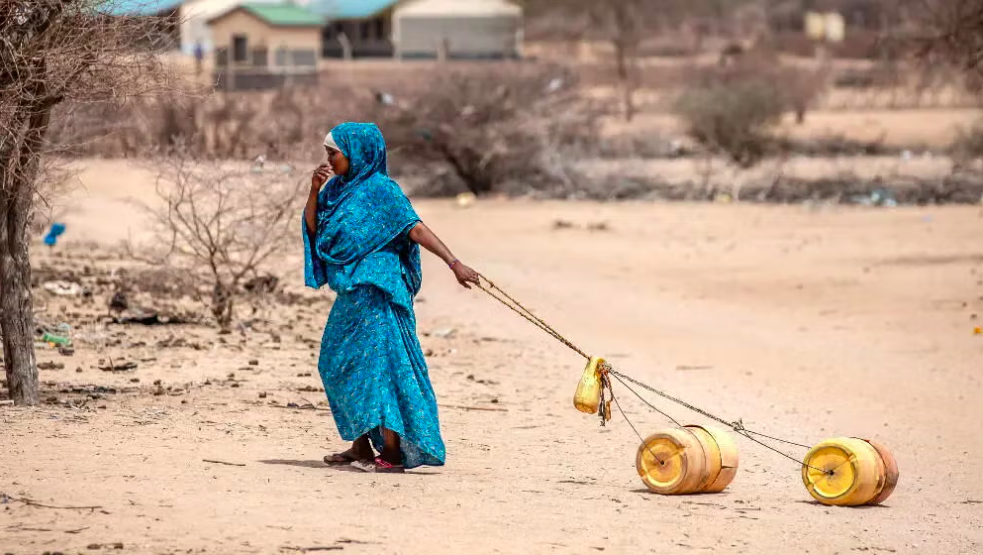
The dry conditions are expected to have direct consequences for food security, especially in arid and semi-arid areas.
“The dry weather conditions expected during the month are likely to worsen the food security over the northern and parts of the eastern sectors of the country as availability of food, water and pasture for human as well as livestock use is expected to decline further,” the department warned.
It added that national and county governments, together with humanitarian agencies, should act early to reduce the risk of hunger and livestock losses.
The department advised farmers to monitor weather updates closely, use available water carefully, and take advantage of any rainfall that occurs in January to support crops still in the fields.
Communities were also urged to prepare for heat stress, water shortages and increased pressure on food supplies as the dry season continues.