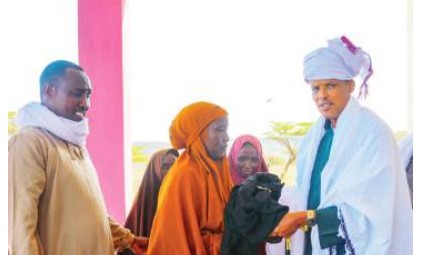
The Director of Criminal Investigations, Mohamed Amin, has pledged a robust and uncompromising approach to combating drug and substance abuse in Kenya.
Wrapping up a security assessment tour in Marsabit county, he announced plans to strengthen the DCI’s Anti-Narcotics Unit (ANU) with advanced tools, intelligence capabilities and forensic resources.
“We are going to heighten our operations on the drug menace in the country," Amin said, describing substance abuse as a profound threat to national development and security.
"We use this opportunity to warn the barons and consumers at large.”
Amin said collective action is urgently needed to protect communities, particularly young people, from the devastating effects of alcohol and drug abuse.
He called for stronger collaboration between communities and police, while warning that law enforcement officers complicit in illicit networks will face strict consequences.
The DCI director commended officers for their dedication, while emphasising the role of local communities in identifying and dismantling drug networks.
Marsabit, he said, is among the leading drug trafficking routes in the country.
He directed police commanders nationwide to take decisive action against sellers, traffickers and distributors of illicit substances.
Amin also warned that any government official or police officer found protecting or enabling drug networks will be held fully accountable, stressing that no one is above the law in this critical fight.
During the tour, Amin visited several police stations, assessed operational readiness and engaged directly with officers and local residents to boost morale and foster collaboration.
His remarks come on the heels of similar warnings from Interior CS Kipchumba Murkomen, who declared 2026 a decisive year in the fight against drug and substance abuse.
“This is the year we are liberating our youth from the yoke of drug and substance abuse. I am telling the major distributors of drugs and adulterated ethanol that your days are over,” he said.
The CS further announced plans to meet the Inspector General of Police, Douglas Kanja, to operationalise President William Ruto’s directive to strengthen the Anti-Narcotics Unit with an additional 500 officers.
He called on county governments to establish at least one rehabilitation centre in every county to support recovery and reintegration for individuals affected by alcohol and drug abuse.
Ruto, in his New Year address from Eldoret State Lodge, declared alcohol and drug abuse a national emergency that threatens public health, national security, productivity and the social fabric of the country.
He highlighted alarming statistics showing that one in six Kenyans aged 15-65 uses at least one substance of abuse, with more than 4.7 million people affected, noting that initiation into harmful use often begins in the teenage years.
To tackle the crisis, the government plans to expand the ANU from 200 to 700 officers, equipping the unit with modern surveillance, intelligence, forensic and financial investigation tools.
The unit will target high-level drug traffickers and illicit alcohol networks, with asset tracing, seizure and forfeiture playing a central role.
Recovered assets will be redirected toward prevention, rehabilitation and treatment programmes.
Ruto warned that any government official or security officer found colluding with traffickers will be prosecuted and dismissed from service.
Over the past three months, authorities have mounted nationwide operations targeting drugs and illicit alcohol, resulting in arrests and the destruction of tonnes of seized substances.
With these measures, the government signals a comprehensive, multi-agency approach to curbing substance abuse and safeguarding the nation’s youth and future.