In 2025, Kenya’s transport landscape underwent a striking transformation.
What had been a patchwork of stalled road projects and under-utilised rail networks turned into a renewed engine for mobility, economic growth, and long-term infrastructure sustainability.
The year marked not just the resumption of construction, but a deep shift in how the country funds, governs, and conceives infrastructure.
Roads that had long lay idle echoed with the rumble of machinery, while rail lines threaded into city hearts, easing congestion and opening new frontiers of connectivity.
At the heart of this transformation was the revival of over 580 stalled road projects, made possible by a groundbreaking financing model built around Kenya’s Road Maintenance Levy Fund (RMLF).
The Kenya Roads Board (KRB) successfully securitised a portion of this fuel levy — specifically, Sh 7 out of every Sh 25 collected per litre — channeling future revenues into a special purpose vehicle (SPV) that raised Sh 175 billion.
Rather than borrowing more or diverting allocations from the national budget, this model unlocked immediate capital while preserving debt sustainability.
It also enabled progress on major corridors such as the Kenol–Sagana–Marua Road, a transformative part of the northern transport network.
As Roads and Transport Cabinet Secretary Davis Chirchir explained, “this isn’t a loan. We’re not increasing Kenya’s debt. We are using a sustainable model that allows us to clear what we found when we came into office and get stalled projects moving again.”
The African Development Bank, a co-financier of the Kenol–Sagana–Marua Road, describes the highway as part of the “Great North Road” that runs from Mombasa through Nairobi to Moyale, connecting Kenya to Ethiopia and Addis Ababa.
“It forms part of the 800km stretch between Nairobi and Moyale and passes through the counties of Murang’a, Kirinyaga, Machakos, Embu, and Nyeri. The road begins at the junction with C71 (Kenol), traverses Makutano (Junction A2/B6), Sagana, and Karatina, and terminates at Marua (Junction A2/B5),” the Bank notes.
Although construction had previously slowed, work resumed significantly later in the year.
Nairobi’s urban road network also experienced a wave of upgrades — especially in the form of interchanges, viaducts, and flyovers, as city authorities seek to relieve chronic congestion.
Among the most significant is the construction of the Gitaru Interchange in Limuru.
The interchange recorded major progress in 2025, with works accelerated ahead of its scheduled opening.
The works form part of a broader upgrade of the Nairobi–Nakuru–Mai Mahiu highway corridor, aiming to improve traffic flow and safety along one of the busiest western-corridor routes.
Closer to the city centre, the Upper Hill–Haile Selassie Overpass project also restarted after a hiatus.
In August, the Kenya Urban Roads Authority (KURA) confirmed that it was in the process of constructing two viaducts within Nairobi CBD, similar to expressways, to ensure seamless traffic flow across the city.
"A viaduct is an elevated road over land, like what we have in an expressway. It integrates very well in an urban environment so that the visual intrusion is not interfered with. We are also expanding the walkways all the way from Valley Road to the CBD," Assistant Director at the Authority's Directorate of Urban Design Benjamin Asin said.
KURA clarified that recent hoarding walls along Kenyatta Avenue are safety measures, not housing construction, reinforcing that the project is indeed a viaduct — part of a multi-component “urban mobility” plan.
The project, which complements the Nairobi Expressway, is expected to further reshape the city’s skyline once completed.
 Ngong road flyover [KURA/X]
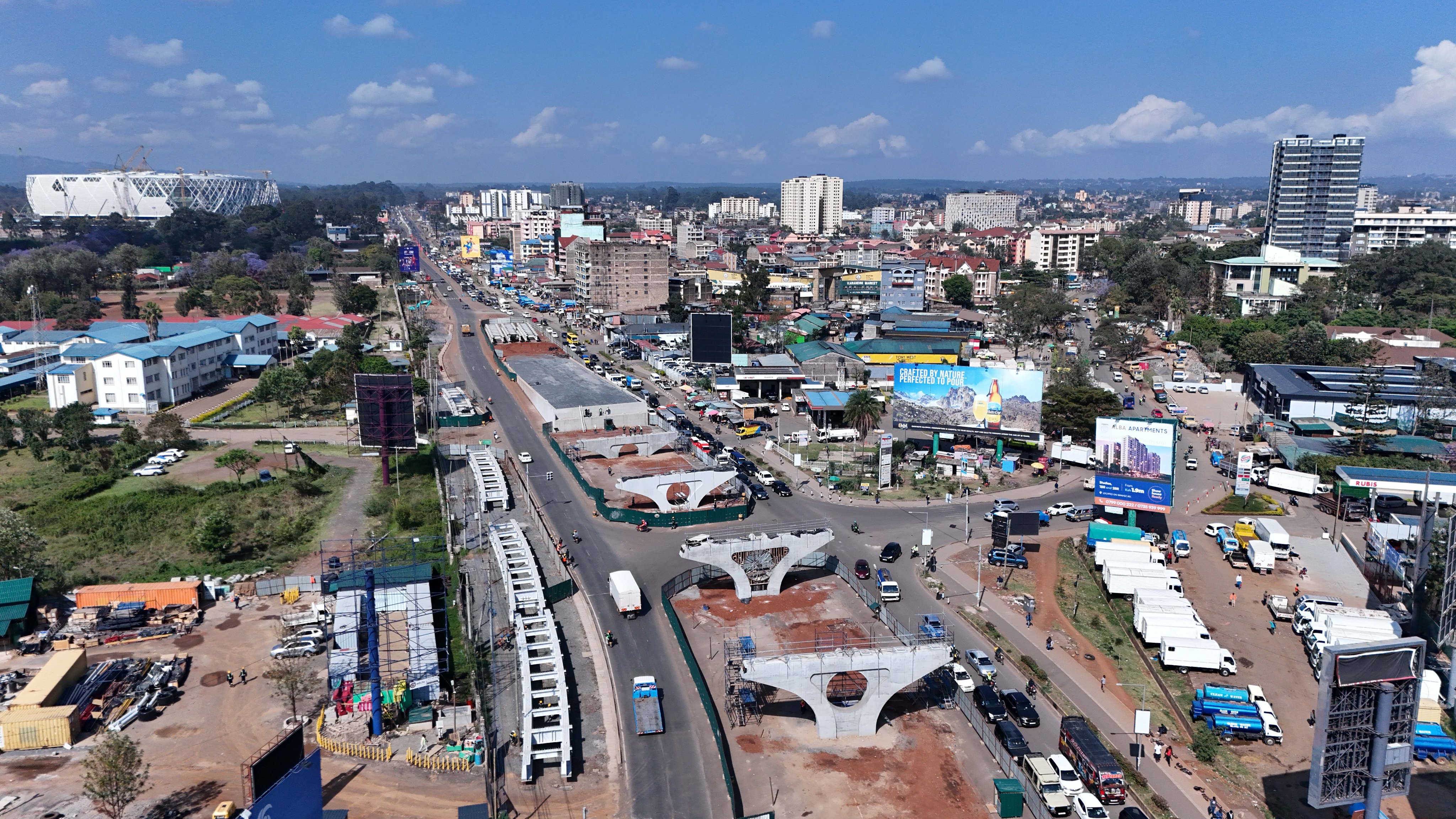
Further out along Ngong Road, the authority is also constructing a flyover at the junction near Junction Mall.
In November 2025, KURA announced a 23-day traffic disruption to allow for the erection of the steel structure for the flyover.
The flyover is part of the ongoing corridor modernisation — expected to ease traffic along one of Nairobi’s busiest south-west arteries.
Together, these projects reflect a determined push to reconfigure Nairobi’s road network — reducing congestion, easing connectivity between suburbs and the CBD, and laying the groundwork for improved traffic flow.
The coordination between KeNHA (for national highways/interchanges) and KURA (for urban roads, viaducts, flyovers) shows an urban-wide strategy rather than piecemeal interventions.
If completed as planned, these interchanges and overpasses could significantly alter commuter experience in Nairobi — cutting delays, improving safety, and enabling more efficient use of both private and public transport.
While roads were being revitalised, Kenya’s railways also saw profound change in 2025 — with both commuter and freight services gaining new momentum.
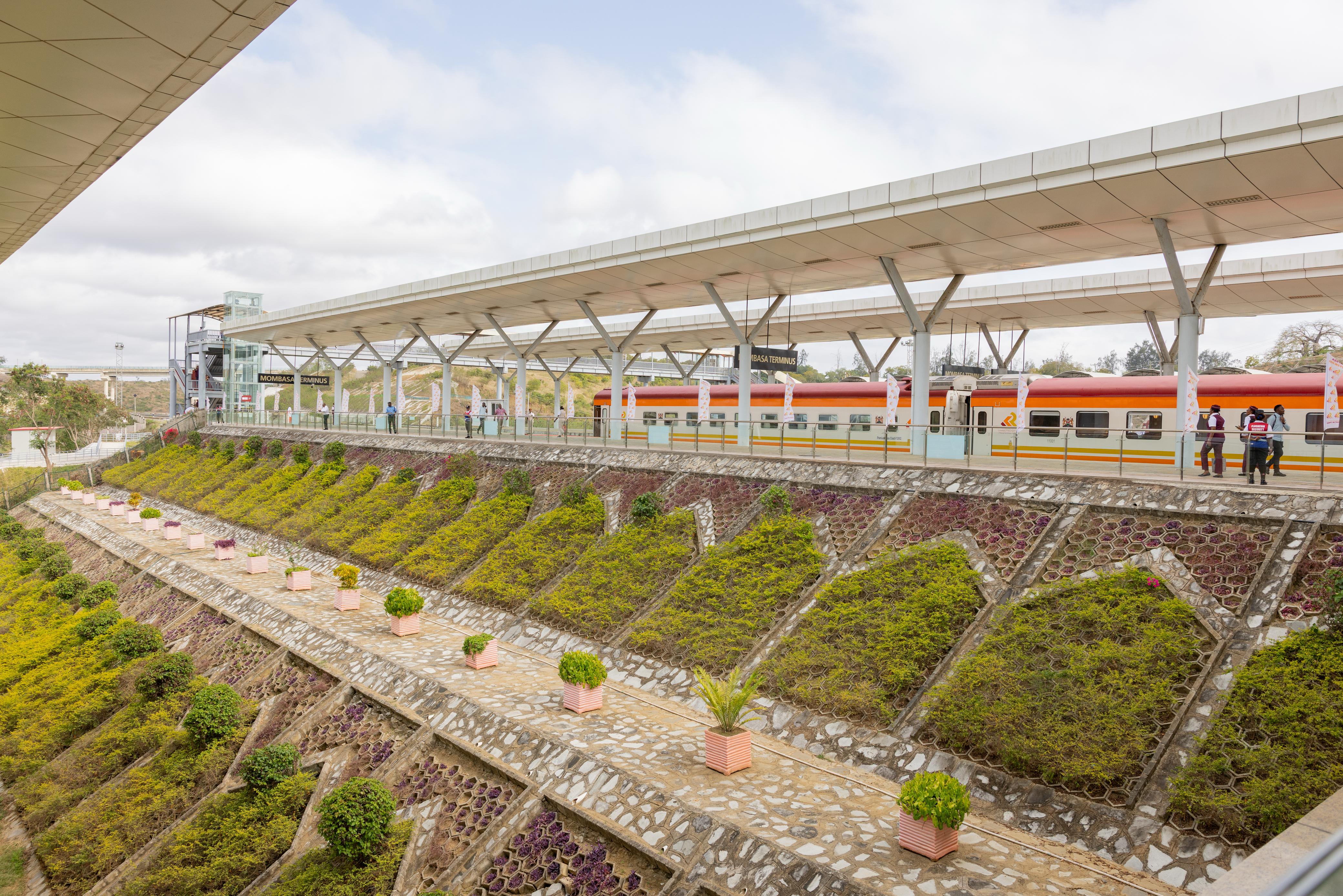
One of the most symbolic achievements was the commissioning of the Mombasa Commuter Rail Service, officially opened by President William Ruto in September.
The service links the Miritini SGR terminus with Mombasa city centre via a rehabilitated 13.8-kilometre line and a 2.8-kilometre link to the SGR — sealing a gap that had long constrained seamless rail-to-road transfers.
This commuter rail not only eases traffic on coastal roads, but also redefines how Kenyans move in a key economic hub.
“I am pleased to inform you that the project is now complete and ready for operations. Our goal is to reduce commuting time, ease road congestion, cut carbon emissions, and provide safe, reliable, and affordable transport for all,” said Transport PS Mohamed Daghar.
The project involved the construction of modern passenger stations in Mombasa town and Miritini, the building of a 2.3-kilometre railway bridge across the ocean at Makupa, and the rehabilitation of 16.6 kilometres of existing Metre Gauge Railway (MGR) line.
By connecting to the SGR terminus, the Mombasa rail link helps integrate local commuter networks with long-distance rail, thereby reducing reliance on road transport for short city trips.
Additionally, following the introduction of Kenya Railways' premium-class passenger trains on the Mombasa–Nairobi Standard Gauge Railway (SGR) in 2024, demand has surged significantly.
In November, the corporation announced that all premium-class trains were fully booked through February 2026, prompting the addition of more Madaraka Express services to meet the growing demand.
"The demand for this premium class is high, so we are now going to order more coaches and equipment to ensure that everyone is accommodated. And for your information, we are booked until February," SGR Managing Director Philip Mainga said.
This surge underscored both the rising appeal of rail travel and the railway system’s readiness to scale rapidly to meet demand, reinforcing how the new feature has reshaped the sector this year.
Complementing these moves was a major institutional reform: Parliament passed the Government-Owned Enterprises (GOE) Bill, 2025, which formalises a new governance architecture for state corporations, including Kenya Railways.
The Bill, now the Government-Owned Enterprises Act, provides a clearer legal framework for the establishment, performance, and ownership of government-run entities, enabling better accountability, efficiency, and potential private-sector partnerships.
Closely tied to this is the government’s broader financing vision.
In 2025, the concept of a National Infrastructure Fund (NIF) gained traction: a vehicle intended to mobilise long-term investment for major national projects.
President William Ruto, during his 2025 State of the Nation Address, insisted that Kenya’s ambitions in infrastructure require sustained and innovative financing models.
“Our development ambitions require sustained, large-scale investment in education, including roads, energy, water systems, logistics, and digital networks.”
His remarks reaffirmed his administration’s intention to lean on the NIF as a long-term development tool.
The importance of roads and rail in this transformation cannot be overstated.
On the road’s side, the revival of hundreds of projects means communities previously cut off or underserved now have renewed access to markets, health services, and schools.
Improved road conditions reduce vehicle operating costs, shorten travel times, and stimulate local economies.
Rail, meanwhile, is being reimagined as both a commuter and freight backbone.
The Mombasa commuter rail exemplifies how rail can decongest city streets and make urban mobility safer.
The SGR’s surging demand shows that Kenyans are increasingly opting for passenger rail for long-distance travel — a shift that helps reduce road congestion, lowers accident risks, and potentially cuts emissions.
Meanwhile, institutional reforms via the GOE Act and stronger financing through the NIF lay the groundwork for more efficient, transparent, and sustainable rail operations over the long haul.
The transformation of Kenya’s transport infrastructure in 2025 represents a turning point.
Roads that were once liabilities are becoming assets; rail lines are not just for freight, but a lifeline for urban mobility; and financial innovation is paving new ways to pay for development without plunging the country deeper into debt.
The securitisation of the RMLF, the revival of commuter rail in Mombasa, the surge in SGR demand, and the establishment of the NIF and GOE framework all point to a future where transport is not just about movement — it’s about opportunity.
In conclusion, 2025 was not merely a year of construction; it was a year of transformation — a recalibration of how Kenya builds, funds, and governs its transport future.
Though there were challenges — including stalled projects and financial constraints — the sector still recorded significant milestones that reshaped mobility and strengthened Kenya’s transport network in 2025.
As the country moves forward, the big question will be whether this renaissance can be sustained.
If the institutions, funding models, and political will forged in this year hold firm, Kenya may well be laying the foundation for transport-driven growth for decades to come.