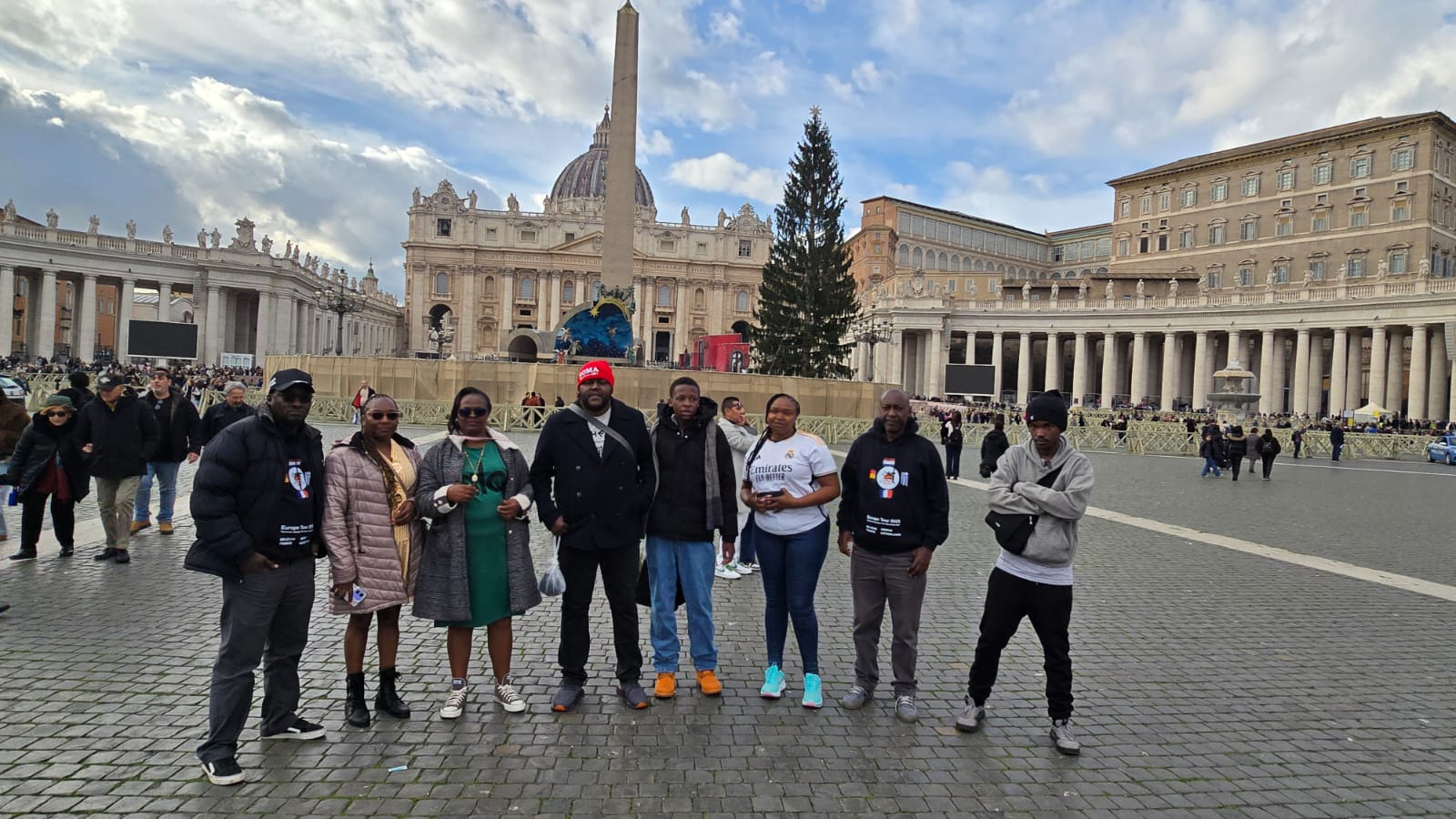
 The Kenyan Europe 2025 team courtesy of Esperanza tours and travel at the Vatican City, Holy Family Basilica in Rome, Italy in December 2025/HANDOUT
The Europe Tour 2025, organised by Esperanza Tours and Travel Company, provided a rich experience for Kenyan travelers, taking them through four European Union countries; Greece, Italy, Belgium, and the Netherlands.
The tour combined tourism with education and cultural exploration, going beyond traditional sightseeing.
It showed how Europe has actively transformed travel into a means for cultural preservation, economic growth, and regional unity. Under the guidance of Joseph Kinuthia, the Director of Esperanza Tours and Travel, the journey was crafted to deliver genuine, real-world experiences.
Participants saw not just Europe’s famous landmarks and rich heritage, but also the realities of cross-border movement. They gained firsthand insights into the opportunities and challenges of traveling within the EU.
From the start, the tour emphasized a growing trend among Kenyan travelers toward experiential journeys that focus on learning, history, and meaningful global exposure.
Athens, Greece, served as a significant entry point into Europe’s complex past, where ancient civilization, religious heritage, and modern governance coexist. Visits to Ancient Corinth and the Archaeological Museum encouraged participants to reflect on early Christian history and the teachings of the Apostle Paul.
They also saw how Greece has preserved its heritage as a sustainable and valuable tourism asset. Being present at sites referenced in biblical and historical texts created a deep emotional and intellectual connection.
As Esperanza Tours and Travel Director Joseph Kinuthia noted, “Standing where Paul once preached made history come alive. It reminded us that tourism is not just movement but a connection with time, faith, and culture.”
The experience highlighted the importance of heritage tourism and showed how impactful storytelling can turn travel into a deeply engaging and unforgettable journey.
The Athens experience also showcased the economic power of sports tourism with a visit near the Olympiacos Stadium.
Olympiacos Football Club, one of Europe’s most successful teams, illustrates how football clubs can drive economic growth. Owned by Evangelos Marinakis, who also owns Nottingham Forest in the English Premier League, Olympiacos has tens of thousands of registered members and a dedicated global fan base.
Official merchandise sold at the stadium highlighted how sports tourism supports branding, job creation, and local businesses, while providing fans affordable access to authentic products.
In Rome, Italy, the group encountered the immense scale and influence of global faith tourism at Vatican City. St. Peter’s Square was filled with worshippers and visitors from around the world, highlighting the Vatican’s unique role as a spiritual center and a major tourism destination.
Although access to St. Peter’s Basilica was limited due to large crowds, this offered a valuable lesson in the logistical challenges of managing millions of visitors every year. Beyond its sacred sites, Rome revealed the realities of international travel.
Participants navigated complex transportation systems, dealt with airline disruptions, and managed a medical emergency that required quick coordination and strong leadership.
These experiences added depth to the journey, transforming it into a valuable learning opportunity that extended well beyond sightseeing. “International travel demands patience, preparation, and clear leadership.
Every challenge brought us closer as a group,” remarked participant Rose Njambi. These moments turned the tour from a leisure trip into a practical lesson on resilience, teamwork, and flexibility.
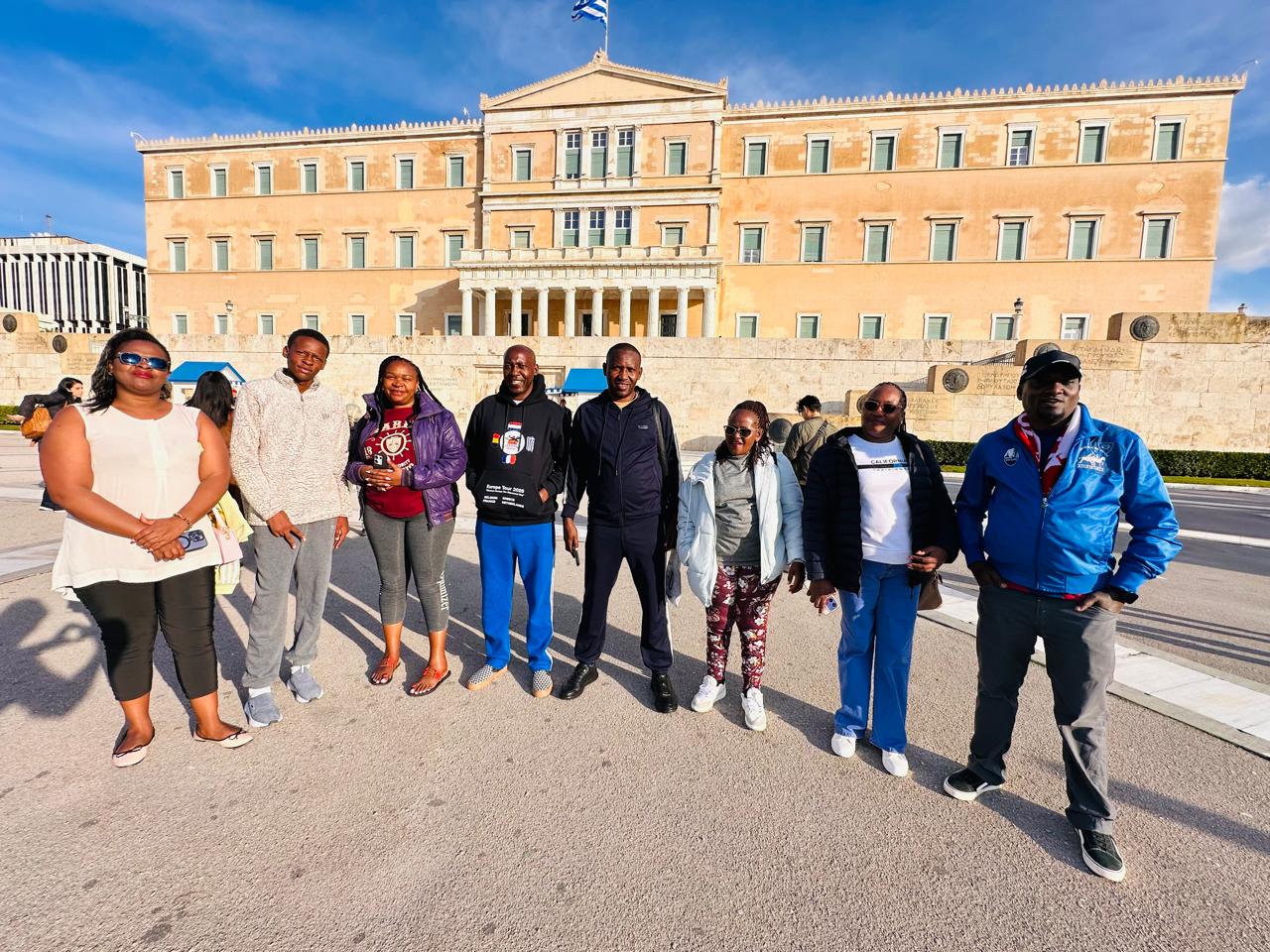 The Kenyan Europe team courtesy of Esperanza tours and travel outside Hellenic Parliament in Greece in December 2025/HANDOUT
Brussels, Belgium, marked a shift from cultural and religious exploration to political and institutional learning. A visit to the European Parliament gave participants a rare, firsthand look at regional governance in action.
Inside its chambers, elected representatives from different member states work together to create laws, approve budgets, and hold European Union institutions accountable. For many in the group, this experience was both eye-opening and stimulating.
It prompted deep reflection on democratic practices, governance systems, and the potential of regional collaboration—lessons that resonated beyond Europe and sparked comparisons with governance models at home. “Standing at the heart of Europe was a dream come true.
It made us think seriously about governance, borderless travel, and economic collaboration,” shared Joshua Mwangi.
Comparisons arose between the European Union and the African Union, particularly concerning policy coordination, free movement, and economic integration. The efficiency of Europe’s infrastructure was evident in smooth rail connections and unified communication systems, where one mobile network worked seamlessly across multiple countries.
The final part of the tour took participants to the Netherlands, moving through Rotterdam and ending in The Hague.
Modern urban planning, effective public transport, and architectural innovation showcased Europe’s commitment to building functional and sustainable cities.
A visit to the International Criminal Court in The Hague held special significance for Kenyan travelers, recalling the post-election violence cases against former President Uhuru Kenyatta and President William Ruto after the 2007/2008 crisis.
Although the cases were later dropped due to lack of evidence, the ICC remains a strong symbol of international justice.
Seeing the ICC in person revived discussions on global justice systems, national sovereignty, and Africa’s relationship with international institutions.
It also underscored how tourism sites can carry political and historical weight beyond their physical presence.
Throughout the journey, the smooth movement across borders, effective transport systems, and coordinated policies highlighted the differences with Africa’s integration efforts. “Traveling across countries without border checks and using a single SIM card raises important questions about regional cooperation in Africa,” Kinuthia noted.
These observations turned the tour into a lively platform for discussions on policy, development, and business. The Europe Tour 2025 concluded with a collective reflection on how structured international travel can be transformative.
Participants recognised that such journeys expand perspectives, strengthen tourism efforts, and promote meaningful cultural understanding. Esperanza Tours and Travel confirmed that the lessons learned will directly influence future travel programs, planning, and customer experiences.
“This is not the end but the start of future journeys,” Kinuthia said, noting that plans for new international tours are already in progress. The tour ended on December 12, Kenya’s Jamhuri Day, a symbolic conclusion that combined national pride with global exposure.
For participants, the Europe Tour 2025 was much more than a travel trip—it served as an engaging classroom, a bridge between cultures, and a powerful reminder of how travel can inform, connect, and inspire.
The writer is Joel Magu, a Strategic Communication Consultant