TikTok has rapidly evolved from a platform for dance trends and lip-syncing challenges into one of the most powerful social media spaces of the decade.
For Generation Z, it is more than an entertainment app; it is a community hub where creativity meets activism.
Through short videos, young people share stories, emotions, and experiences that connect them in real time.
The platform’s algorithm gives ordinary voices extraordinary reach, helping users rally around causes, amplify injustices, and support one another in times of crisis.
In Kenya, TikTok has become a space where Gen Z not only entertains but also educates, mobilises, and advocates for social change.
This transformation was evident during the Gen Z protests, where TikTok became a vital tool of activism.
It was used to broadcast live updates, organise peaceful gatherings, and document events that mainstream media missed.
What began as a heartbreaking story of a teenage boy caring for his ailing father in rural Nyeri turned into a powerful symbol of kindness and hope across Kenya.
The 17-year-old Vincent Kaluma , famously known as Kaluma Boy, captured the nation’s attention after sharing emotional videos on TikTok showing his daily struggles to care for his bedridden father.
His story, told through raw and honest posts, revealed the harsh reality of a young man balancing caregiving duties, casual labour, and the pain of watching his father recover from a stroke.
Kaluma’s father suffered a severe stroke in 2024 that left him in a coma for three months. When he was discharged, he required constant medication and therapy.
Kaluma took full responsibility for his father’s care. He began working on nearby tea farms to buy food and pay for medical needs, documenting the journey on social media.
The videos quickly spread, touching millions of Kenyans who were moved by his resilience and humility.
Within weeks, what started as a few sympathetic comments online had grown into a nationwide campaign of compassion.
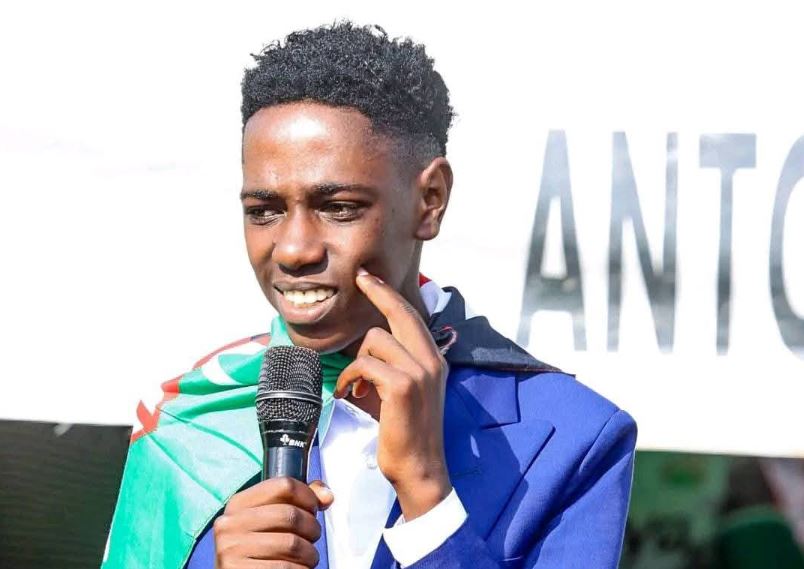
On September 28, thousands of Kenyans, many of them young people, travelled to Othaya to meet him in person.
They brought donations, food, and medical supplies, in what became one of the largest spontaneous acts of kindness seen in recent years.
It became a rallying point for a generation, showing how the power of digital storytelling and community spirit could unite people for good.
The “Kaluma Boy” movement became a trending conversation online, celebrated as an example of how empathy can flourish in a time of hardship.
As messages of support poured in, organisations, leaders, and well-wishers began reaching out to secure Kaluma’s future.
In a heartwarming turn, he was awarded a university scholarship, a gesture recognising not just his perseverance but also the national outpouring of support that his story inspired.
“I didn’t expect any of this. I was just taking care of my dad. I thank everyone who stood by me and gave me strength,” he said after the visit.
Presidential Advisor Dennis Itumbi backed the viral idea of a TikTok Community Hospital, a social media-driven project that captured national attention for its ambitious plan to crowd-fund a modern hospital through Kenya’s growing community of online creators.
The proposal began when Kaluma Boy shared emotional videos of himself caring for his ailing father after a stroke.
His story touched millions and sparked a wave of support, with TikTok users rallying behind the idea of building a hospital powered by digital unity rather than traditional donors.
Speaking during a Creators’ Workshop in Kiambu County, Itumbi praised the initiative, saying it reflected Kenya’s long-standing culture of community-led projects.
“If TikTok creators can organise themselves and build a modern hospital, that would be brilliant,” he said.
He noted that the plan mirrors the spirit of past mission hospitals and faith-based facilities established through collective action and goodwill.
Itumbi, who heads the Presidential Council on Special Projects and Creative Economic Coordination, used the event to challenge TikTok to make monetisation fairer for African creators.
The TikTok Community Hospital concept since evolved into a larger conversation about youth activism, digital influence, and community-driven development.

INSPIRING MILLIONS THROUGH TECH
Tech educator Roy Kanyi became a household name for demystifying technology and inspiring young innovators.
In February, TikToker Kanyi was named among six content creators from Sub-Saharan Africa (SSA) to watch this year.
Kanyi was the only Kenyan on TikTok’s 2025 Discover List, which celebrated 50 content creators globally across five categories, namely: Icons, Innovators, Foodies, Educators, and Originators.
The tech enthusiast was recognised in the ‘Educator’ category owing to his ability to simplify the complex world of gadgets and electronics for his audience.
“His engaging, relatable content helps users make informed decisions on smartphones, televisions, and tech accessories, making him a go-to creator for tech education,” TikTok said in a statement.
Azziad Nasenya, often called Kenya’s “TikTok Queen,” uses her influence to promote self-expression and empowerment.
Nasenya is one of Kenya’s most recognisable TikTok stars, a pioneer who helped shape the country’s digital entertainment landscape.
She rose to fame in 2020 when her energetic dance to the hit song Utawezana went viral, but what began as a viral moment quickly grew into a multifaceted career that blends entertainment, empowerment, and entrepreneurship.
On TikTok, Azziad has built a loyal following by showcasing her creativity through dance, fashion, and lifestyle content.
Her charisma and consistency turned her into one of the first Kenyan influencers to prove that digital platforms could launch serious careers.
Over the years, she has evolved beyond performance to become a role model for young women navigating the challenges of online fame.
Through her videos, she encourages authenticity and confidence, often telling her audience to believe in their uniqueness and never dim their light.
Azziad has also used her influence for advocacy and education. She has partnered with organisations on campaigns promoting youth empowerment, responsible social media use, and creative industry growth.
As a content creator, she actively highlights opportunities within the digital economy, showing how young people can turn their passions into livelihoods.
Her work has made her a key voice in discussions about Kenya’s creative economy, digital inclusion, and women’s representation in media.
In 2025, Azziad continued to make headlines not just for her entertainment content but for her positive impact on Kenyan youth culture.
CHAMPIONING ENVIRONMENTAL SUSTAINABILITY
Another TikToker, Anita Soina, emerged as one of Kenya’s most influential young voices using the platform to champion environmental sustainability, youth empowerment, and gender equality.
She has redefined what activism looks like in the digital age using short, engaging videos to spark conversations about climate change and inspire practical action among young people.
Soina’s journey began long before she became a social media sensation. She is an environmentalist, author, and politician who has been advocating for climate action since her teenage years.
Through her posts, she simplifies complex issues like pollution, water scarcity, and climate resilience, making them relatable to the
She uses humour, challenges, and trending sounds to draw attention to serious topics, from deforestation to plastic waste.
Her TikTok presence has attracted collaborations with international organisations and sustainability campaigns, highlighting her ability to bridge local voices with global movements.
Her efforts have earned her recognition, including a nomination at the 2025 TikTok Awards Sub-Saharan Africa in the Social Impact Creator of the Year category, a nod to how she’s using digital media for real-world change.
Beyond environmental issues, Soina also speaks about women’s leadership and inclusion. She often shares motivational content encouraging young women to step into spaces of influence and take part in decision-making processes.
Her approach blends advocacy, education, and empowerment, showing that social media can be a tool not just for entertainment but for mobilising communities toward a greener and fairer future.
The conversation around content creation in Kenya took a new turn in 2025 when the government and digital platforms, including TikTok, began engaging directly with creators on issues of sustainability and monetisation.
What started as scattered concerns about fair compensation, data regulation, and digital safety evolved into a structured dialogue on how to make the creator economy a viable part of Kenya’s national development agenda.
In October 2025, a forum held in Kiambu County brought together representatives from the Ministry of Youth Affairs, the Ministry of ICT, TikTok Africa, and dozens of top Kenyan creators.
The meeting marked one of the first official government-platform engagements focused specifically on supporting the country’s rapidly growing digital creator community.
Discussions centred on how to make content creation a reliable source of income, improve transparency in earnings, and align creative work with national youth empowerment programmes.
Government officials acknowledged that content creation has become one of the biggest youth-driven industries in Kenya, employing thousands both directly and indirectly.
They expressed commitment to help creators access funding, training, and safer online environments.
TikTok representatives, in turn, pledged to continue working with local authorities to ensure fair monetisation systems and promote creators who focus on educational, civic, and social-impact content.
A key outcome of the engagement was a joint effort to link creator work with national campaigns in areas such as health, climate action, entrepreneurship, and digital literacy.
This approach recognised influencers not merely as entertainers but as valuable communication partners who can reach millions of young Kenyans faster than traditional media.
The discussions also touched on tax policy, digital rights, and online ethics, critical issues shaping the future of Kenya’s digital economy.
The government called for a balance between regulation and creativity, emphasising that innovation should not be stifled.
The engagement signalled a shift from viewing social media as a threat to seeing it as an economic engine capable of creating jobs, shaping narratives, and amplifying positive social change.
By opening this dialogue, Kenya positioned itself as a regional leader in formalising the digital creative sector.