In a country where headlines often celebrate politicians, tycoons, and top executives, the true story of Kenya’s heart beats quietly in the hands of ordinary citizens doing extraordinary things.
They are teachers, tinkerers, students, and activists, everyday people whose courage and creativity have transformed their communities and inspired the nation.
This year, several Kenyans captured the public imagination not through power or privilege, but through purpose.
From the dusty fields of Nyeri to the slums of Korogocho and the plains of Makueni, these unsung heroes showed what it means to lead with heart.
1. Vincent “Kaluma Boy", The son who moved a nation
When 17-year-old Vincent Kaluma began posting short TikTok videos of his daily routine, feeding his bedridden father, tending tea bushes, cooking simple meals, he never imagined he was about to spark a national movement.
The Star was among the first media houses to spotlight his story in late September 2025.
Kaluma’s devotion to his ailing father, who suffered a stroke, struck a chord with millions of Kenyans.
His videos, simple but raw, revealed the quiet burden of caregiving that many youth shoulder in silence.
"I don’t have money, but I have time and love. That’s what keeps my father alive,” Kaluma said in a viral interview at his Othaya home.
Within days, his story ignited what was termed as “a wave of kindness rarely seen online.” Kenyans raised funds, paid his school fees, and brands pledged support.
The East African University offered him a full scholarship to study Marketing, while community members refurbished his father’s house.
President William Ruto mentioned him during a youth empowerment forum, saying, “Vincent reminds us that greatness begins in the home, in responsibility and love.”
Kaluma’s story was proof that ordinary compassion can command extraordinary attention.
2. Evans Wadongo- Man who lit up the villages
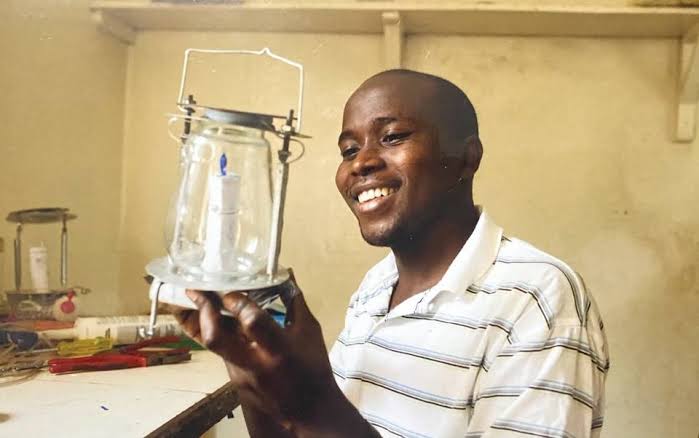
Long before Kenya began talking about digital transformation, Evans Wadongo, a young engineer from Western Kenya, was lighting up the darkness, literally.
Armed with scrap metal, LEDs, and a dream, Wadongo designed a simple solar lantern known as “MwangaBora” (good light).
His invention has illuminated more than 50,000 rural homes, allowing children to study after sunset and families to reduce their reliance on kerosene.
His journey was chronicled from a humble village schoolboy who studied under dim paraffin lamps, to an internationally recognised innovator featured on CNN and Forbes’ “30 Under 30”.
“I just wanted children not to strain their eyes like I did,” Wadongo once said in an interview. “Innovation isn’t about fancy labs. It’s about solving real problems.”
Today, Wadongo runs GreenWize Energy Ltd, a social enterprise that empowers rural youth to build and distribute affordable clean-energy solutions.
He remains grounded, still visiting schools in Bungoma and Siaya to encourage young innovators.
His life’s work shows how a simple idea, born of need, can change the fate of thousands.

3. Hanifa Adan- From Korogocho to the national stage
When Nairobi’s Korogocho slum flooded in 2024, Hanifa Adan refused to stay silent.
She picked up her phone, went live on social media, and directly called out city authorities for decades of neglect.
Her courage sparked not only outrage, but also change.
Her story was profiled as part of a new generation of Kenyan youth activists “holding power to account.”
Through her viral videos and street engagements, Hanifa forced the Nairobi City county to dispatch engineers to unclog drains and repair roads that had been impassable for years.
But that was only the beginning.
Hanifa became a leading voice during the 2024-2025 Gen Z protests, which saw thousands of young Kenyans demand accountability and policy reform.
Unlike political actors, she stayed rooted in community issues, sanitation, safety, and social welfare.
“Activism doesn’t start with anger,” she said in June.
“It starts with love for your people. We deserve a city that works for all.”
Hanifa has since founded the Korogocho Community Watch, a volunteer group focusing on waste recycling, youth mentorship, and civic education.
Her journey from a small informal settlement to the national conversation illustrates the power of grassroots leadership, a reminder that democracy’s loudest heartbeat often echoes from the margins.
4. Patricia Kombo- The tree girl of Makueni
When global climate talks seem too abstract, Patricia Kombo, 28, makes environmentalism personal.
Known locally as “the tree girl,” she started PaTree Initiative in her rural Makueni village to teach schoolchildren about conservation, one seedling at a time.
Her story featured her in an environmental series titled “Young Voices for the Planet”, noting that her campaign has planted more than 350,000 trees since 2019.
Her approach is both practical and poetic, pairing tree planting with storytelling, art, and environmental clubs in schools.
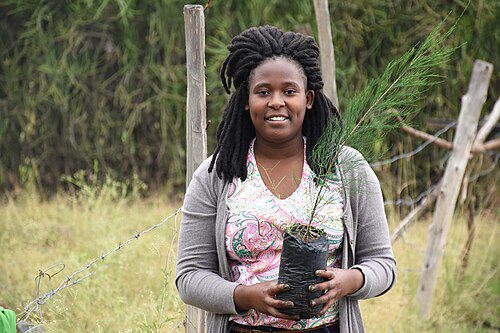
In a 2025 interview, she said, "Planting a tree is like writing a letter to the future. It’s how we say, we were here, and we cared.”
Kombo’s efforts earned her recognition from the United Nations Convention to Combat Desertification (UNCCD), which named her a Land Hero.
She has spoken at global forums but continues to live and work in Makueni, focusing on water conservation and sustainable farming.
Her story is a reminder that Kenya’s climate future may depend less on international summits and more on the quiet persistence of people like Patricia, who plant hope, literally, in the soil.
5. Alice Wanjiru- Kenya’s 11-year-old eco hero
In September 2025, we ran a heartwarming headline: “At just 11, Alice Wanjiru is Kenya’s Eco-Hero.”
It told the story of a cheerful girl from Ruai, Nairobi, whose environmental passion earned her global acclaim.
Alice began her journey cleaning up her neighbourhood’s sewage-clogged streams.
With help from her parents and classmates, she launched a campaign called “Let’s Green Ruai”, planting trees and flowers around the Nairobi Water and Sewerage Company’s treatment site.
“We just wanted our home to smell fresh again,” she told media during an interview after receiving the 2025 International Young Eco Hero Award.
Her project grew from a small school activity into a full-fledged community movement that engaged residents, boda boda riders, and local youth groups.
Today, her initiative has restored over five hectares of degraded land, and schools across Nairobi’s Eastlands are replicating her model. Environmentalists hail her as one of Kenya’s youngest climate ambassadors.
“Alice reminds us that leadership has no age,” we (the Star) noted.
“She teaches us that action, not age, defines impact.”
The bigger picture: Kenya’s quiet revolution
What connects Kaluma, Wadongo, Hanifa, Kombo, and Alice is not fame; it is faith.
Faith in small beginnings, in community, and in the idea that every Kenyan can be a force for good.
Each represents a different front in Kenya’s silent revolution of citizen action, from caregiving and clean energy to activism and climate restoration.
As political analyst Herman Manyora recently stated: “While the political class argues over positions, ordinary Kenyans are busy fixing what matters to families, schools, neighbourhoods, and nature. They are the real nation builders.”
Their stories reflect the broader reality that Kenya’s resilience is not found in policies alone but in people, in the farmer harvesting rainwater, the teacher under a tree, the student tending his father, or the child planting hope in the soil.
A country built by ordinary hands
As Kenya grapples with economic pressures, social reforms, and the climate crisis, these individuals remind us that progress often begins in unexpected places.
Kaluma shows compassion as power, while Wadongo shows innovation as service.
Hanifa, on her part, shows voice as activism while Kombo shows action as legacy.
Wanjiru shows that no one is too young to lead.
In their quiet ways, they have written a new kind of national anthem, one sung not in Parliament or palaces, but in homes, farms, classrooms, and streets.
Their stories prove that Kenya’s greatness is not built by the mighty; it is sustained by the many.