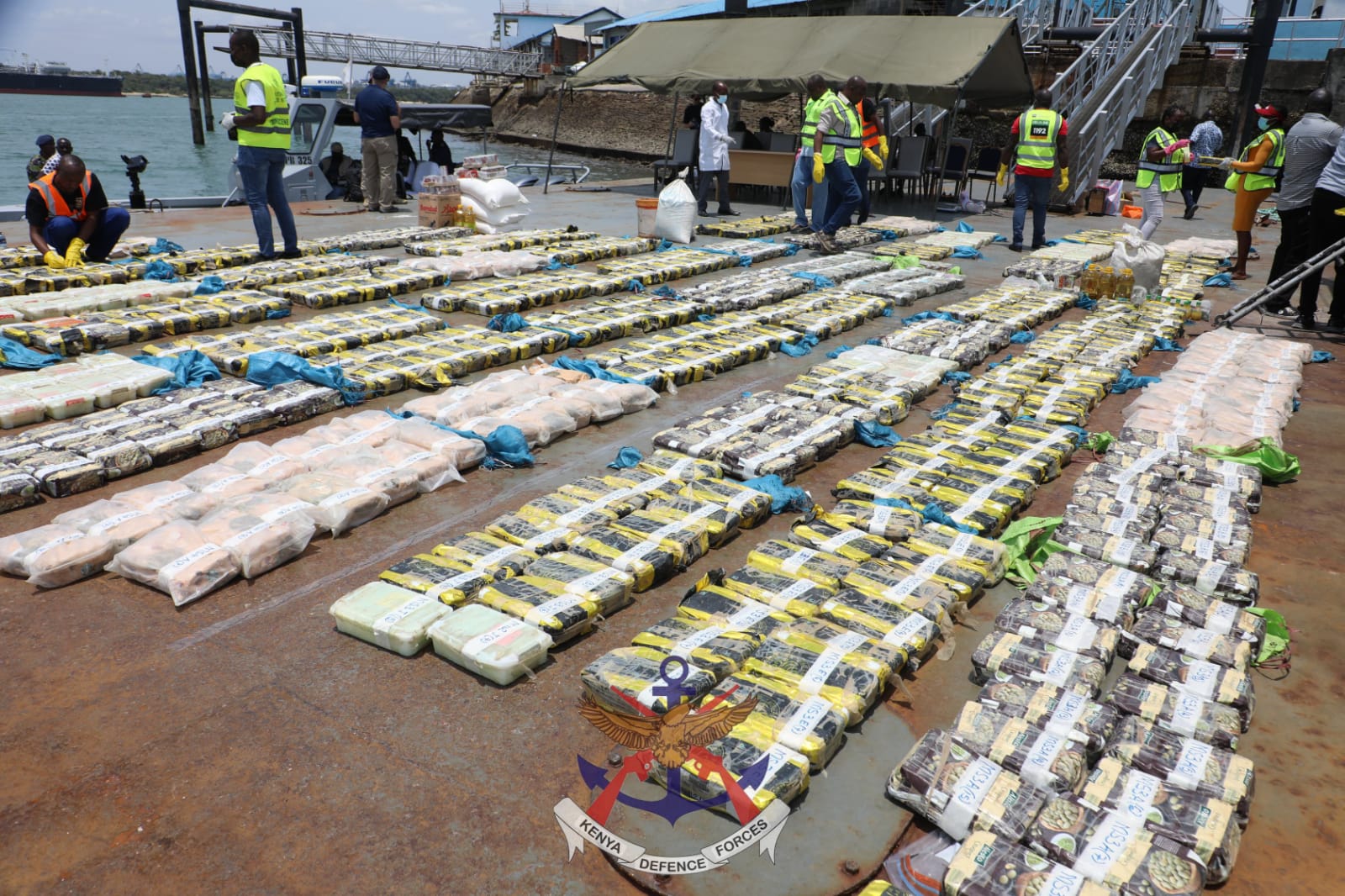
 Part of the drugs that were seized at the Indian Ocean
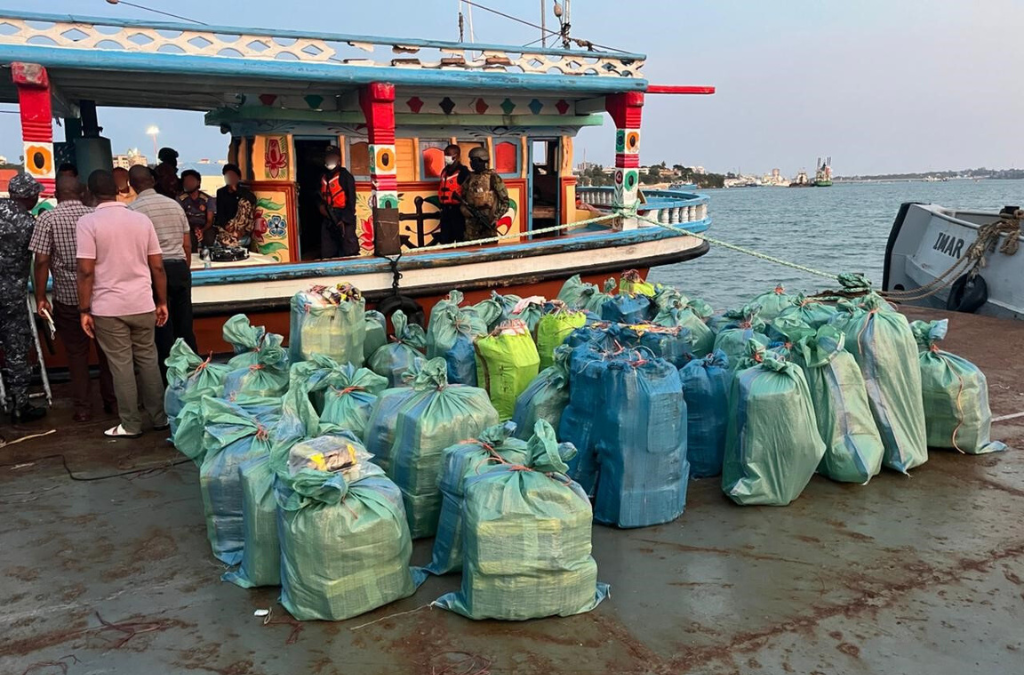 Some of the Meth that was seized in the Indian Ocean./FILE
In October 2025, Kenyan authorities made what was then described as the biggest narcotics haul ever intercepted in the Indian Ocean, a moment that underscored the scale of transnational drug trafficking passing through the region.
Interpol said it supported Kenyan agencies in a successful maritime operation that led to the seizure of more than one tonne of methamphetamine and the arrest of six suspects aboard a flagless vessel.
On October 21, 2025, the Kenyan Navy intercepted a dhow about 340 nautical miles east of the coast of Mombasa, following intelligence shared between the Regional Narcotics Interagency Fusion Cell in Bahrain and the Regional Coordination Operations Centre in Seychelles.
Three days later, the vessel was escorted to Mombasa, where a multi-agency coordination centre was set up under the leadership of the Deputy Commander of the Kenyan Navy.
In its advisory and mentoring role, Interpol oversaw search operations and ensured rigorous crime scene management to support future court proceedings.
Interpol also coordinated operational support from the U.S. Naval Criminal Investigative Service, which deployed two officers to assist with the searches and engagement with the crew.
Inside the dhow, authorities uncovered 769 packets of a crystal substance weighing 1,024 kilograms.
Analysis by the Government Chemist later confirmed the substance was methamphetamine with a purity level of 98 per cent. Experts in Kenya estimated the seizure to be worth more than Sh8.2 billion (USD 63 million), highlighting the enormous financial stakes involved.
Six crew members were arrested and later charged with drug trafficking.
Court battles and a deeper web
A Shanzu court later allowed investigators to continue detaining the six Iranian nationals—Jasem Darzaen Nia, Nadeem Jadgai, Imran Baloch, Hassan Baloch, Rahim Baksh, and Imtiyaz Daryayi—who were at the centre of the trafficking probe. The Director of Public Prosecutions said the extended detention was critical to dismantling a sophisticated narcotics network.
Prosecutors told the court that detectives believed the suspects were linked to a highly organised transnational cartel that used maritime routes to move synthetic drugs into the region. Investigators recovered seven electronic devices, including a GPS tracker, believed to contain crucial intelligence on the origin of the shipment, intended routes, and the financiers behind the operation.
The court authorised the seized substances to be forwarded to the Government Chemist for further analysis and allowed forensic examination of the suspects’ mobile phones at the DCI headquarters. Investigators said the suspects were being probed for trafficking narcotic drugs, contrary to the Narcotic Drugs and Psychotropic Substances (Control) Act of 1994.
Tracing routes and destinations
Director of Criminal Investigations Mohamed Amin and Kenya Navy Deputy Commander Brigadier Sankale Kiswaa confirmed that the vessel had been tracked about 630 kilometres east of Mombasa before being intercepted and escorted to port.
Amin said the operation was a success, noting that the consignment was believed to have been destined for markets within the East African region, though investigations were ongoing to establish both the source and final destination.
He added that the vessel was stateless but crewed by six Iranian nationals, complicating efforts to trace ownership and accountability.
Further investigations revealed that the drugs had been under surveillance by international agencies for months. Police said the consignment had initially been transported on a larger vessel before being offloaded onto the dhow as traffickers planned their next move. Investigators also suspected that some of the drugs may have already entered circulation in the region.
Weeks later, detectives linked the maritime seizure to another interception at Jomo Kenyatta International Airport, where 2.5 kilograms of methamphetamine valued at Sh20 million had been seized en route to Seychelles. Although no arrests were made in that case, authorities said they were pursuing those responsible.
By the close of 2025, the Indian Ocean seizure stood as both a milestone and a warning — a reflection of Kenya’s growing success in intercepting illicit drugs, and a reminder of the vast, hidden networks still operating across sea and sky.