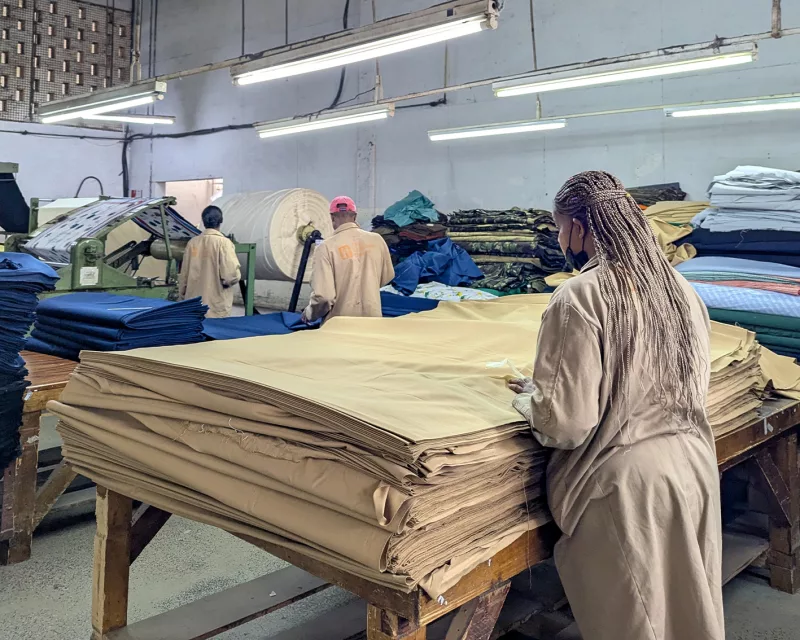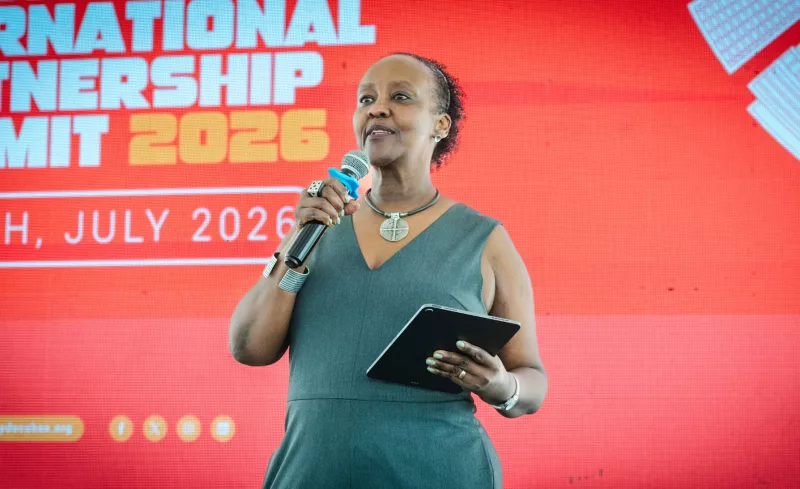
They are reassessing sourcing strategies, and industrial zones in Africa have become viable options for them. Kenya’s Vipingo SEZ pair infrastructure and financing with compliance-ready operations, turning pilot orders into repeat contracts and reshaping sourcing strategies.
The State of Fashion 2026 report notes that brands are adjusting sourcing footprints as trade disruptions increase costs and push companies to diversify beyond Asia. African countries are increasingly appearing on shortlists for new manufacturing contracts as governments, investment agencies and industrial clusters position themselves as reliable alternatives.
Kenya opened the Vipingo Special Economic Zone in Kilifi in September. Designed as a textiles, apparel and value-adding hub, Vipingo provides operational infrastructure and financing mechanisms that enable immediate production.
KCB Group and the African Export-Import Bank committed $300 million and $500 million, respectively to operationalise the zone, covering project finance, working capital, guarantees and trade facilities.
KCB CEO Paul Russo said the investment aims “to catalyse industrial growth in Kenya and the region.”
Afreximbank added that the initiative “strengthens export-oriented supply chains that support local communities”.
The package addresses critical operational needs, from machinery financing to fulfilment of initial orders, reducing early-stage risks that previously discouraged buyers from pilot orders in new African locations. Total development costs are projected at $3 billion once the full industrial and logistics cluster is complete.
Vipingo is a fully serviced zone, with roads, power, water, on-site customs and logistics infrastructure to support immediate operations. Sector analysts say its launch signals Kenya’s ability to offer operational certainty.
Shem Opore of the African Policy Research Institute says recent disruptions expose gaps across apparel-producing countries, where reliance on single export markets or insufficient investment in compliance and productivity leaves factories vulnerable.
“Tariff exposure has become a structural risk for African exporters. Buyers are adjusting sourcing footprints, and the countries that respond first with capacity, compliance and predictable lead times will retain market share,” Opore said.
He added that zones like Vipingo provide the type of operational certainty international buyers increasingly prioritise.
Kenya’s industrial strategy extends beyond Vipingo. Earlier, in October, the Rivatex East Africa textile complex in Eldoret was leased to Arise Integrated Industrial Platforms for 21 years.
Arise must invest in machinery upgrades, clear existing debts and modernise operations to rebuild vertical integration from cotton growers to finished garments.
Development finance institutions are monitoring Vipingo’s integrated model closely. Afreximbank’s combination of capital, project preparation and guarantees reduces early cash-flow risk and supports conversion from pilot orders to repeat contracts. Buyer behaviour already reflects these operational shifts.
At the 2025 Africa Sourcing and Fashion Week in Nairobi, exhibitors from Kenya, Madagascar, Mauritius and Ethiopia reported discussions focused on capacity requirements, productivity benchmarks and delivery timelines. Machinery suppliers showcased upgraded cutting, stitching and finishing systems designed to shorten lead times and meet European and US retailer expectations.
The Addis Ababa edition emphasised quality verification. More than 200 exhibitors, including park-based manufacturers, hosted buyer inspections, compliance reviews and multi-season production planning.
Several sourcing teams scheduled immediate follow-up visits to Hawassa, Bole Lemi and Adama industrial parks to examine workflow, energy reliability and logistics systems.
Ethiopia illustrates the importance of industrial scale. The Industrial Parks Development Corporation reports 177 manufacturing sheds across 13 parks, with more than 90 per cent allocated to investors and supporting more than 100,000 jobs.
Parks, such as Hawassa, Bole Lemi and Adama, combine labour concentration with infrastructure and export facilitation, attracting UK fashion houses and artisan studios.
INDUSTRY AUTOMATION
Factories that invested in automated cutting and line-balancing systems secured multi-season contracts, while others struggled with delivery schedules amid currency shortages and logistics constraints.
Buyers increasingly link orders to demonstrable productivity and quality improvements rather than labour cost alone.
Elsewhere, slow adaptation to trade changes has triggered disruption. In Lesotho, 2025 tariff adjustments under the US Generalised System of Preferences, combined with declining productivity, led to cancelled orders, production halts and layoffs.
Eswatini faced similar pressure as compliance and traceability requirements tightened in 2024, causing some manufacturers to lose contracts due to incomplete labour and environmental documentation.
Madagascar’s apparel industry experienced immediate disruption in 2025 after a 47 per cent US tariff on its exports.
Factories reported sudden volume declines, shift cuts and layoffs. Even minor non-conformities — fire safety, wage payments and chemical management — led to suspended shipments and cash-flow strain.
With exports to the US totalling roughly $733 million in 2024 and employing 180,000 people, industry leaders warned that tariff and audit shocks could put tens of thousands of jobs at risk.
Kenya and Ethiopia have faced similar pressures. Export-oriented textile firms in Kenya saw order cancellations under stricter origin-verification rules in 2024.
Factories in Ethiopia, recovering from prior political and economic disruptions, experienced postponed orders in 2025 due to labour-rights reporting gaps.
Limited reinvestment in technology and dependence on single markets amplified exposure, forcing production suspensions, staffing reductions and scaled-down operations.
Trade shows are increasingly shaping sourcing decisions. Africa Sourcing and Fashion Week in Addis Ababa, with more than 200 exhibitors, shifted from branding to direct sourcing. Buyers conduct quality checks, request pilot samples and schedule audits across Kenya, Ethiopia, Madagascar and Mauritius, using the events as operational validation points.
The emerging pattern is consistent: Africa’s sourcing trajectory aligns with global demand for diversified, tariff-resilient supply chains. Execution determines outcomes.
Buyers require predictable timelines, certified facilities, transparent logistics and measurable productivity gains. Factory-level investment in automation, compliance and workforce capabilities will determine whether inquiries convert into contracts.
“Improvements in customs clearance, energy reliability and regional transport corridors would reduce lead times and enhance export competitiveness,” Opore said.
He said development finance institutions are evaluating machinery financing and quality-assurance laboratories, while regional trade bodies advocate clearer rules of origin to facilitate intra-African sourcing of fabrics and trims.
Procurement teams will ultimately apply a practical test: Can Vipingo and its manufacturers deliver a first season of orders on time, at agreed quality and at an acceptable landed cost?
“Successful delivery would position Nairobi and the Kenyan coast as recurring destinations for sourcing missions. Failure would highlight structural gaps requiring corrective action,” Opore added.