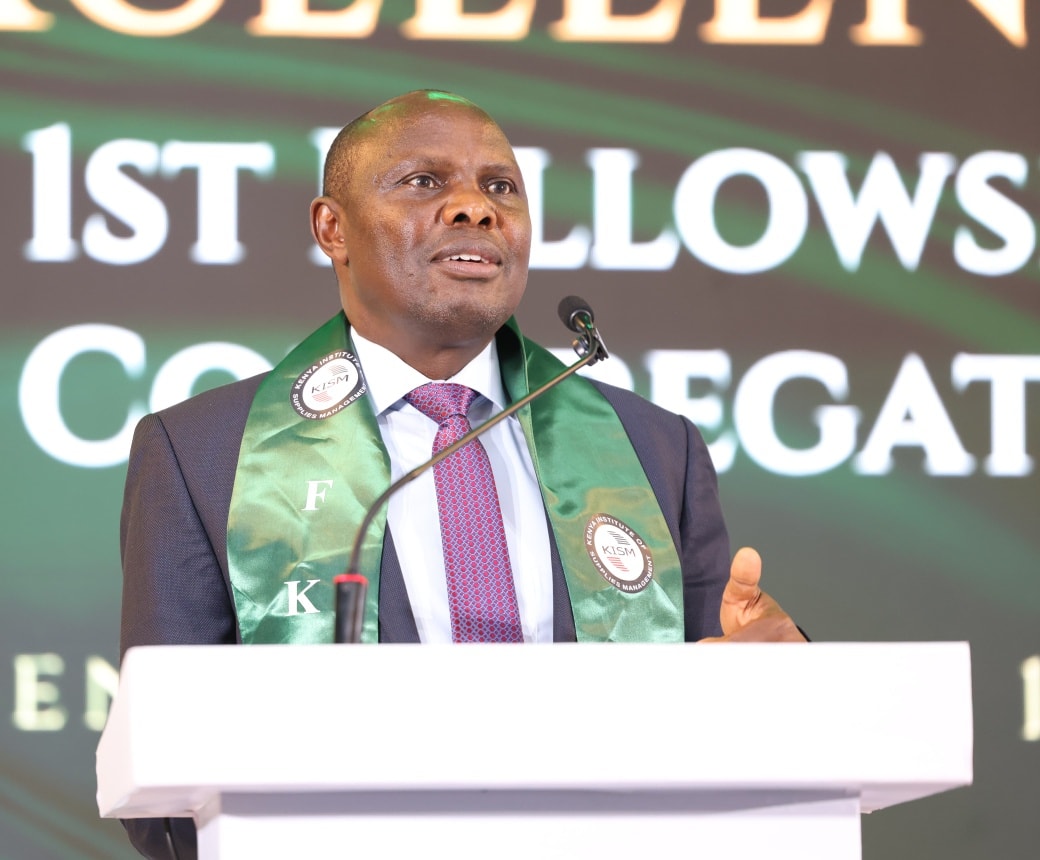
 Felix Koskei, Chief of Staff and Head of the Public Service, Republic of Kenya./COURTERSY
To transition from its current status as a developing nation to a "First World" (developed) economy, Kenya requires a profound structural transformation.
The path to the "First World" is not just about wealth, but about productivity. Kenya must transform from an economy that consumes finished goods and exports raw materials to one that creates high-value products and services.
The impact of government strategy (packaged as BETA plan) towards fulfilment of the above is evident.
The critical "make-or-break" factors which will take Kenya to the first world if all Kenyans support government in tackling them include:
1.Industrialisation and Export Diversification
Kenya currently relies heavily on agricultural exports like tea, coffee, and flowers. To reach developed status, it must move up the value chain. Manufacturing Leap: Increasing manufacturing's share is vital.
This requires lowering the cost of electricity and improving logistics. Agro-Processing: Instead of exporting raw materials, Kenya must process them locally (e.g., roasted coffee instead of beans) to retain higher profit margins.
The "Silicon Savannah": Leveraging its lead in ICT to become a global hub for software development and digital services.
2. Governance and Institutional Integrity
For Kenya, this means addressing: Corruption: High levels of public fund leakage undermine investor confidence and divert resources from essential infrastructure. Rule of Law: Consistent enforcement of contracts and protection of property rights are necessary to attract long-term Foreign Direct Investment (FDI). Political Stability: Transitioning from "ethnicity-based" politics to "issue-based" politics to ensure policy continuity across different administrations.
3. Education and Human Capital
A First World economy requires a workforce capable of high-tech and high-efficiency output. STEM Focus: Shifting the education system toward Science, Technology, Engineering, and Mathematics.
Technical & Vocational Training (TVET): Bridging the skills gap so that the youth—who make up the majority of the population—are employable in modern industries. Innovation Funding: Increasing R&D spending from the current ~0.8% of GDP toward the global developed average of 2–3%.
4. Macroeconomic Stability and Debt Management
Kenya’s "First World" ambition requires a heightened management of public debt and fiscal pressure. Debt Sustainability: Moving away from expensive commercial loans toward sustainable financing to prevent "debt distress" that chokes off growth.
Tax Base Expansion: Increasing domestic revenue mobilization fairly without stifling the private sector or the "hustler" (informal) economy.
5. Infrastructure and Energy Reliable Power
Transitioning to 100% green, affordable energy (geothermal, wind, solar) to power heavy industry. Regional Integration: Utilizing the East African Community (EAC) to create a massive single market, allowing Kenyan firms to scale beyond national borders.
With the focus the government has put on these critical factors, there is no doubt that Kenya is marching forward to the first world.
Kenyans must resolve on one accord to leave behind politico -ethnic differences, have their minds meet for the country to take the shortest time possible to reach First World status.
The writer is the Chief of Staff and Head of the Public Service, Republic of Kenya