Kenya has been pricing its own citizens out of the basic dream of a decent home. Every time the cost of cement rises, imported steel gets delayed at the port, a contractor pays more for fuel to move sand and ballast, “affordable housing” quietly becomes a pipedream instead of a key to dignity. Yet over the past couple of years, the country has set ambitious affordable housing targets and launched new projects in pursuit of that goal.
But the elephant in the room remains how to lower the real cost of building, and build enough homes for people who need them most. Today, affordable housing stands at the centre of the government’s Bottom-Up Economic Transformation Agenda for a reason.
Housing is not just shelter; it is health, safety, productivity, and pride. A stable home is where children study without fear, where families plan, where workers rest and show up stronger the next day.
For a country that is urbanising as fast as Kenya, housing has become a national stress test. But the hard truth we often avoid is that housing affordability is not decided only on the construction site. It is decided long before the foundation is dug, in the industrial value chains that produce and deliver the materials.
When a bag of cement is expensive, when tiles are imported because local factories cannot scale, we pay for those inefficiencies in the final selling price. That price then shuts out the small trader, the teacher, the farmer, the nurse, the police officer, the young entrepreneur -- the very people the Bottom-Up agenda is meant to lift.
And this is where Development Finance Institutions (DFI) matter. In every serious economy, there is a category of finance that exists to provide patient capital and risk support for long-term national priorities.
Unlike conventional lenders, a DFI does not chase quick returns. It exists to unlock industries, deepen local supply, and crowd in private investment so that transformation is firmly built on production.
The most practical way to make housing cheaper is to make building materials cheaper and supply them more reliably. That means supporting manufacturers and service firms that sit behind every housing project, such as ready-mix concrete producers, cement and steel suppliers, equipment leasing companies, and transporters. These are, in essence, the real muscles of the housing plan.
To put this in context, we have to look at the lived reality of a growing ready-mix concrete producer in Kiambu on the outskirts of Nairobi. When such a firm invests in modern machinery, tightens quality control, reduces waste, and expands capacity, the impact spreads fast.
Contractors avoid delays caused by inconsistent supply, developers control costs better, and workers get steady jobs in production and logistics services.
Besides, small suppliers of inputs and transport services find dependable demand, turning one plant into a small ecosystem of livelihoods and a dependable input into the construction economy. Ultimately, the supply of housing units becomes more predictable, and predictability is what lowers cost.
There is also a national resilience argument to be made amid the frequent shockwaves of currency swings and global supply disruptions that Kenya has faced in the recent past. When we rely heavily on imported inputs, a problem thousands of kilometres away can suddenly raise the price of a home in Bungoma, Machakos, or Kilifi.
Financing stronger domestic supply chains then becomes common sense in a volatile world. The country that can produce more of what it builds with is the country that can keep building even when markets are turbulent.
Equally important is that construction and manufacturing are heavy on energy and resource consumption, making sustainability critical. For DFIs, this opens yet another opportunity to finance modern, efficient production processes that reduce waste, improve standards, and lower energy intensity. This is because cleaner production is how Kthe enyan industry becomes competitive, and how we protect the land and water that agriculture and life depend on.
Because housing is built by hands and the industry is run by trained minds, acquisition of skills stands out as the strongest pillar of all. This demands that DFIs support enterprises to invest in technicians, machine operators, safety supervisors, and quality assurance teams that build careers and grow profits. That ultimately is the environment that gives young Kenyans a reason to stay hopeful, to believe that work with dignity is still possible, that the country can manufacture its future rather than import it.
Ultimately, if Kenya wants to finance the foundations that make affordable housing achievable, the government must keep demand visible through credible pipelines and fair regulation. Private investors must look beyond quick wins and see the long game in industrial growth. And DFIs must step forward with patient capital, smarter risk tools, and strong project preparation that turns good intentions into bankable factories, fleets, and supply corridors.
If we get this right, the reward is bigger. It creates a Kenya where the people who power our small businesses, teach our children, care for our sick, and protect our streets can live near opportunity, not far from it. A Kenya that builds with its own strength, employs its own youth, and takes pride in the simple, powerful idea that a decent home should not be a privilege.
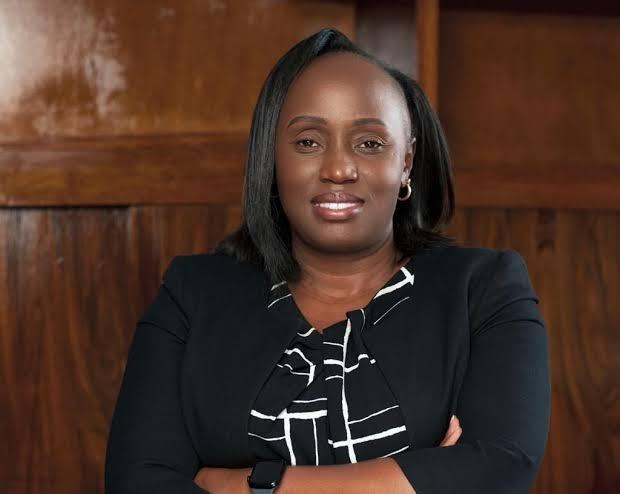
Ms Ratemo is the Kenya Development Corporation Director General