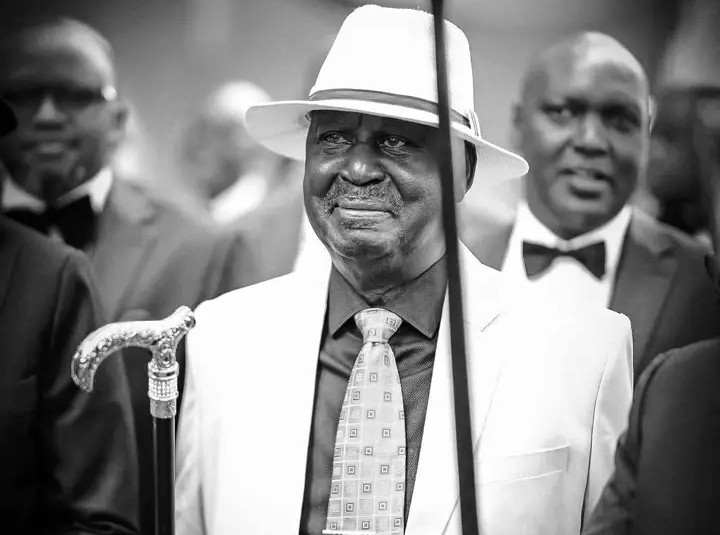
 Former Prime Minister Raila Odinga/HANDOUT
While an overwhelming majority of Kenyans have voiced approval over how the government managed events following the death of former Prime Minister Raila Odinga, a section remains critical.
According to a recent TIFA Research poll, 60 per cent of respondents said they were “very satisfied” with how the government handled Raila’s passing.
A further 29 per cent said they were “somewhat satisfied” with the handling.
But 11 per cent said they were “not satisfied", offering a revealing window into the sentiments of Kenyans who feel the state’s actions fell short at key moments during a period of national grief.
Among those who expressed dissatisfaction, the leading grievance — cited by 23 per cent of this group— was the chaos, violence and access restrictions that accompanied public body-viewing arrangements.
For many in the group, long queues, overcrowded spaces and tight security impeded the chance to pay respects to the towering political figure, transforming what should have been a solemn civic experience into one marked by what they described as disorganisation and unrest.
Another 22 per cent of the dissatisfied said their unease stemmed from a perceived insincerity by senior government officials, in contrast to how Raila was treated during his lifetime.
For these critics, the optics of state ritual felt discordant with the rhetoric, suggesting that political gestures during mourning did not bridge the gap between symbolic honour and genuine recognition of his decades-long struggle for reform and democracy.
Smaller portions of the dissatisfied expressed varying concerns: 11 per cent felt the mourning and burial period was too short, another 11 per cent cited a lack of transparency surrounding the events of his passing, while a further 11 per cent believed the public expenditure was excessive under the circumstances.
"Only 3 per cent mentioned the exclusion of some opposition leaders from speaking roles at the funeral ceremonies," the poll notes.
Though these critical voices represent a modest slice of the overall public, their complaints revolve less around the government’s decision to honour Raila and more around the execution of that honour, the analysis observes.
This is particularly during moments expected to unite the nation in collective mourning.
Raila Odinga — a veteran opposition leader and former Prime Minister — died on October 15, 2025, at the age of 80 while receiving medical treatment in India.
The announcement of his death triggered a series of state-led mourning events, including national days of mourning, public viewings of his body and a state burial at his ancestral home in Bondo, Siaya County, attended by President William Ruto, former President Uhuru Kenyatta and other dignitaries.
"The state funeral, conducted with ceremonial honours, was intended as a unifying moment, but for a handful of Kenyans, it exposed cracks in planning and authenticity that they believe undermined the occasion’s dignity."