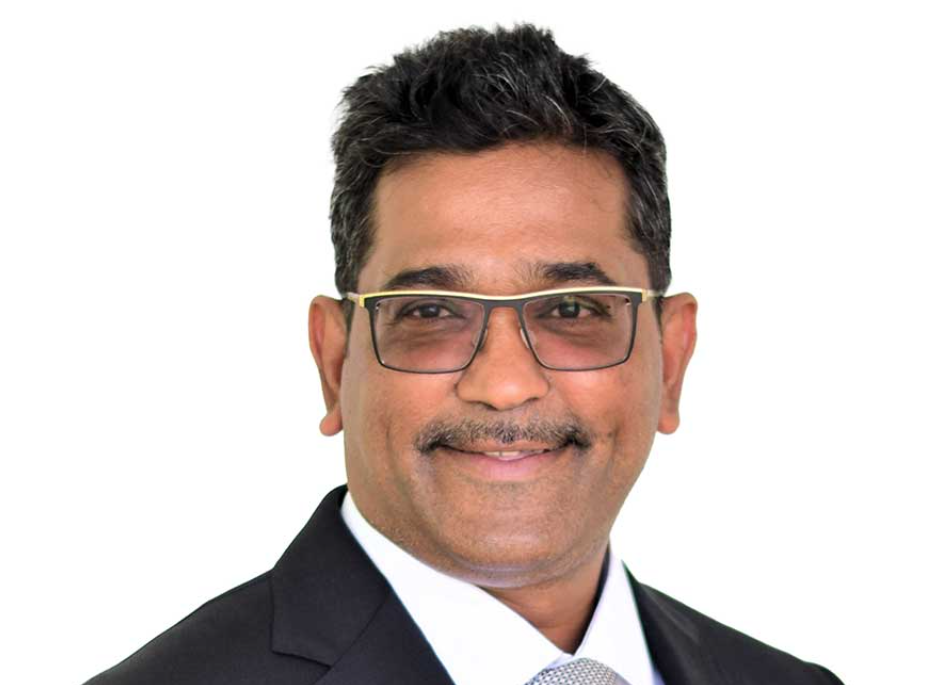
 Chris Diaz, Chairman Adili Group and Business Leader./COURTERSY
The story of modern aviation is one of humanity’s greatest triumphs, a testament to our ingenuity in conquering distance and forging global passenger movement, international trade, and intracontinental connections. Yet, this narrative now faces a critical revision. According to existing data, the industry, responsible for approximately 2.5% of global emissions, a substantial 915 million metric tons in 2022, finds itself at a profound inflection point.
It must reconcile its indispensable role in global commerce and mobility, projected to serve 8.2 billion passengers annually by 2037, with the existential imperative to decarbonize.
This daunting challenge, however, is not merely a technical or economic puzzle; it is, at its core, a test of leadership. The transition to sustainable aviation, particularly through the rapid scaling of Sustainable Aviation Fuel (SAF), demands not just managers but transformational leaders who can envision a new future and mobilize entire ecosystems to build it.
Transformational leadership transcends the mechanics of operational efficiency. It is defined by the ability to articulate a compelling vision of the future that inspires followers to exceed their own expectations for a collective cause. In the context of global aviation’s net-zero by 2050 ambition, aligned with the International Civil Aviation Organization’s (ICAO) landmark agreement, such leadership is an essential catalyst for economic transformation and enhanced global trade growth, as well as much-needed business connectivity globally.
They operate as system architects, building bridges between historically siloed entities: airlines, fuel producers, governments, financiers, and academia. Their currency is influence and investment, not just instruction. The technical cornerstone of their mission is SAF, a drop-in fuel that can reduce lifecycle carbon emissions by up to 80%.
However, with current global SAF production satisfying less than 0.1% of total jet fuel demand, the gap between potential and reality is a chasm. Closing it requires producing an estimated 449 billion liters annually by 2050, a feat that can only be achieved through leaders who can orchestrate unprecedented collaboration, de-risk monumental investments, and champion innovative policies.
The blueprint for this leadership is being written by global frontrunners whose actions provide a data-driven playbook for success. Consider the Lufthansa Group, among other airlines such as Delta, Virgin, Ryan, Ethiopian, and Kenya Airways, which have globally integrated sustainability into their core strategy. Their commitment extends beyond procurement to active market shaping, having invested over $ 250 million in SAF-related initiatives and operated thousands of flights with SAF blends.
Africa’s relationship with this sustainable transition is characterized by a striking duality: immense latent potential juxtaposed with significant structural barriers. The continent is endowed with the very foundations of a bio-economy powerhouse, possessing an estimated sustainable biomass potential exceeding 1 billion tons per year from agricultural residues, forestry waste, and non-edible oil crops.
Coupled with some of the world’s highest solar irradiance, essential for next-generation Power-to-Liquid (PtL) fuels, Africa’s resource base is formidable. Politically, while 55 African states are ICAO members, fewer than a handful have enacted concrete national SAF strategies or blending mandates, creating a policy vacuum that stifles investment.
Physically, the continent lacks a single commercial-scale SAF biorefinery, with infrastructure needs requiring an estimated 5-10 billion dollars in initial capital. For Africa to transition from a consumer of sustainable aviation solutions to a primary producer and exporter, its leaders must enact a bold, multi-faceted vision.
The first pillar must be Visionary Policy Formulation. African governments, guided by transformational leaders in ministries of transport, energy, and environment, must move from pledges to policy. The second pillar is the Architecture of Catalytic Public-Private Partnerships (PPPs). Leadership here involves convening power.
It’s not bad to figure out a consortium led by a pan-African airline group, a national oil company, a development finance institution like the African Development Bank, and a global technology provider, jointly funding a flagship biorefinery. Such a model shares risk, pools expertise, and signals serious intent to the global market.
The third pillar is strategic capital mobilization. African leaders must creatively channel global climate finance to attract a larger share of the funds currently allocated to the continent. Instruments like carbon credits and green bonds specifically tied to SAF infrastructure can unlock vital capital. Ultimately, this journey is about more than emissions reduction; it is a profound economic opportunity.
A robust African SAF industry could catalyze a green industrial revolution, creating hundreds of thousands of jobs in sustainable agriculture, biorefining, and logistics, while reducing the continent’s heavy dependence on imported fossil fuels. It would enhance energy security, foster technological sovereignty, and position Africa as a decisive player in the global clean energy transition.
The path for African aviation will not be charted by following old maps but by leaders courageous enough to draw new ones. Transformational leadership in this context is the force that can convert abundant sunshine and biomass into jet fuel, policy hurdles into frameworks for growth, and isolated efforts into a unified continental mission.
By embracing this mantle, Africa’s leaders must implement strategies to ensure the continent soars not just as a passenger or cargo aviation business, but in the era of sustainable solutions, leading to the continent's economic transformation. Private and public partnerships will deliver on the commitment made by over 100 countries, airlines, and stakeholders to achieve transformational leadership, such as the use of SAF to reduce carbon emissions by 60 to 80% and contribute to net-zero goals by 2050.
The writer is the Chairman Adili Group and Business Leader.
X handle : @DiazChrisAfrica