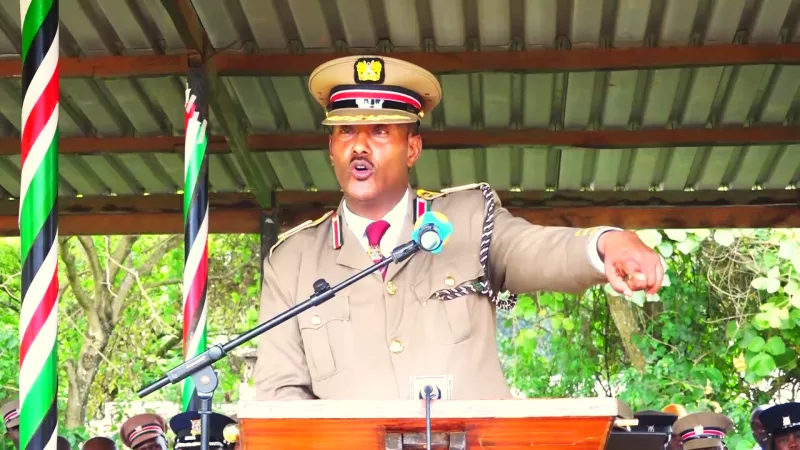
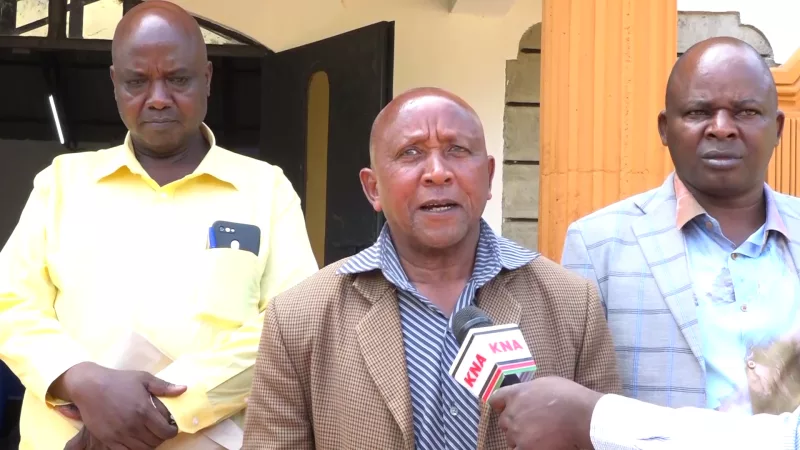
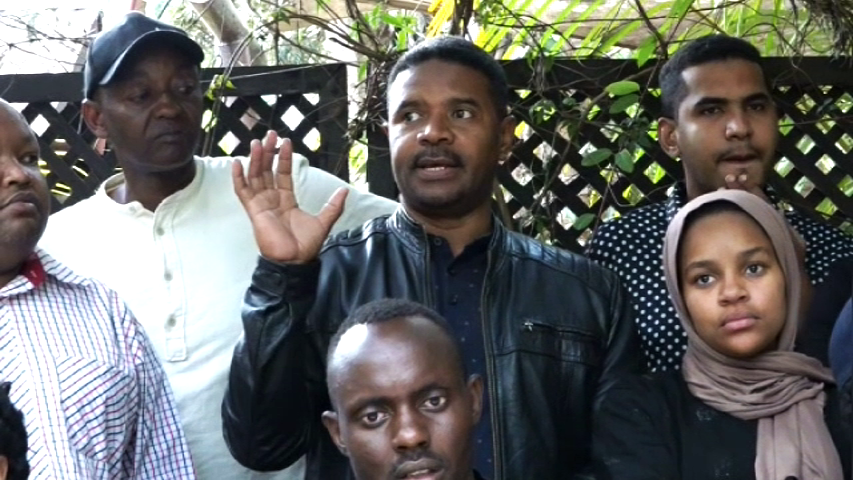
 Human rights activists led by Vocal Africa CEO Hussein Khalid during a press conference in Nanyuki town, Laikipia, on December 19, 2025/ ALICE WAITHERA
Three youth thought to have been fathered by British soldiers in Nanyuki, Laikipia county, have called for the fast-tracking of their recognition by the UK government following a court ruling in their favour.
In October, London’s Family Court issued a ruling in favour of seven Kenyans, confirming that they were fathered by British nationals living in Kenya. Six of the fathers worked with the British Army Training Unit Kenya (Batuk) while one was a contractor and the paternity was confirmed using public DNA databases.
Addressing a press conference in Nanyuki, three of those abandoned narrated the struggles they encountered as they were brought up by single mothers. They explained their inability to fit into the community as their peers referred to them as ‘mzungu’ due to their mixed race, despite coming from poor backgrounds.
“I had to drop out and help to take care of my siblings. Life has been very difficult because the only jobs available are not that well-paying,” one said. All they ever wanted, he said, was to be accepted as part of the community even though they looked different.
Another said when he asked his mother who his father was, he did not get an answer. His family, he added, lived in abject poverty and he grew up watching his mother struggle to raise him and his siblings.
“When people refer to me as a white man, it makes me feel segregated. I did not choose to be born this way or even where to be born,” he said, expressing his desire to know who his father is.
Hussein Khalid, a human rights activist and the CEO of Vocal Africa, observed that the community living near Batuk’s training area has been grappling with many challenges over the years. He pointed out that the soldiers leave weaponry in the fields that explode on locals grazing their cattle, maiming them and killing their livestock.
“The explosives release some gases that are thought to contaminate the environment—including the water that they drink—which affects their health and that of their cattle,” he said.
Further, whenever there’s compensation, the money is channelled to non-victims while victims are left reeling in losses. In August, the High Court in the UK ordered that children in Kenya allegedly fathered and abandoned by British soldiers be given access to the identities of the men involved.
The ruling required the Department for Work and Pensions and HM Revenue and Customs in Britain to disclose the last known contact details of the 11 men.
The ruling has opened the door for such children, estimated to be in their hundreds, to seek British citizenship and financial support. A study conducted by Amnesty International reported over 650 rape allegations against British soldiers between 1965 and 2001, primarily in areas like Dol Dol, Archers Post and Wamba.
Michael Monicah, a paralegal, said the Laikipia Paralegal Organisation is working with partners to support those adversely affected by the British soldiers.
“The lives of children sired by the soldiers have been turned upside down. They face serious difficulties right from their childhoods and we have the burden of proving their parentage”.
DNA, he explained, has helped identify some fathers, some of whom have accepted their responsibilities while others have denied them. He challenged the High Commission in Kenya to help the children acquire British citizenship and support from their fathers.
Similar sentiments were expressed by Nahida Kassim from Vocal Africa, who noted that the local communities have voiced concerns over Batuk’s wrongdoings in the area for decades.
“The continued silence on these matters has bred mistrust and the British High Commission should take responsibility and ensure these wrongs are righted”.
She called for a review of the bilateral agreement between Kenya and the UK on military presence in the country, to ensure those who commit wrongs are held accountable.
A report released by the National Assembly in November also revealed a disturbing trend of sexual misconduct by Batuk personnel, including rape, assault and abandonment of children fathered by soldiers.
The report, released by the Departmental Committee on Defence, Intelligence and Foreign Relations following a two-year inquiry, accused the British Army of persistently declining to appear before the committee and invoking diplomatic immunity.
INSTANT ANALYSIS
A report released by the National Assembly in November also revealed a disturbing trend of sexual misconduct by Batuk personnel, including rape, assault and abandonment of children fathered by soldiers.
The report, released by the Departmental Committee on Defence, Intelligence and Foreign Relations following a two-year inquiry, accused the British Army of persistently declining to appear before the committee and invoking diplomatic immunity.