 Nairobi County Traffic Police Commander Joseph Chirchir (right) with StanChart Marathon LOC
chairman David Mwindi during a past event/HANDOUT
Nairobi County Traffic Police Commander Joseph Chirchir (right) with StanChart Marathon LOC
chairman David Mwindi during a past event/HANDOUTDecember has once again opened with grim reminders of why it remains Kenya’s most dangerous month on the roads, as a spate of fatal crashes underscores the deadly cost of festive travel.
On Sunday night, tragedy struck at Chabera along the Kisii-Kisumu highway when 12 members of one family lost their lives in a horrific collision involving two trucks and a van.
The family was returning from a wedding ceremony in Kakamega when the crash occurred.
Ten people died on the spot, while two others succumbed to their injuries in hospital.
The accident came barely 24 hours after another crash claimed eight lives at Ekerenyo along the Kisii-Kericho road on Saturday night, deepening grief in the region.
“Yet again, our county has been thrown deeper into mourning with at least 10 people reported dead following a road accident at Chabera, along the Kisii-Kisumu Road this evening,” Nyamira Governor Amos Nyaribo said in a statement.
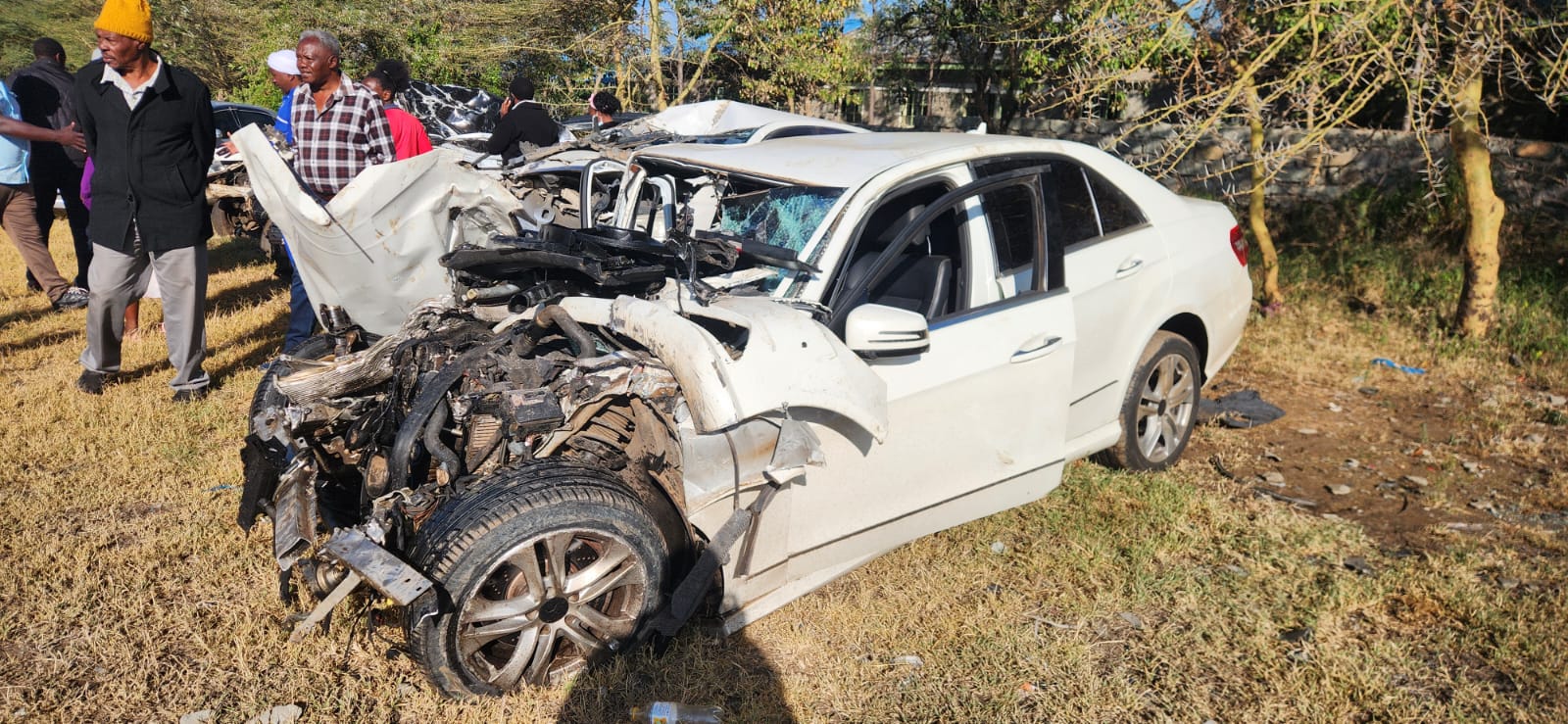 Wreckage of Cyrus Jirongo's car after an accident that claimed his life at Karai area on Nakuru-Nairobi Highway, December 13, 2025 /HANDOUT
Together, the accidents paint a familiar and troubling picture: a sharp rise in road carnage as the holiday season sets in.
With Christmas and New Year travel gathering pace, authorities are racing to contain what has become an annual December surge in fatal crashes.
More than 3,000 people have already died on Kenyan roads this year, prompting the National Transport and Safety Authority (NTSA) and the National Police Service to roll out joint nationwide operations.
As part of the response, the two agencies have launched a two-month 2025 Festive Season National Road Safety Awareness Campaign, themed “Road Safety and Precaution During the Festive Season in Kenya.”
The initiative combines intensified enforcement with public sensitisation, targeting the behaviours that routinely turn holiday journeys into tragedies.
NTSA data highlights the scale of the crisis. Between January 1 and October 22, 2025, road crashes claimed 3,890 lives, surpassing the 3,805 fatalities recorded during the same period in 2024.
Among the dead were 351 drivers, 378 pillion passengers, 57 cyclists and more than 1,000 motorcyclists, with vulnerable road users accounting for the majority of fatalities.
NTSA acting director general Angele Wanjira said the agency is anchoring its interventions on the Safe System Approach, which aims to design transport systems that reduce the risk of human error resulting in death.
“We intend to strengthen real-time monitoring, roadside checks, public sensitisation and collaboration with passengers themselves,” Wanjira said.
She noted that NTSA is enforcing the Intelligent Road Safety Management System (IRSMS) for public service vehicles and commercial fleets.
The system tracks vehicles in real time, monitors driver behaviour such as speeding and harsh braking, and flags violations that can trigger retraining or sanctions.
The authority is also expanding the Usalama Barabarani programme, focusing on seat belt use, speed control and fatigue management, while conducting free pre-travel inspection clinics at bus termini to ensure long-distance vehicles are roadworthy.
Yet experts warn that enforcement alone may not be enough.
Police admit that December remains the deadliest month on Kenyan roads due to a surge in travel, risky driving behaviour and pressure on public transport operators during the festive season.
“The volume of traffic increases sharply in December, and unfortunately this is also when we see widespread speeding, reckless overtaking, drunk driving and driver fatigue,” Nairobi Area Traffic Commander Joseph Chirchir told the Star.
These factors, he argued, combine to create a very dangerous environment on our highways.”
According to Chirchir, public service vehicles (PSVs) and long-distance buses are often at the centre of fatal crashes as operators rush to maximise trips amid high passenger demand.
“Some drivers are pushed to complete as many trips as possible, leading to excessive speed, night driving and disregard for traffic rules,” he said.
He noted that drunk driving, speeding and fatigue alone significantly impair judgment and reaction time, making accidents more frequent and far more severe.
Chirchir warned that alcohol consumption during parties, weddings and holiday gatherings continues to fuel night-time crashes, with intoxicated drivers struggling to make sound decisions on the road.
“Alcohol affects cognitive ability and slows reaction time. A driver under the influence cannot properly assess danger, and that is why drunk driving remains a major cause of fatal crashes during this period,” he said.
Speeding, he added, is another leading contributor, as motorists rush to reach their destinations.
“Many drivers ignore speed limits because they want to arrive quickly for family gatherings or festive events,” Chirchir said.
“When you are speeding, you reduce your ability to respond to sudden hazards, and when a crash happens, the impact is usually fatal.”
The traffic commander also pointed to driver fatigue, especially among long-distance motorists and public service vehicle drivers, as a silent but deadly threat.
“Fatigue is as dangerous as alcohol. Drivers who have been on the road for long hours suffer lapses in concentration and delayed reflexes,” he said.
An exhausted driver, he said, is a danger not only to themselves but to everyone else on the road.
Poor road conditions and adverse weather have further heightened the risk during the peak travel season.
Chirchir noted that heavy rains in some regions have led to slippery roads, poor visibility and water-filled potholes.
“Wet roads reduce tyre grip and can double stopping distance. Even experienced drivers can lose control if they fail to adjust their speed,” he said.
Police have also raised concerns about the influx of inexperienced and unfamiliar drivers on the roads during the holidays.
According to Chirchir, newly licensed drivers and motorists navigating unfamiliar routes often make sudden lane changes, tailgate or misjudge distances, increasing the likelihood of collisions.
“We also see drivers operating on roads they are not familiar with, especially in rural areas. This leads to confusion, abrupt maneuvers and poor decision-making,” he said.
The dramatic increase in traffic volume during December compounds the problem, creating congestion and frustration that can trigger aggressive driving.
“When too many vehicles are on the road, patience runs thin. Aggressive driving, combined with inattention, creates a very dangerous environment,” Chirchir warned.
“These accidents are preventable. We are urging motorists to slow down, avoid alcohol, rest adequately and obey traffic rules. Passengers must also speak out when drivers engage in dangerous behaviour.”
Chief Justice Martha Koome said Monday that authorities will roll out diverse measures to enhance road safety and prevent traffic-related deaths, noting that many victims are often innocent pedestrians or motorists.
“We must put in place elaborate and diverse measures to enhance road safety and prevent traffic-related deaths,” she said.
“Most of the time, people are innocent, either as pedestrians or drivers and someone else causes the accident.”
Koome who spoke after chairing a multi-agency team of senior officials from state agencies announced that mobile traffic courts will be deployed using both physical and digital platforms to fast-track traffic cases during the festive period.
Koome added that enforcement agencies will increase strategic roadblocks for vehicle and motorcycle inspections, particularly along high-risk corridors across the country.
Motorists were warned against overlapping and drunk driving, while Kenyans were urged to observe traffic rules to avert injuries, loss of life, and congestion during the busy holiday season.
She said the initiative will be implemented in collaboration with multiple agencies, including the National Police Service (NPS), the National Transport and Safety Authority (NTSA), the Kenya Prisons Service, the Ethics and Anti-Corruption Commission (EACC), the Asset Recovery Agency (ARA), and the Office of the Director of Public Prosecutions (ODPP).
The CJ also urged Kenyans not to pay bribes if arrested for traffic offences, saying authorities will closely monitor human rights violations as part of heightened enforcement during the festive season.
“Do not pay any bribe when arrested. There will be monitoring of human rights violations,” Koome said.
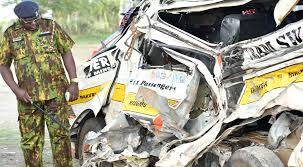 A picture of a recent road accident in Kenya/FILE