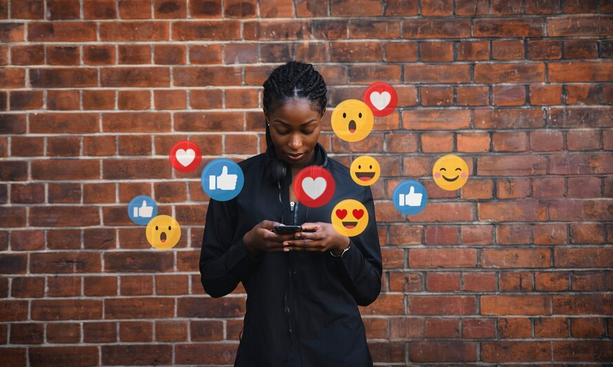
In an age where screens mediate connection, social media has become more than a space for communication.
It now plays a powerful role in shaping how young people see themselves, what they value and how they measure success.
For many, the digital world has become a mirror, one that often reflects a distorted reality of perfection and competition.
Social media platforms like Instagram, TikTok, Facebook and X are designed to captivate.
They encourage users to share moments, achievements and milestones. But with those opportunities for connection comes an undercurrent of comparison and validation seeking.
Users are rewarded with likes, comments and shares; metrics that begin to act like a form of social currency.
Research on how digital platforms influence identity formation highlights this trend, noting that “likes, comments, shares and followers have become significant sources of social validation” for many young people.
The study published in the International Journal for Advanced Research in Science & Technology (IJARST) shows that constant engagement with curated content can blur the line between real life and a highly polished digital persona.
This digital validation cycle can have emotional consequences.
Posts that receive little engagement can leave some users feeling invisible or overlooked, while those with many likes may feel pressured to maintain that performance.
The pursuit of approval from an online audience can become exhausting, shaping identity around how one is perceived rather than who one truly is.
Anecdotal voices from everyday users echo these concerns.
One online commenter said they felt social media was “a race to be seen as interesting, successful or perfectly imperfect,” adding that this constant performance pressure “can strip away what makes us authentically us.”
“Sometimes I catch myself scrolling, comparing my life to strangers' highlight reels, and I hate it. It’s like my sense of self gets muddled by the need to “perform” online,” the user said.
“Even posting something simple feels like a balancing act: is this too much? Not enough? Do I even like this, or am I posting it because it’s expected? It’s exhausting, honestly. Social media promises connection, but more often, it feels like competition.”
One of the most visible effects of social media on self-worth is the rise of body image concerns.
Platforms encourage visual content, and beauty filters have become nearly ubiquitous.
A recent study in Nairobi found that frequent social media use significantly contributes to body dysmorphia among young adults.
Participants reported that exposure to idealised images increased dissatisfaction with their own appearance and fostered appearance comparisons.
“Social media use contributes to body dysmorphia in young adults. Frequent use fosters appearance comparisons, lowered confidence, and pressure to alter looks. Exposure to idealised images increases dissatisfaction,” the study done by MKU students found.
When users constantly encounter filtered and retouched images of “perfect” faces and bodies, it can skew perceptions of beauty.
As another online observation put it, being “bombarded with filtered photos and retouched faces” over time makes authentic features feel “not enough.”
“Every day, we’re bombarded with filtered photos, retouched faces, and an impossible standard of “perfection”. Over time, this distorts reality—people start comparing their authentic selves to something that doesn’t even exist,” a Reddit user said.
She added that this is not just about vanity but is linked to one’s mental health.
The user noted that younger generations, influenced by social media’s beauty standards, are rushing into procedures without fully understanding the emotional, psychological or long-term effects.
For adolescents and young adults in Kenya and beyond, social media does not just influence how they look; it influences how they see themselves.
Studies show that social media usage has a notable impact on self-concept and social behaviour among secondary school students.
Researchers have found that social media use correlates with adolescents’ sense of self and their social behaviours, suggesting that digital interaction plays a role in how young people build their identities.
Yet this influence is complex. On one hand, digital spaces can foster positive self-expression and community building.
For young people exploring their identities, online communities can offer a sense of belonging and a space to connect over shared interests.
On the other hand, pressures to conform to digital norms and trends can lead to fragmentation of self – where teens feel compelled to present a version of themselves that aligns with online expectations rather than their own internal values.
Comparison culture and mental health
“The comparison trap” is a phrase often used to describe the emotional toll of constantly evaluating one’s life against curated online lives.
Social media platforms amplify social comparison by displaying idealised versions of experiences, achievements and lifestyles.
When users feel their own lives do not measure up, it can fuel feelings of inadequacy and decreased self-esteem.
In Kenya, research and commentary point to these strains playing out on the ground. According to World of Statistics, an average Kenyan spends three hours 43 minutes a day on social media.
Many young people spend hours daily on social media, a trend that intertwines with broader societal pressures, including economic challenges and unemployment.
Some argue that the digital world has become a space where young Kenyans seek meaning and recognition that may be harder to find offline.
A Reddit user posed this question to young Kenyans, “But fr what do you think? How can we turn this social media addiction into something profitable, or are we just too online for our own good?”
Finding balance in a digital era
Despite the concerns tied to social media, experts emphasise that these platforms are not inherently damaging.
What shapes outcomes most is how people engage with them.
Social media can provide connection, creativity, learning and even livelihood opportunities when used mindfully; the challenge comes when use becomes automatic, unreflective or driven solely by the pursuit of approval.
Research highlights strategies that can help users cultivate a healthier digital life rather than one dominated by comparison and self-criticism.
A University of Nairobi study found that undergraduate students employed several coping methods to protect their psychological well-being amid excessive social media use.
These included digital detoxification, time management, offline hobbies and curating online environments by unfollowing negative content.
Peer, family and counselling support also helped students resist the stress associated with prolonged engagement online.
These findings echo international research showing that conscious and reflective use of social platforms can support mental health.
A pilot study on adolescent social media literacy found that when young people are equipped to interpret and evaluate online content critically, their psychological well-being and resilience improve.
Digital literacy initiatives like teaching users how to spot misinformation, understand algorithms, and recognise unhealthy comparisons, are central to this approach.
Practical steps toward balance often centre on intentional engagement.
The UoN study recommended setting clear boundaries on usage time and notifications to reduce distraction and burnout, taking planned breaks or “digital detoxes” to reset attention and reduce stress.
Users should also curate feed by unfollowing accounts that trigger negative comparison and following content that promotes self-acceptance, learning or positive community, and develop offline habits such as exercise, hobbies or face-to-face interactions to counterbalance screen time.
For example, students involved in the UoN study found that disabling notifications and practicing self-imposed limits helped them focus on offline goals and reduce the psychological toll of constant scrolling.
Importantly, moderate and mindful use can yield benefits rather than harm.
Digital literacy also plays a key role beyond simple screen limits.
Studies emphasise educating young people about how social media algorithms shape what they see so they can engage more critically and consciously with content.
Users trained in digital evaluation are better equipped to resist unhealthy comparison cycles and engage in more meaningful online activities.