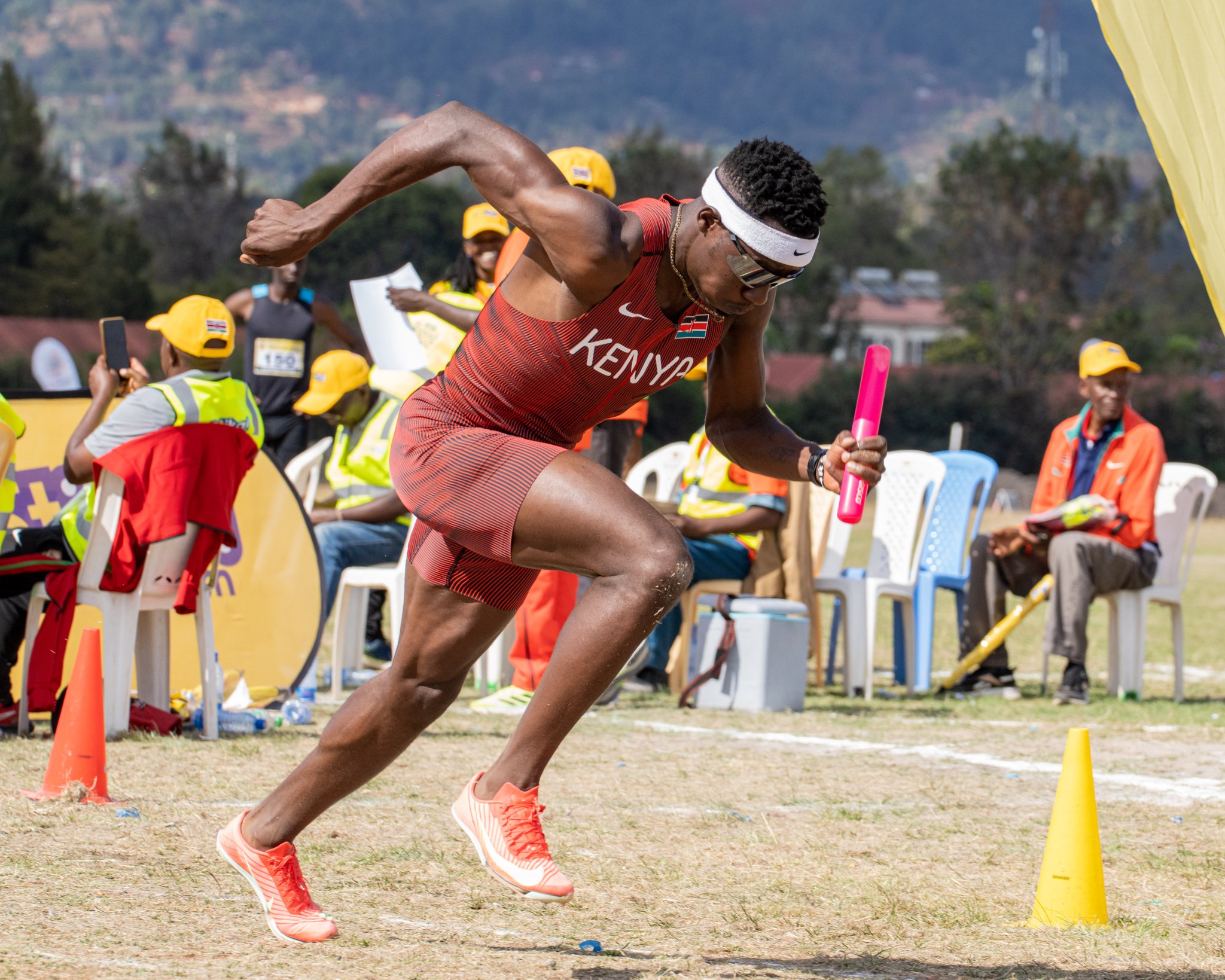
 Sprinter Wiseman Were during a previous competition/ FILE
With the Los Angeles 2028 Olympic Games drawing steadily closer, the urgency to prepare Kenya’s athletes for another assault on the global stage has never been sharper.
The clock is ticking, the world of athletics is evolving rapidly, and the margins between dominance and decline continue to narrow with each passing season.
For decades, Kenya has been synonymous with excellence on the track and the roads — a nation whose runners have shaped races, broken barriers and rewritten record books. From the rhythmic strides of the late greats to the modern-day torchbearers, Kenya’s imprint on global athletics remains unmistakable.
Today, that proud legacy is carried by glittering icons such as quadruple world and triple Olympic 1,500m champion Faith Kipyegon, who continues to define the gold standard of middle-distance brilliance.
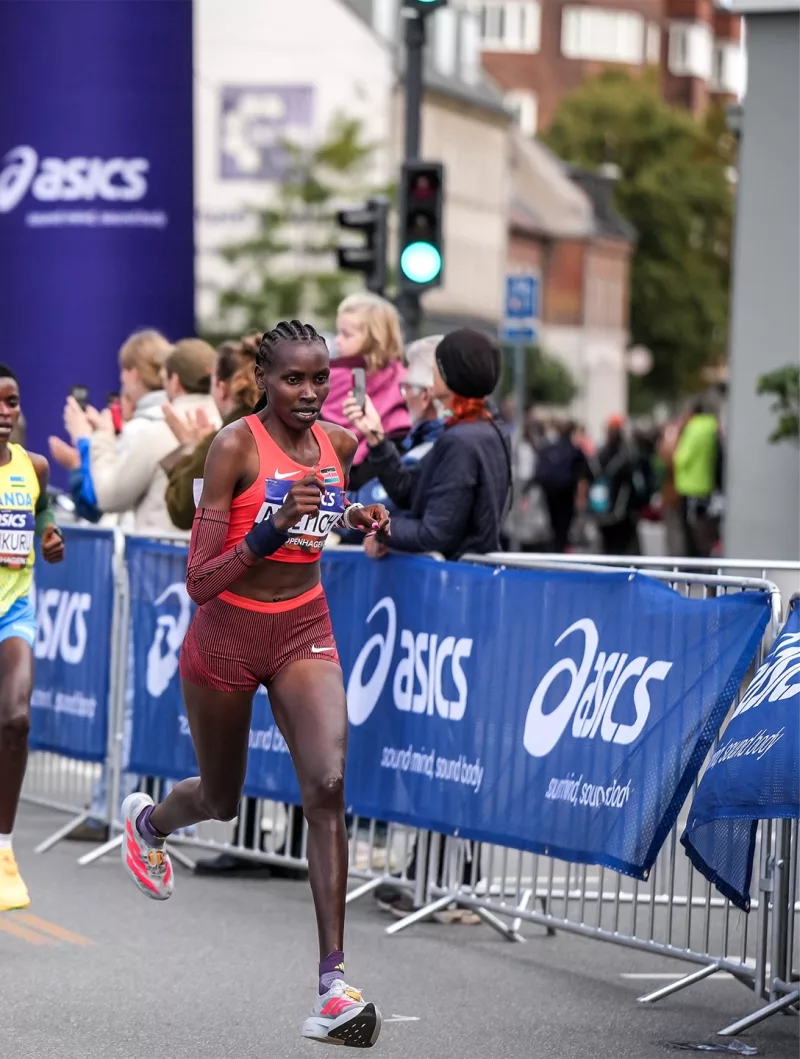
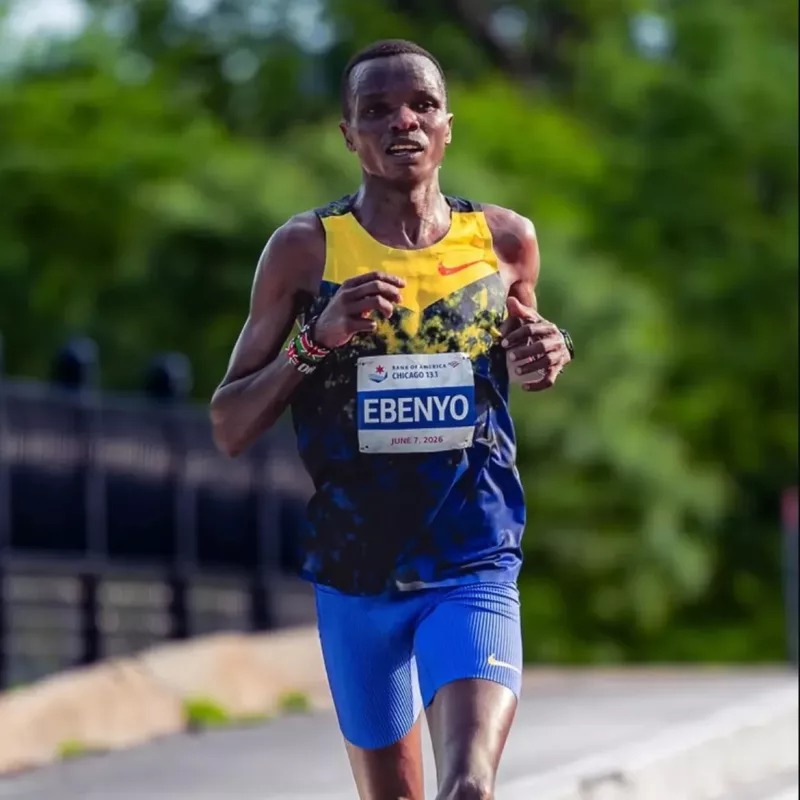
Marathon legend Eliud Kipchoge, a two-time Olympic champion, has redefined the limits of human endurance, while Beatrice Chebet — a double Olympic and world champion — has stamped her authority across long-distance events with fearless intent and ruthless consistency.
Yet as the spotlight shines brightly on these superstars, a deeper reality looms large: greatness must be continuously replenished.
Kenya’s future success on the global stage will depend not only on its established champions but also on how effectively it identifies, sharpens, and unleashes the next generation of talent that will proudly wear the Kenyan singlet in Los Angeles.
National sprints coach Stephen Mwaniki notes that the process begins with one critical ingredient — competition.
Competition as the lifeblood of progress
Mwaniki believes that increasing the number of athletics meetings in the build-up to LA 2028 is non-negotiable if Kenya is to sustain its competitive edge in an increasingly crowded global arena.
“We need to have more athletics meetings in the country by the time we get to the LA 2028 Olympics. This will ensure that we increase competition among our athletes as well as sharpen their form,” Mwaniki explained.
“More meetings will also ensure that we unearth more top talents that would have otherwise gone unnoticed,” he added.
The seasoned tactician is adamant that the world’s leading athletics nations thrive on volume and variety of competition — a reality Kenya must embrace to avoid being overtaken.
“If you look at countries like the US, they have meetings regularly. They host both indoor and outdoor competitions. Kenya may not have the facilities for indoor meetings, but we have to ensure we hold more outdoor meetings for the good of our athletes,” Mwaniki said.
“We should not lose the dominance we have on the athletics scene because other countries are also coming up very fast.”
The United States provides a compelling blueprint. Powered by the expansive NCAA collegiate system and a packed calendar sanctioned by USA Track & Field (USATF), the US hosts a staggering number of track and field meets annually. Hundreds of competitions are staged across the country each year, creating relentless competition and a constant conveyor belt of elite talent.
During the 2024 season alone, the USA hosted 18 events on the World Athletics Continental Tour — the highest number by any country.
Other global powerhouses, such as Jamaica, mirror this philosophy. There, track and field is more than a sport; it is a way of life. From local school championships to world-renowned international meets, athletics is deeply embedded in the culture, resulting in a comprehensive annual calendar that continually sharpens athletes from a young age.
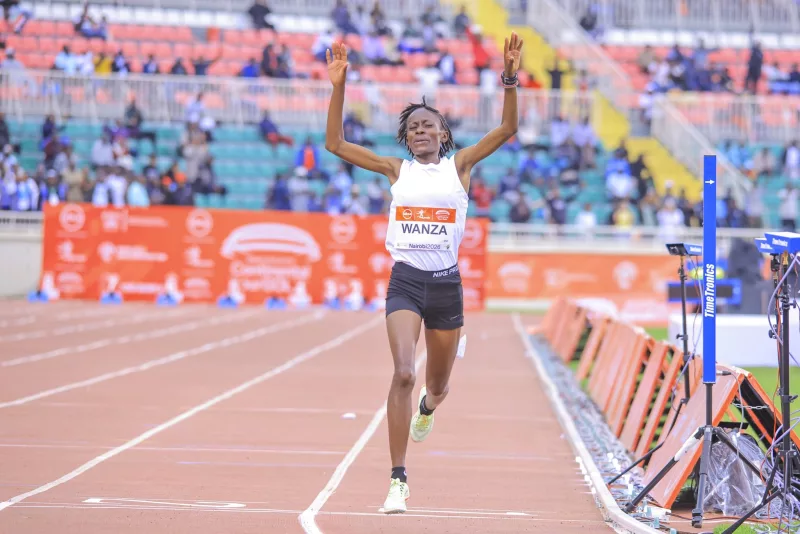
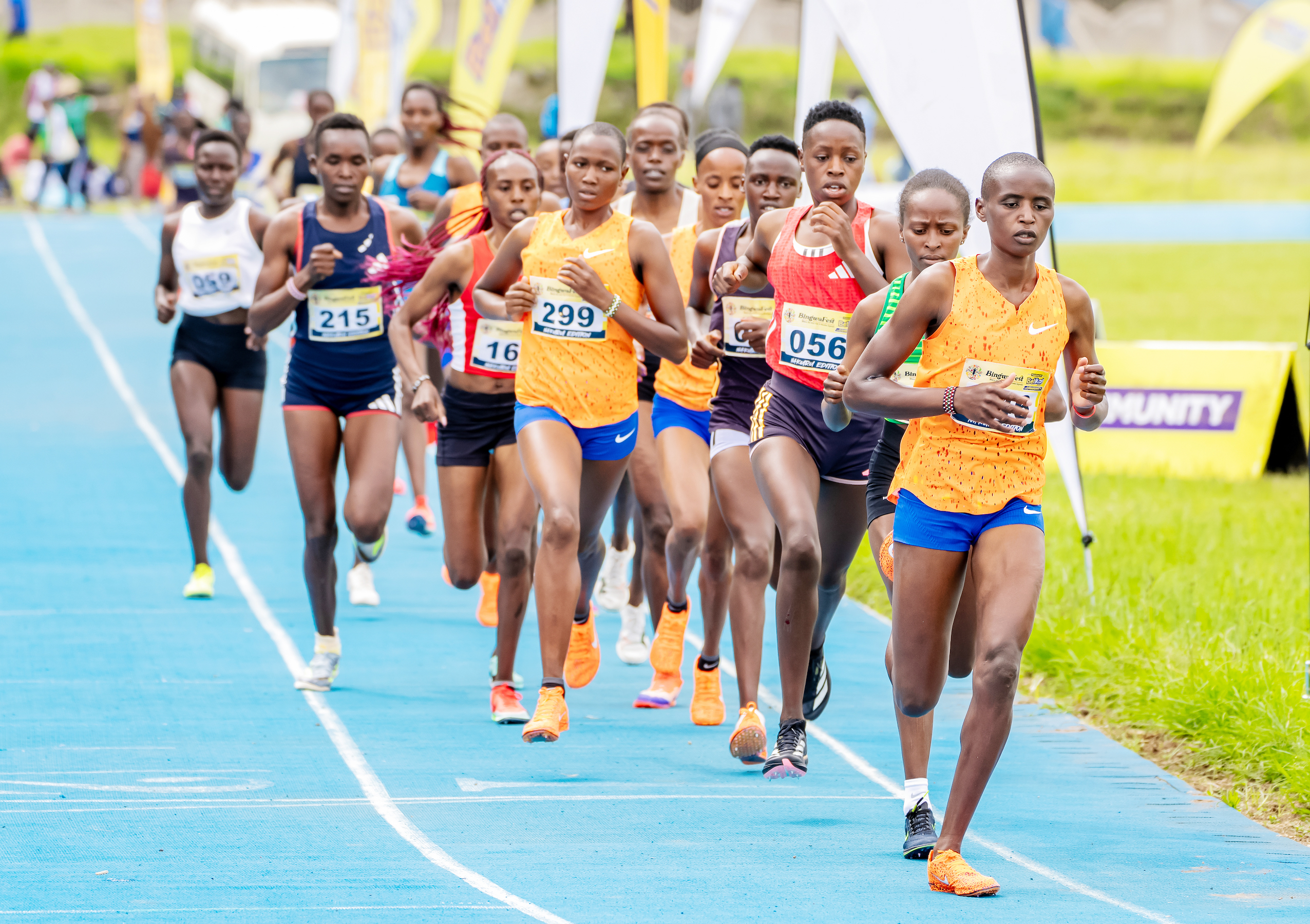 Action during a recent BingwaFest weekend meeting/HANDOUT
The need for broader support
For Kenya to keep pace with these nations, Mwaniki insists collaboration is essential, particularly from sponsors and corporate partners.
“We need sponsors and more corporates to come on board and assist Athletics Kenya in organising more track and field meetings in the country. Regular meets mean athletes are active throughout the year,” he said.
He also believes the solution must extend beyond national structures, calling on county governments to take greater ownership of talent development.
“County governments should bring on board former athletes who will guide them and advise them on how to nurture talents at the grassroots level, not just waiting on AK to identify the talents.”
This decentralised approach, Mwaniki argues, would allow talent to be spotted earlier, nurtured more consistently and retained within the sport.
A long-standing gap begins to close
Encouragingly, signs of progress are already visible.
The Betika BingwaFest has emerged as a beacon of hope, filling a long-standing void in Kenya’s athletics calendar. For years, Kenyan athletes — particularly sprinters — endured prolonged layovers after major championships, watching their international rivals continue competing while they waited for the next season to begin.
“We had long layovers, more so for our sprinters. While other nations were continuing with some competitions after major championships, our athletes had to wait till around March to start competing,” Mwaniki noted.
“Even for our long-distance stars, after major competition, they also had long layovers, forcing some of them to now start looking at road races.”
The introduction of BingwaFest has changed that rhythm.
“But with the introduction of BingwaFest, our athletes are being kept on their toes. Like this year, after the Tokyo World Championships, they held a meeting. This weekend they will have another meeting. This means athletes are constantly competing.”
That consistency, Mwaniki believes, has already elevated the competitive standard within the country.
“This has already raised the level of competition because every athlete is trying their best. It is also helping younger athletes challenge the elites, who in turn push their training a notch higher.”
He went further to credit the BingwaFest series as a key contributor to Kenya’s recent global success.
“BingwaFest is one of the reasons Kenya had such great performances in Paris and Tokyo. They started a four-year plan with Athletics Kenya in 2024 targeting the 2028 Olympics.”
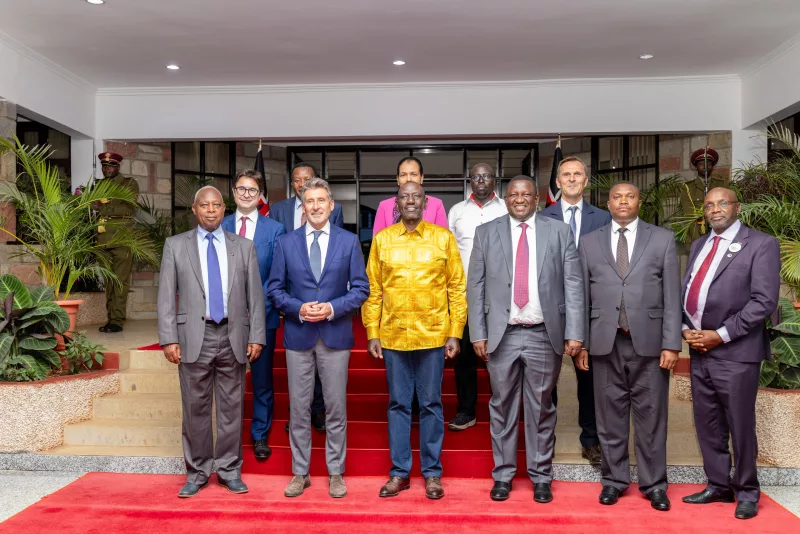
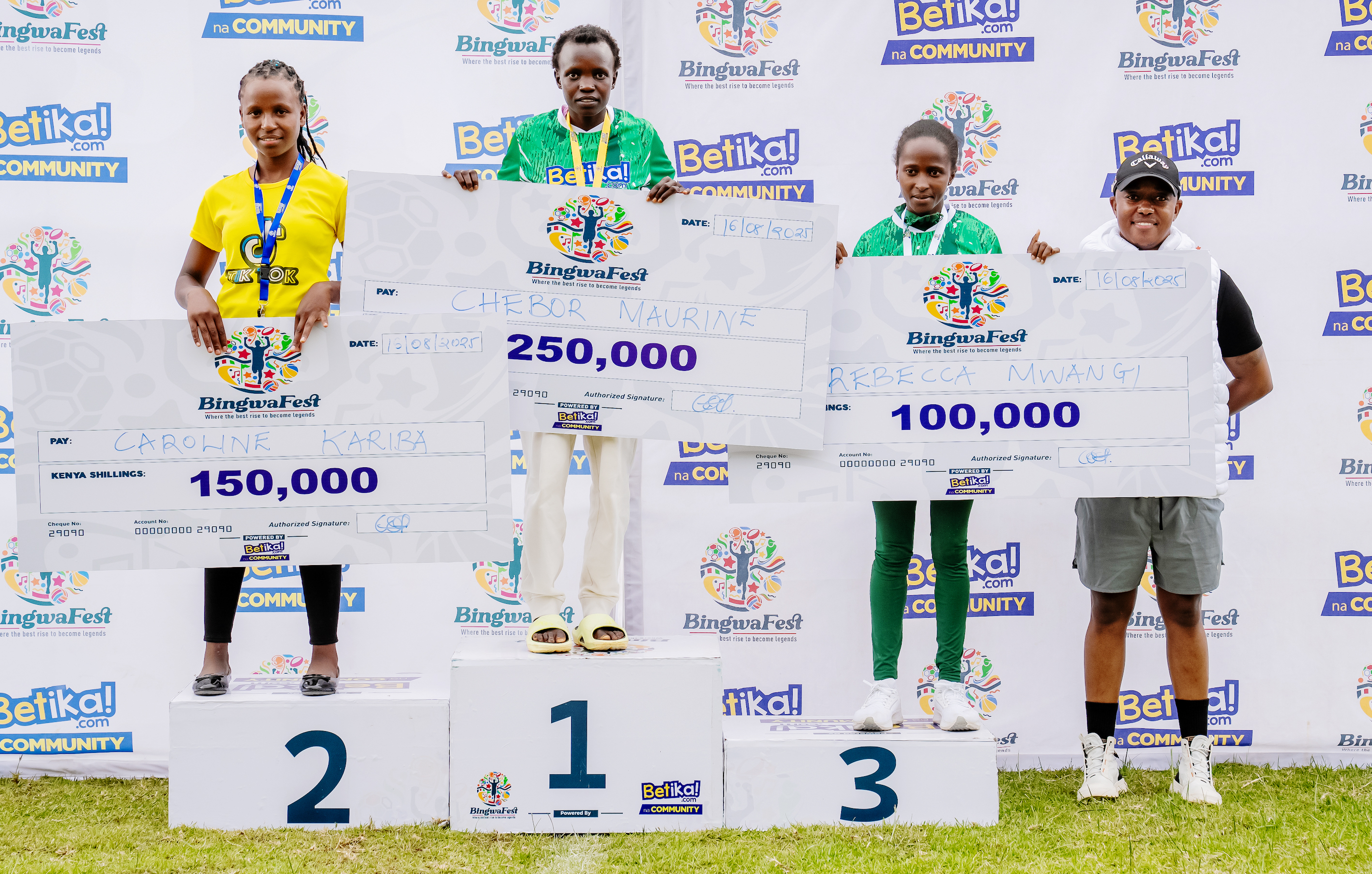 Betika Head of Brand Eric Mwiti with the 5,000m medallists at the BingwaFest rift Valley edition at Afraha Stadium in August/HANDOUT
The results appear to support that assertion. The 2024 season culminated in the Olympic Games in Paris — the ultimate stage of athletics excellence. Kenya rose to the occasion, collecting 11 medals (four gold, two silver and five bronze), finishing 17th globally and emerging as the top-ranked African nation.
Beatrice Chebet completed a historic 5,000m and 10,000m double, Emmanuel Wanyonyi stormed to gold in the 800m, while Faith Kipyegon reaffirmed her supremacy in the 1,500m.
Silver medals followed for Kipyegon in the 5,000m and Ronald Kwemoi in the same event, while bronze honours went to Mary Moraa (800m), Faith Cherotich (steeplechase), Abraham Kibiwot (steeplechase), Benson Kipruto (marathon) and Hellen Obiri (marathon).
If Paris was impressive, 2025 elevated Kenya to even greater heights.
At the World Relay Championships in Guangzhou, China, in May, three Kenyan teams punched their tickets to the Tokyo World Championships — the men’s 4x100m, men’s 4x400m and the mixed relay.
The quartet of Boniface Mweresa, Steve Odhiambo, Meshack Babu and Mark Otieno made history by qualifying Kenya’s men’s 4x100m team to the World Championships after clocking 38.56.
Meanwhile, the mixed relay team of David Sanayek, Mercy Chebet, Brian Tinega and Mercy Oketch clinched bronze in 3:13.10, finishing behind the USA (3:09.54) and Australia (3:12.20).
At the Tokyo World Championships, Kenya delivered a commanding performance, amassing 11 medals — seven gold, two silver and two bronze — to finish second overall behind the USA, who topped the table with 26.
One of the most remarkable achievements was Kenya’s clean sweep of women’s distance gold medals. Lilian Odira captured the 800m, Kipyegon dominated the 1,500m, Cherotich claimed the steeplechase, Chebet completed another 5,000m and 10,000m double, while Peres Jepchirchir sealed the marathon title.
Emmanuel Wanyonyi emerged as the lone male gold medallist with a scintillating 800m victory, while Dorcus Ewoi (1,500m) and Kipyegon (5,000m) claimed silver medals. Reynold Cheruiyot (1,500m) and Edmund Serem (steeplechase) secured bronze.
Unearthing the unknown
Beyond medals, BingwaFest has also proven instrumental in uncovering hidden gems.
“We have athletes like George Mutinda, who ran the fourth fastest national 400m time this year. But nobody had even heard of him. It is this meeting that was instrumental in shaping him,” Mwaniki revealed.
“If we can have more of this, imagine the talent we would be able to tap into.”
Mutinda went on to become the national 400m champion, sealing the title on June 27 after stopping the clock at 44.51.
Veteran sprinter Boniface Mweresa echoed those sentiments, stressing that Kenya’s LA 2028 ambitions hinge on expanding competitive opportunities.
“As we look towards LA 2028, we need more sponsors to come in and have regular meetings for the athletes. This will boost competitiveness and also build morale for global championships,” Mweresa said.
“If you look at our performance from the World Relays, we were able to qualify three teams to the World Championships. And for the first time in the history of Kenya qualify the men’s 4x100m to the global show.”
He also highlighted the historical importance of lucrative local meets.
“Around 2009–2010, Eveready used to have a meeting and it was very lucrative for athletes. I think Betika coming in with this new initiative is a big plus for us.”
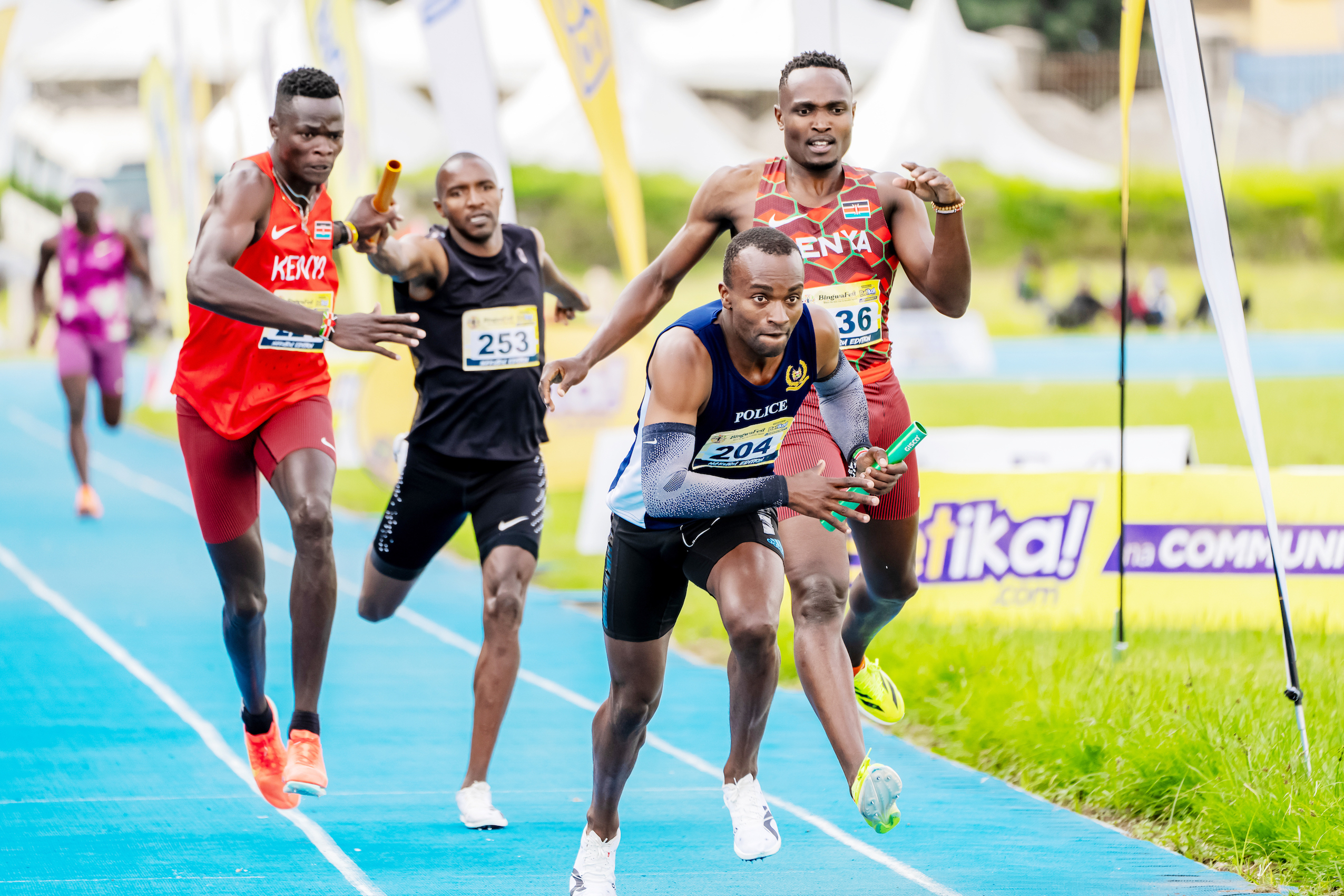 Allan Kipyego, David Sanayek, Brian Tinega and Boniface Mweresa during a recent BingwaFest weekend meeting 400m relay race/HANDOUT
Prize money as motivation
According to Mweresa, prize money is more than just a financial reward — it is motivation.
“You find countries like the US offer Sh1.3 million ($10,000) for winners during their trials. Now imagine having that same package here in Kenya," he quipped.
Crucially, home-based competitions also reduce the financial burden on athletes.
“If we can have more meetings at home, that will be key so that athletes don’t have to go outside looking for meetings in Europe, which at the end of the day leaves them with little to no money,” he said.
“For European meetings, an athlete may pocket roughly Sh300,000 after a win. He has to pay his coach, management and flight tickets, meaning he is left with little.”
“With BingwaFest, an athlete can earn that same amount and save a lot because travel expenses are minimal. The only major cost is paying the coach.”
Currently, BingwaFest offers prize money of Sh300,000 and Sh250,000 for winners in the 10,000m and 5,000m, respectively, alongside Sh150,000 for sprint and middle-distance events.
A broader vision
Betika CEO and Managing Director Mutua Mutava underscored the broader vision behind the initiative.
“Kenya’s first-ever Olympics-style, multi-sport grassroots tournament is designed to discover, nurture and celebrate local talent at scale,” Mutava said.
“It is a space where young athletes can showcase their skills, access scouting and coaching, and rise from grassroots competition into elite pathways.”
Mutava believes BingwaFest can become a powerful pipeline for talent development.
“The long-term vision for BingwaFest is to build it into Africa’s most impactful grassroots sports development platform — a true continental pipeline for talent, opportunity and community transformation.”
As the countdown to Los Angeles 2028 continues, the message from coaches, athletes and administrators is clear: Kenya’s dominance cannot be taken for granted. Sustained success will require deliberate investment in competition, collaboration and grassroots development.
If the momentum generated by initiatives like BingwaFest is maintained — and expanded — Kenya may not only defend its proud legacy, but redefine it for a new generation on the road to LA.