Economic stability remains a significant challenge for several African nations as they navigate the complexities of 2025.
Inflation, the rate at which the cost of goods and services rises over a year, is currently reshaping the purchasing power of millions across the continent. While many global economies are stabilising, a specific group of African countries is grappling with hyperinflationary pressures and double-digit price hikes.
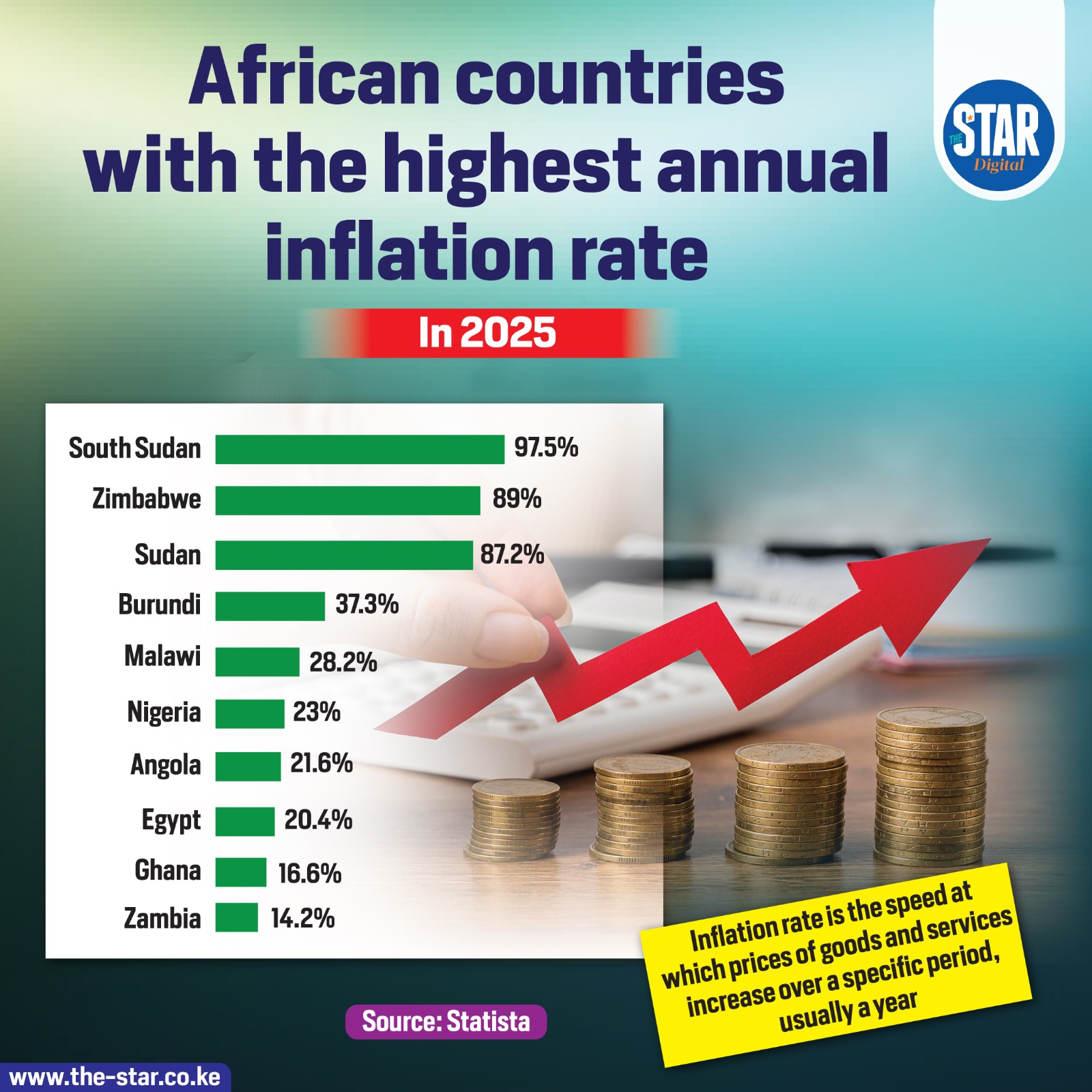
South Sudan currently faces the most severe economic strain, with an annual inflation rate reaching a staggering 97.5%. This extreme level of price volatility creates immense hurdles for daily survival and long-term financial planning.
Not far behind are Zimbabwe and Sudan, with rates of 89% and 87.2% respectively. These figures highlight a deep-seated economic crisis in the eastern and southern regions of the continent, often exacerbated by currency devaluation and supply chain disruptions.
Beyond the top three, the inflationary pressure remains significant but drops to a lower tier. Burundi follows with a 37.3% rate, while Malawi and Nigeria continue to see prices rise by 28.2% and 23%.
Even in larger economies like Angola and Egypt, inflation holds firm above the 20% mark. Rounding out the top ten are Ghana and Zambia, which, despite seeing lower figures than their peers at 16.6% and 14.2%, still face rates well above the ideal targets for emerging markets.