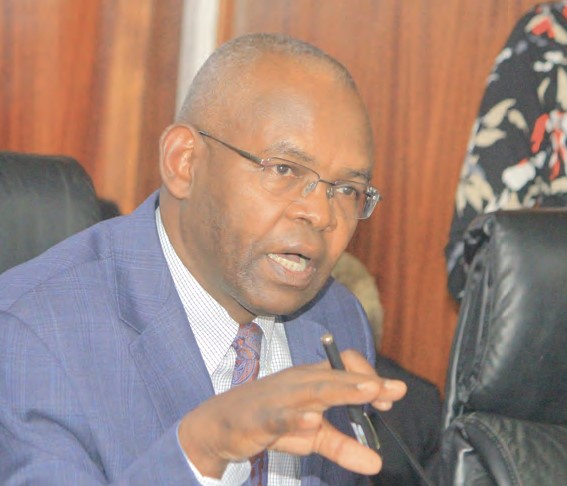
 Shivani Siroya, founder and CEO, Tala./FILE
Financial infrastructure firm, Tala, has launched a tokenized lending platform to cater to borrowers without a banking history in the world.
It plans to deploy $50 million credit facility via the platform in USDC to power blockchain-enabled, permission-less lending for millions of global customers.
The Artificial Intelligence (AI) underwritten consumer lending tool, in partnership with Huma Finance, is the first of its kind in Kenya and is powered by Solana and supported by USDC liquidity facilitated by the Huma Protocol
For billions of consumers who lack access to traditional banking services and credit history systems, tokenized lending offers faster and more reliable access to credit, better rates through a global capital network, and a portable, digital reputation that enables broader participation in the global economy.
Tala’s existing customer base of nearly 13 million across multiple emerging markets creates immediate scale for blockchain adoption.
"After a decade operating across multiple emerging markets, we know how to translate frontier technologies into real-world financial power," said Shivani Siroya, founder and CEO, Tala.
"By pairing Tala’s trusted platform with the power of blockchain technology, together with Huma and Solana, we can expand financial access, eliminate systemic inefficiencies, and help millions become active participants in the global digital economy.”
The solution is powered by Tala’s proprietary credit engine, which has been trained on $7 billion in lending performance data across multiple continents.
That dataset—largely invisible to banks and most AI systems—gives Tala the ability to evaluate borrowers who have historically been overlooked by the global financial system.
By tokenizing these loans in an overcollateralized lending facility and connecting them to Huma’s liquidity pools, Tala unlocks a new funding mechanism for emerging market credit, bringing global capital directly to high-demand markets transparently and efficiently.
Speaking during the launch, Erbil Karaman, Co-Founder of Huma Finance, said that Tala’s team has over a decade of experience in scaling high-performance lending programmes while providing financial access to tens of millions of people who need it the most.
“Unlike past attempts in the industry, this partnership sets a new standard for overcollateralized, data-driven, fully-digital, tokenized lending that is liquid from day one. Together we are delivering on the promise of crypto – an open and efficient global financial system for all.”
Huma Finance specializes in compliant, transparent, on-chain payment finance infrastructure, connecting high-performance digital assets to more than 100,000 liquidity providers globally.
Its stable-coin-based payments finance protocol offers programmable lending and repayment rails, risk controls, and real-time portfolio visibility.
The collaboration with Tala will tokenize loan assets and move key processes such as disbursement and repayment on-chain for transparency, lower costs, and global liquidity access.
The launch establishes Tala as one of the largest global on-ramps for non-crypto-native users in emerging markets, instantly introducing millions of new consumers to the global blockchain ecosystem through everyday financial activity.
For liquidity providers, tokenized lending introduces a new class of real-world assets backed by real repayment behavior, verified on-chain.
Tokenization also allows lenders to sell tokens that represent future cash flows, fractionalize risk to reach more investors, and automate key processes through smart contracts, improving transparency, efficiency, and balance sheet management.
Maya Caddle, Payments Lead at Solana Foundation, said that the firm’s vision for internet capital markets is to make finance accessible globally and at scale.
“Tala’s decision to bring its credit and payments products to Solana shows how on-chain markets can expand access to financial services in emerging markets.”
The company’s on-chain lending model will extend to other networks next year, creating an even broader scale for cross-border transactions and stable-coin use cases.