 Indonesia’s main
exports to Kenya in 2025 included vegetable oils and fats, paper products,
chemicals, plastics and textiles. /HANDOUT
Indonesia’s main
exports to Kenya in 2025 included vegetable oils and fats, paper products,
chemicals, plastics and textiles. /HANDOUT
The Association of Southeast Asian Nations are looking to ride on culture, crafts and food exchange programmes to grow their trade influence with Kenya.
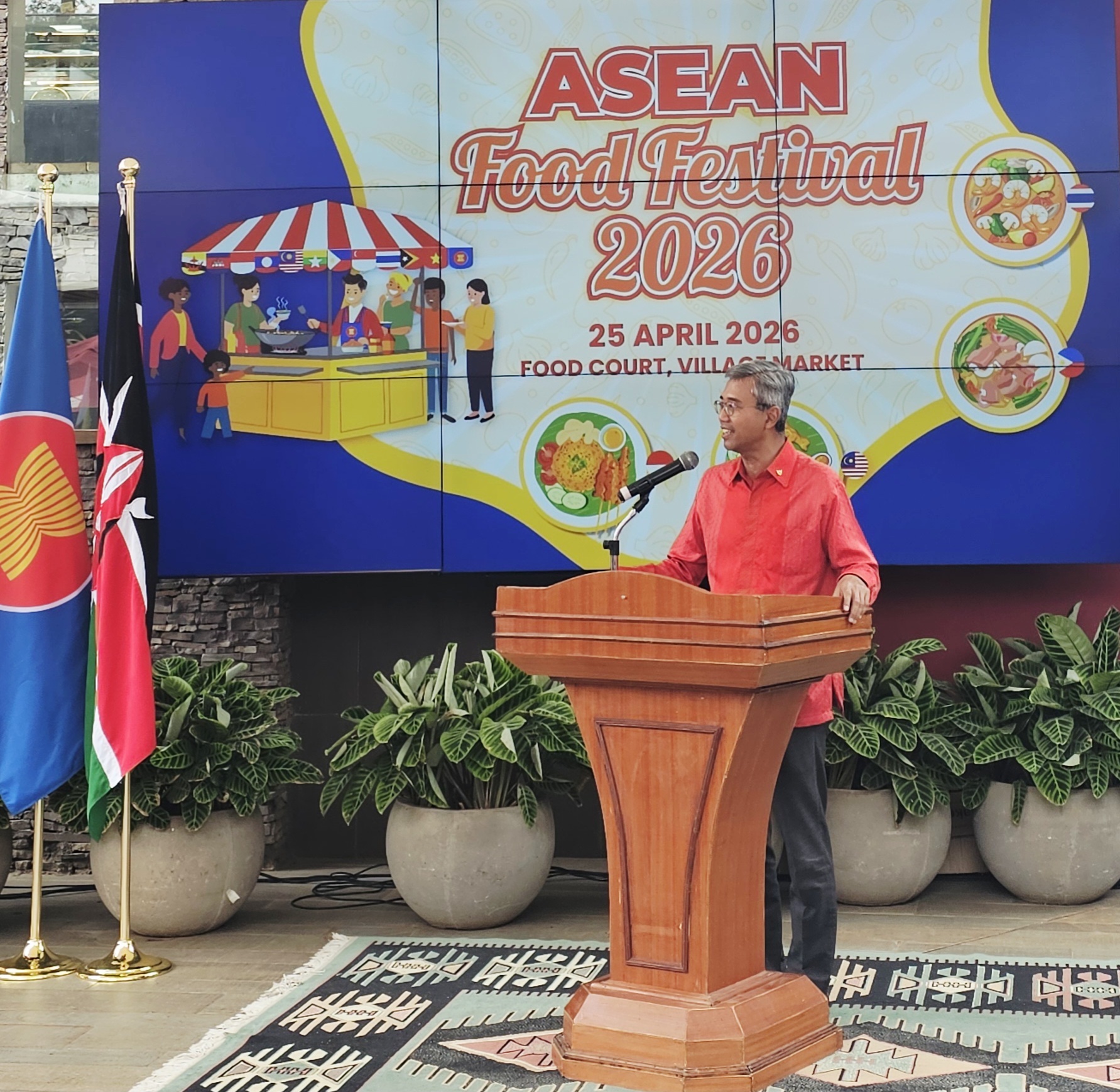
This was revealed during a showcase at the 2026 edition of the Indonesian culinary arts and culture at the ASEAN Food Festival (AFF) 2026.
The event was organised by the ASEAN Committee (which includes Indonesia, Malaysia, the Philippines and Thailand) to deepen commercial and people-to-people links with Kenya.
The committee’s current chair, who is the Indonesian Ambassador to Kenya, Witjaksono Adji, noted that more than 1000 visitors attended the showcase.
"The diversity of ASEAN countries, speaking different languages and coming from different backgrounds, yet working, developing, and sharing prosperity together. This same spirit is reflected in this event—a variety of cuisines, presented with rich flavour and harmoniously coexisting," said Adji.
Indonesia’s stand was among the busiest, offering dishes such as nasi goreng, satay, bakso, siomay and traditional snacks. Visitors also browsed batik fabrics, woven textiles and small handicrafts.
Private-sector brands with an established presence in Kenya, including Indomie and Indocafe, also exhibited products at the festival.
The event comes as trade between Kenya and Indonesia continues to grow.
According to UN Comtrade data compiled by Trading Economics, Indonesia exported goods worth about $522.7 million to Kenya in 2025, while Indonesia imported about $168.4 million from Kenya, putting total two-way trade near $691 million.
Indonesia’s main exports to Kenya in 2025 included vegetable oils and fats, paper products, chemicals, plastics and textiles.
Kenya’s leading exports to Indonesia were cocoa and cocoa preparations, chemicals, leather products, vegetables and machinery-related goods.
The figures suggest a sharp increase from earlier years and underline Indonesia’s growing commercial footprint in East Africa, where Kenya serves as a regional logistics and financial hub.
Kenyan government officials attending the event said cultural exchanges can support broader economic cooperation, especially in trade, tourism, education and investment.
Kenya, meanwhile, has sought to diversify trading partners beyond traditional markets in Europe, China and the United States.