A parliamentary committee has approved sweeping amendments to a proposed law that will outlaw widespread practice of detaining patients or withholding bodies of the deceased over unpaid medical bills.
The Committee on Health has completed its review of the Health (Amendment) Bill, 2024, sponsored by Kirinyaga Woman Representative Njeri Maina and recommended its passage.
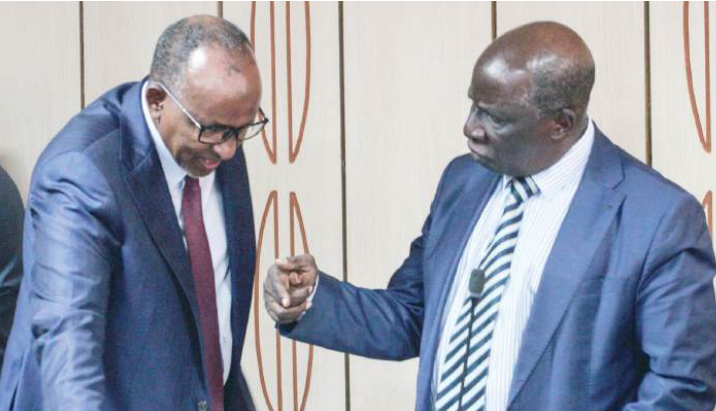
Chaired by Seme MP James Nyikal, it has proposed crucial changes that extend protection to all hospitals – public and private.
The House team has also proposed that the law establishes legal pathways for debt recovery without violating patient rights.
The Bill now heads to the National Assembly for debate and could set a precedent and deal with the public outcry.
For years, countless families have faced the traumatic ordeal of being unable to bury their loved ones because hospitals refused to release bodies pending settlement of bills.
Others have been illegally confined in wards long after being medically discharged, trapped by mounting debts, leaving many to resort to fundraisers for reprieve.
The committee’s report acknowledges that this practice “offends the spirit of the constitution and undermines the dignity of the human person.”
“The Bill seeks to reaffirm these rights by ensuring no family is denied the remains of their loved one because of financial incapacity,” Maina stated in her submission to the committee.
“Families deserve compassion, closure and the opportunity to mourn and bury their loved ones in peace.”
The committee received memoranda from key stakeholders, including the Ministry of Health, the Kenya Law Reform Commission (KLRC), the Office of the Attorney General and the National Gender and Equality Commission.
The Ministry of Health initially opposed several clauses, arguing that existing frameworks like the Social Health Insurance Fund already address emergency costs.
The ministry called for the deletion of clause 3(e), which proposed making it an offence to demand payment before emergency treatment (fine up to Sh3 million) and to detain a body over unpaid bills (fine up to Sh2 million).
It argued that the new rules could create legal problems, adding that existing laws adequately addressed the issues.
But the committee ultimately sided with the proposed law, therefore expanding protections and creating clearer legal prohibitions.
Initially, the proposal only criminalised detention of bodies by public health facilities.
The committee, heeding inputs from the KLRC and the Gender Commission, has now recommended that the offence apply to all health facilities.
It said violations occur equally in private institutions, a shift MPs hold ensures alignment with Article 27 of the constitution on equality and non-discrimination.
KLRC, Attorney General and Ngec supported the Bill, saying it should apply to private and public health facilities.
Another significant amendment is the introduction of a structured payment guarantee system.
Recognising that hospitals also struggle with financial sustainability, the committee proposes a new Section 12A in the Health Act.
This will allow facilities to legally request a promissory note from a patient or family upon discharge, creating a binding commitment to pay outstanding bills without resorting to detention.
The provision seeks to balance patient rights with the practical need for healthcare providers to recover costs.
“The proposed amendment seeks to ensure health facilities can recover unpaid hospital bills through lawful debt recovery means without infringing on patients’ rights,” the report states.
The Bill also strengthens the right to emergency medical treatment.
It affirms that no healthcare provider may demand upfront payment before providing emergency care, a direct enforcement of Article 43(2) of the constitution, which states that a person shall not be denied emergency medical treatment.
The committee’s report cites several High Court rulings, including a September 2025 decision by Justice Nixon Sifuna, which declared the detention of a body for unpaid bills “unlawful, unconstitutional and contrary to public policy.”
Courts have consistently ruled that hospitals must pursue debts through civil channels, not by holding bodies or patients hostage.
Njeri Maina also anchored the proposed law in global best practices, pointing to similar laws in the Philippines, Uganda and Canada that prioritise human dignity in healthcare delivery.
The committee rejected some overly technical amendments, such as redefining “emergency treatment” to avoid legal ambiguity.
Even so, the core mission of the bill remains intact, that is, to replace a practice of coercion with one of compassion, and to align the country’s health system with its constitutional values.