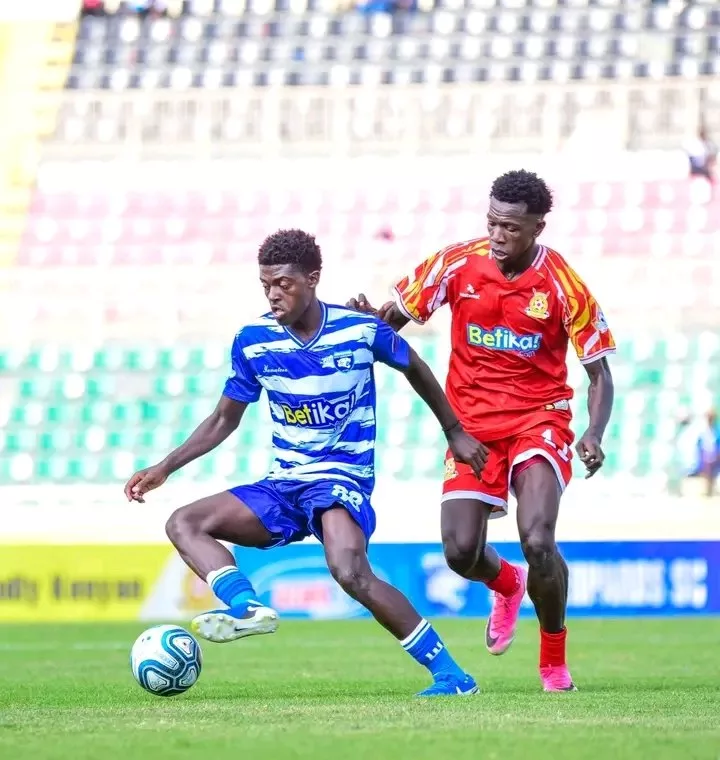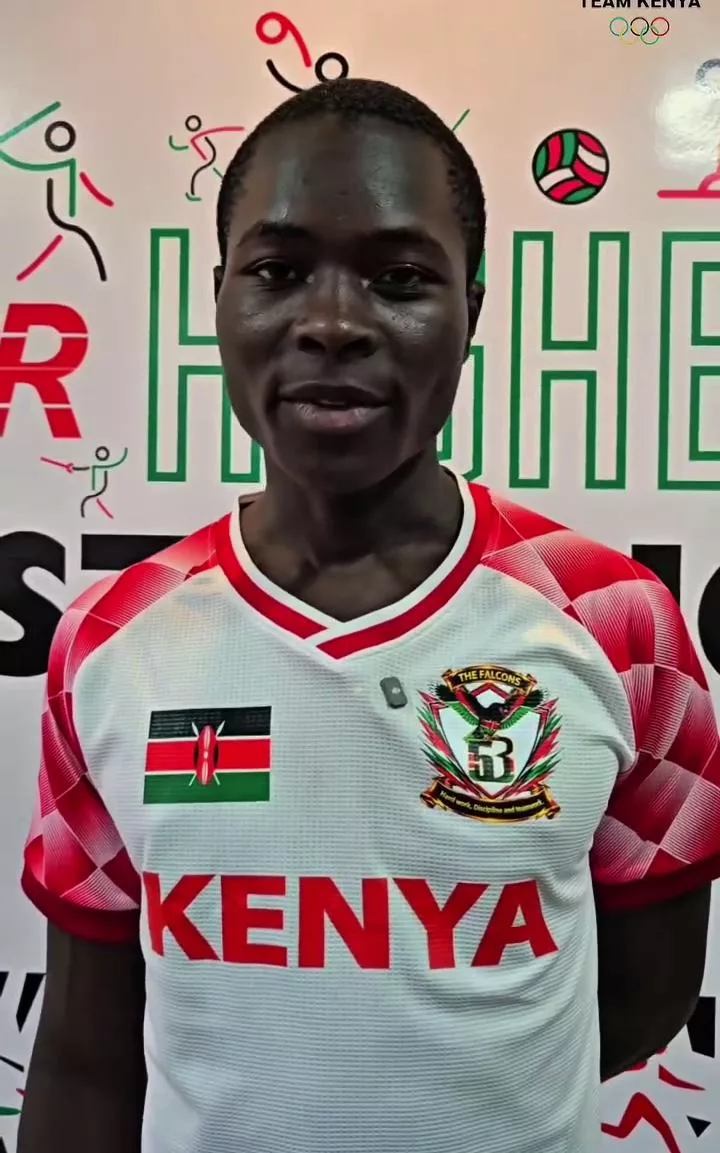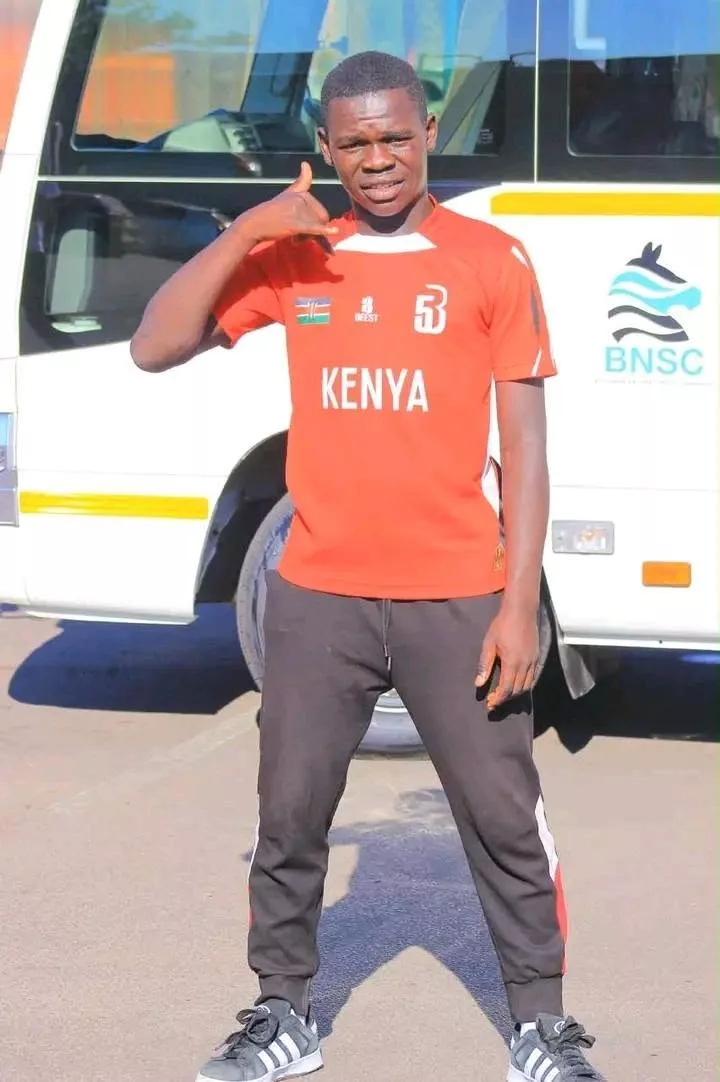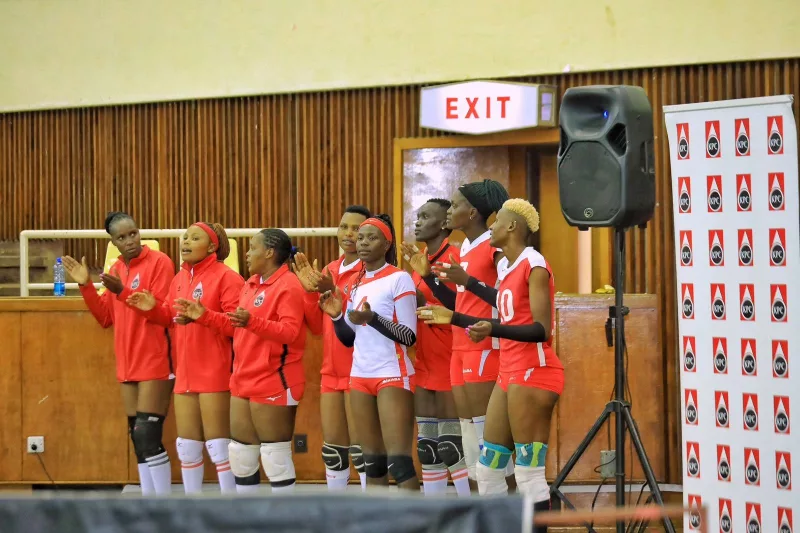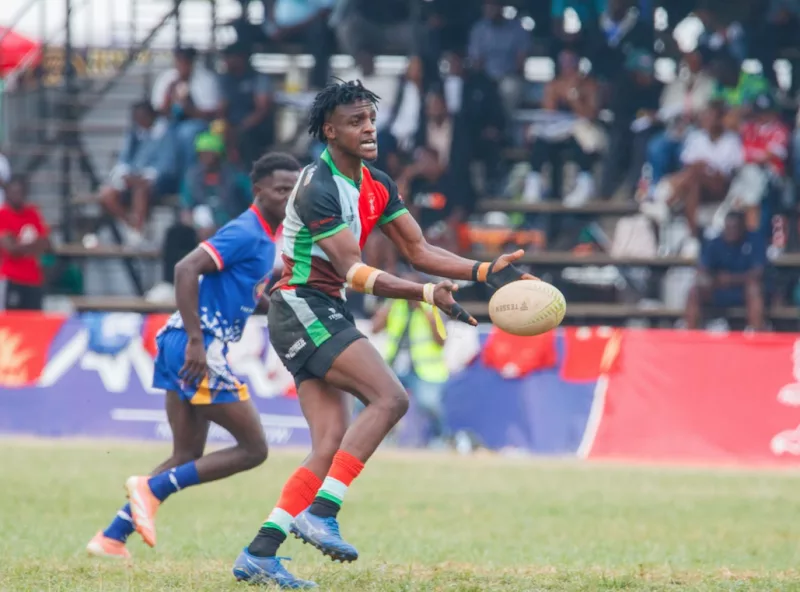
 AFC Leopards skipper Victor Omune/AFC LEOPARDS
 The room is quiet when Victor Omune finally begins to speak, the kind of quiet that feels earned rather than imposed.
He sits upright, shoulders broad but visibly weighed down by memories he has tried for years to outrun. The quiet stretches across the room like a soft blanket, allowing him space to exhale, to measure his thoughts, to peel back layers he has rarely dared to confront publicly.
The AFC Leopards midfielder has always been a fighter—tall, powerful, and defined by a relentless drive on the pitch. But even the strongest athletes can be punched breathless by life. Even the men who tower over defenders, who rally teammates, who lead scoring lines, can crumble in moments far away from stadiums and spotlights.
For Omune, the blows came in quick succession: the death of his mother, the loss of two children, and the silent battle with depression that nearly pushed him over the edge.
No match prepares you for that. No tactical briefing tells you how to survive that kind of sorrow. No sports psychologist, no recovery drill, no fitness test can measure the depth of that pain.
For a long time, he kept it all buried under the surface. Footballers, especially in East Africa, are taught to be grateful, to be tough, to never show weakness. But the truth was too heavy, and the silence became its own kind of suffering. Today, he is done hiding.
He wants people to understand what grief does to an athlete, to a man—how it can take more than just your form, your energy, your confidence.
It can take your will to live. And how, with enough courage, love and faith, you can still claw your way back. His story is not about tragedy. It is about what it takes to keep breathing when life has given you every reason not to.
The story begins in 2019. At the time, Omune was playing for Nairobi Stima, a vibrant, ambitious side pushing hard for promotion to the Football Kenya Federation Premier League.
He was in good shape. His game was sharp. The club believed in him, and he felt ready to finally make his mark. There was a momentum to his life, a sense that all he had worked for since his MYSA days in Lucky Summer was beginning to crystallise.
But life has a way of choosing its moments, and tragedy often arrives unannounced. In the span of months, both his mother and his second-born child died.
The shock hit him like a collapsing roof. One moment, he was preparing for league run-ins, and the next, he was caught in an emotional field of rubble, disoriented and broken.
“When I was at Stima during my last season at the club, I lost my mother and second-born kid. By the time we were done with the burial preparations, the league was about to wind up,” he recalls, his voice steady but soft. Behind that steadiness, though, you sense the ache that time hasn’t fully numbed.
Football suddenly felt irrelevant. Training? Impossible. The pitch, once a sanctuary, felt foreign and unsafe. He moved through the season like a ghost—physically present, mentally scrambled.
There were days he dressed for training and stood at the edge of the field, unable to step in. There were nights he lay awake thinking of the last conversations he had with his mother, replaying them until he was too exhausted to think anymore.
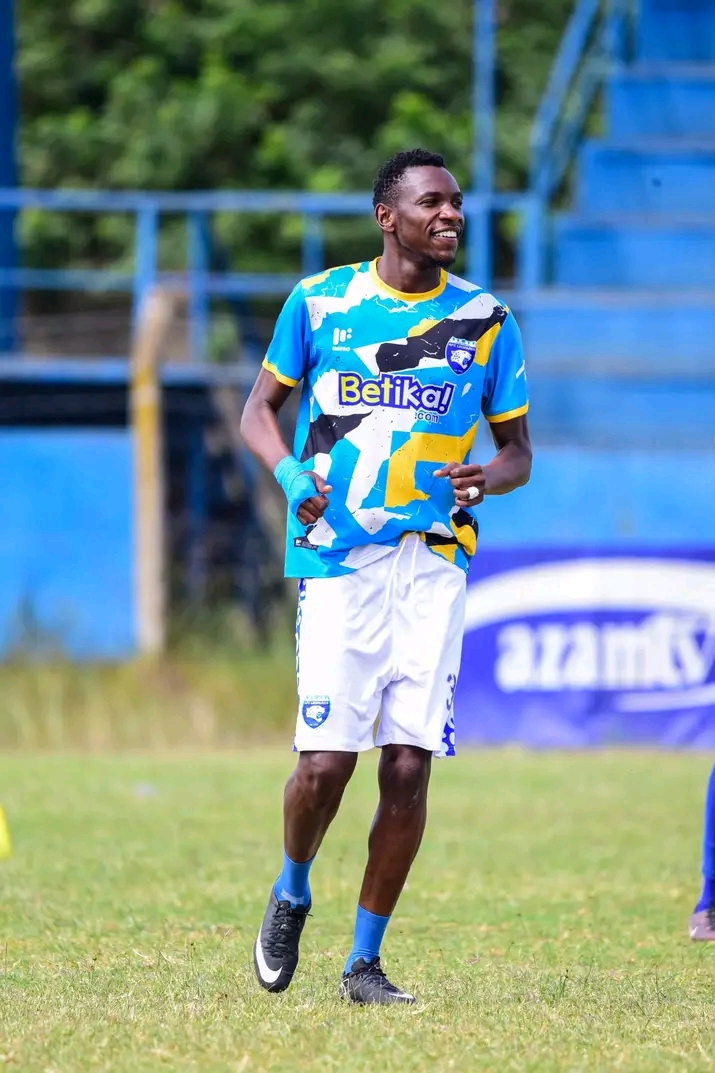 Victor Omune during pre-match warmup/AFC LEOPARDS
 When Stima reached the promotion playoffs against Posta Rangers, he returned to the squad out of duty rather than readiness.
“After my mum passed, I was not training. By the time we were done with the burials, the playoffs were nigh. We were playing Posta in Machakos and I came back having not trained. The game ended as it did and we were relegated, but it was very hard,” he says.
Hard is too simple a word for what he endured. Hard doesn’t explain the sleeplessness, the guilt, the loneliness. Hard doesn’t capture the feeling of walking into a stadium, trying to act normal while carrying invisible weight. Hard doesn’t tell you what it feels like when fans criticise your performance, not knowing you buried your mother days earlier.
It was more than hard. It was the breaking point. When the offseason arrived, there was too much silence, too much empty space. Grief—raw, unfiltered, merciless—filled the void. He began to withdraw from friends and teammates. The depression tightened around him until he saw only one escape route.
“I found it difficult to cope during the off-season and I even considered taking my life. It was hard, but my firstborn was giving me a lot of satisfaction. I was able to overcome that thanks to God’s help," he says.
These are not the kinds of confessions footballers make easily. In a sporting culture that worships toughness, vulnerability is often dismissed as weakness.
But Omune’s honesty feels like a declaration of survival. It is clarity born from the darkest kind of suffering, spoken calmly but carved from pain.
His next chapter was supposed to be brighter. After leaving Stima, he joined KCB FC—a step up, a chance to reset, a chance to breathe again.
But grief is not a linear process. It doesn’t obey transfer windows. It doesn’t listen to optimism. And it certainly doesn’t leave simply because a man has decided he has suffered enough.
In 2021—just as his form was stabilising and he was rebuilding himself piece by piece—he lost his firstborn child. Five years old. A short illness. A long, excruciating silence.
“In my second season at KCB, my firstborn died at five due to a short illness. But I thank God for everything because he has a reason. It really did take a toll on me,” he says.
He pauses. The kind of pause that isn’t for emphasis—it’s for survival. The kind of pause you cannot coach out of someone.
It was, he admits, the closest he ever came to giving up. Not just on football. On life. The pain was relentless and the emotional exhaustion unbearable.
He struggled to get up in the morning. He struggled to train. He struggled to find meaning in a world that had taken so much from him.
But despair, while powerful, did not win. The credit, he says, goes to two people: his wife and his brother.
“If it were not for my wife, I would have taken my life a long time ago. My brother as well. He kind of felt it. He was very close to me and he helped me push through alongside my wife, but we passed that stage and we are grateful to God,” he says.
Some athletes are saved by coaches. Some by teammates. Omune was saved by love—unconditional, patient, persistent. His wife was the anchor that steadied him. His brother was the companion who refused to let him fall. They watched him closely, protected him fiercely, and kept him tethered to life when his grip weakened.
Life after deep emotional trauma is not a sudden sunrise. It is a slow unwrapping of shadows. When AFC Leopards came calling again in 2021, it felt like a return to something familiar.
A second chance at a club where he once showed promise. And for maybe the first time in years, he allowed himself to hope again.
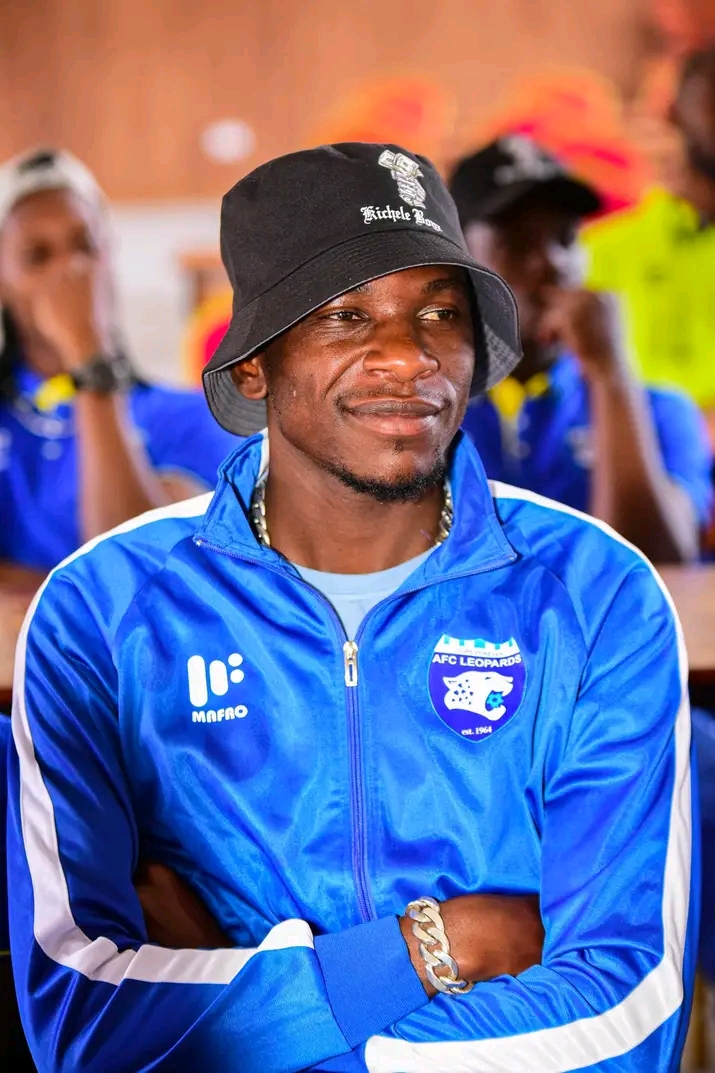 Victor Omune/AFC LEOPARDS
He trained harder. He listened more. He took care of his body. And little by little, the forward regained his confidence and rhythm. Everything he had survived—every moment of darkness—began to form a quiet strength beneath his surface.
His work paid off spectacularly in 2023, when Engin Firat handed him his Harambee Stars debut against Iran.
For a player who once questioned whether he would live to see another season, the call-up felt like more than an achievement. It felt like proof. Proof that the world still had room for him. Proof that he could still rise.
Today, Omune is one of Leopards’ most driven players, wearing jersey number 33 with a sense of purpose only trauma can forge.
At 183 centimetres and 76 kilogrammes, he moves with a mix of power and precision, his forward runs carrying both intent and memory.
On the pitch, he plays for his family, for the children he lost, for the mother who raised him, and for the small boy from Lucky Summer who once dreamed of football stardom.
His journey began in Nairobi, born on February 14, 1993, at Pumwani. A Valentine’s baby whose life would be marked by extremes of love and loss.
He attended Babadogo Primary School and Blessed Teresa High School, juggling studies with football wherever space allowed. The MYSA system in Nairobi’s Eastlands became his foundation, taking him from under-10 to under-16 categories—years that shaped his discipline and hunger.
From there, the path wound through local teams like BIG Bebs and Kariobangi Youth before he joined Kariobangi Sharks in 2008.
That six-year period at Sharks hardened him, preparing him for the professional career that followed: Mahakama FC, AFC Leopards (his first stint), Muhoroni Youth—where he lifted the KPL Top 8 Cup—Nairobi Stima and KCB.
Football gave him identity. It gave him purpose. And when life tried to take everything else, football gave him something to return to.
Today, as he speaks openly about depression, grief and survival, Omune is doing more than telling his story. He is breaking a silence that has lingered far too long in African sports. Mental health is still a taboo topic in many locker rooms across the continent.
Too many athletes suffer quietly, their struggles disguised beneath jerseys, boots and stoic interviews.
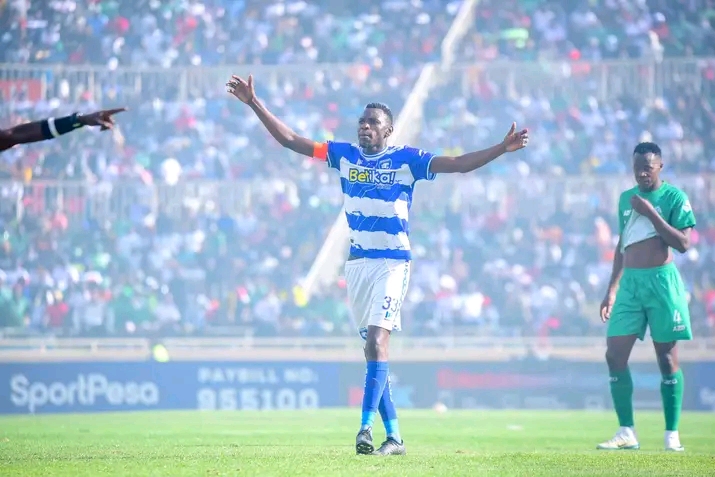 Victor Omune during the Mashemeji derby encounter against Gor Mahia/AFC LEOPARDS
 By sharing his truth, Omune is not just healing himself; he is lighting a path for others. He wants players to know that they are allowed to hurt, allowed to talk, allowed to seek help.
He wants clubs to understand that mental wellness is not a luxury—it is essential. And he wants fans to see athletes as human beings first, performers second.
His journey is still unfolding. There are moments when the memories return with force. There are days when the body is willing, but the heart lags. But he is here. Alive. Playing. Fighting. Believing.
And that, for Victor Omune, is victory.