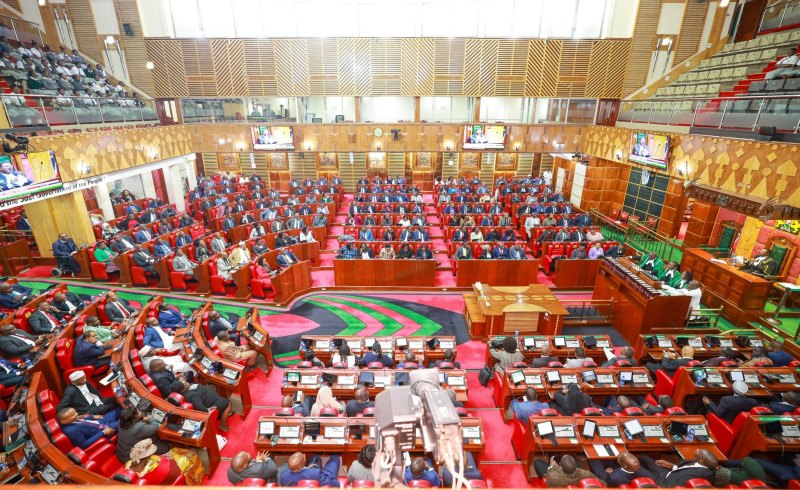
A fresh standoff has erupted between the Senate and the National Assembly over a contentious proposal seeking to punish IEBC officials who conduct elections in ungazetted areas or delay release of results.
The dispute centres on the Elections Offences (Amendment) Bill, 2024—one of the legislative proposals that emerged from the National Dialogue Committee (Nadco) process.
The Bill is stuck in Parliament after senators rejected the National Assembly’s decision to throw out amendments it passed.
Initially, the Bill proposed changes to section 6 of the Elections Offences Act, 2016, introducing new offences for IEBC officers who hold elections in polling stations not officially gazetted or who unreasonably delay declaring election results.
It also sought to criminalise the act of knowingly altering declared results.
However, the Senate took issue with these provisions and made extensive alterations.
They argued that creating an offence specifically targeting elections conducted in ungazetted polling stations was unnecessary and could duplicate existing safeguards.
They replaced the clause with a broader offence criminalising deliberate acts of interfering with, altering, destroying or concealing election materials or declared results, or directing another person to do so.
The National Assembly rejected this revision, reinstating the original proposal and splitting the offences into two separate clauses.
The first reinstated the offence of conducting or holding an election in a polling station not published in the Gazette and publicised through accessible media.
The second reintroduced the offence of intentionally altering or causing interference with declared results.
Despite this, the Senate’s Justice and Legal Affairs Committee has recommended rejecting the National Assembly’s stance.
“The committee therefore maintained its position that the offence of conducting elections in ungazetted polling stations was unnecessary and that the more appropriate focus is on criminalising deliberate acts of interference with, alteration, destruction or concealment of election materials or declared results,” the committee said.
Another major point of contention is whether “unreasonable delay” in announcing results should amount to a criminal offence.
The National Assembly retained this provision, arguing that accountability is vital when an IEBC officer takes longer than necessary to release results.
MPs argue that timelines are already clearly defined: Article 138(10) of the Constitution requires the presidential results to be declared within seven days, while section 39(1) of the Elections Act requires other results to be announced immediately after polls close.
But senators rejected the term “unreasonable delay,” describing it as legally vague and prone to controversy.
They replaced it with a more explicit offence—failure to declare presidential election results within seven days and failure to announce all other results immediately after voting closes.
Senators defended their version, arguing that it avoids legal ambiguity and reinforces clarity around electoral timelines.
“The committee passed the Bill with amendments which deleted this phrase and instead restated the offence of failing to declare the results of a presidential election within seven days as required under Article 138(10) and failing to declare the results of an election immediately after the close of polling,” the Senate committee said.
The National Assembly also struck out a Senate-backed clause creating new offences related to sexist campaigning, voter intimidation, assault and digital harassment during elections.
Senators had sought to amend section 17 of the Act by inserting a provision criminalising the use of electronic communication to intimidate, compel or induce a person to refrain from contesting, withdraw their candidacy, or vote against a candidate or party of their choice.
MPs argued that the issues raised by the Senate—particularly undue influence, intimidation, and interference with political rights—are already covered under various sections of the Elections Offences Act.
They dismissed the proposed amendment as duplicative.
However, the Senate stood its ground, insisting that emerging threats, especially digital interference, are not adequately addressed in existing law.
“While the Act addresses offences such as bribery, undue influence, intimidation and interference with political rights, it does not expressly capture the use of electronic communication as a distinct and emerging mode of interference,” the Senate committee maintained.
INSTANT ANALYSIS
The core objective of the Elections Offences (Amendment) Bill, 2024, is to strengthen accountability within the electoral process by introducing offences targeting IEBC officials who conduct elections in ungazetted polling stations, delay the declaration of results, or alter declared results. But diverging positions between the two Houses underscore broader tensions over how best to tighten electoral integrity laws without creating duplication, ambiguity, or overly punitive provisions.